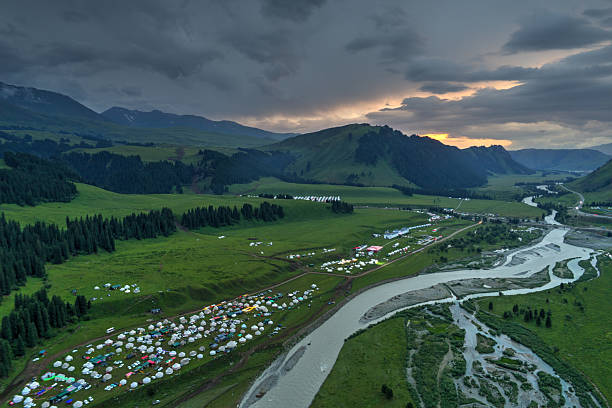

High on the Qinghai-Tibet Plateau—often called the “Third Pole of the Earth”—vast alpine pastures stretch beneath clear skies and towering snow-capped peaks. In this extreme and unforgiving environment, where temperature drops precipitously and air density thins out, life requires extraordinary resilience. Alongside grazing yak herds and the songs of nomadic herders, one creature commands immediate respect: the Tibetan Mastiff (Do-Khyi), an imposing canine with a mane like a lion and a bark that echoes like thunder.
Revered in Asia as the “Oriental Legendary Dog,” the Tibetan Mastiff is widely considered by canine historians to be among the ancient ancestral stocks for many modern molosser breeds (such as the Caucasian Shepherd, Rottweiler, and St. Bernard). Yet, on the high pastures of Tibet, these dogs are far more than a celebrated pedigree—they are an ancient biological imperative, forged over millennia to ensure human survival on the roof of the world.
What is the story behind the name of this ancient guardian? Why have Tibetan herdsmen relied so heavily on them for generations? And what critical functions do they perform in the isolated wilderness?
Key Takeaways
- Name and Cultural Depth: Known natively as Do-Khyi (“tethered dog”), it acquired the title “Mastiff” in Chinese historical texts to denote a exceptionally large, fierce, and highly capable working dog.
- Genetic Adaptation: Possessing unique genetic adaptations—including the EPAS1 gene—and superior hemoglobin efficiency, the breed thrives in low-oxygen, sub-zero conditions above 4,000 meters.
- Vital Survival Necessity: On the isolated pastures of the Qinghai-Tibet Plateau, livestock represents a family’s entire net worth. The Tibetan Mastiff acts as the indispensable first line of defense against wolf packs and apex predators.
- Cultural and Spiritual Bond: Beyond physical guarding, Tibetans honor the mastiff as a noble, loyal companion and a sacred protector intertwined with local folklore and everyday nomadic life.
Why Is It Called the “Tibetan Mastiff”? Origin and Etymology
The name of this legendary canine combines its geographic roots with ancient cultural terms for formidable working dogs:
The Native Tibetan Name: Do-Khyi (“The Tethered Dog”)
In the Tibetan language, the breed is known as Do-Khyi , which translates literally to “dog that is tied up.” This straightforward name accurately describes the dog’s traditional lifestyle and inherent behavioral traits.
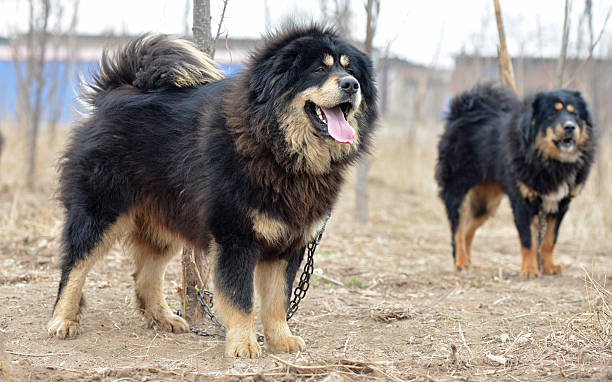
Because Tibetan Mastiffs possess intense territorial instincts and a natural suspicion toward outsiders, nomads historically kept them tethered to iron stakes outside their black yak-hair tents during daylight hours. This prevented accidental conflicts when visitors, traders, or neighboring herders approached. When night fell and the wilderness turned pitch-black, the dogs were unchained to freely patrol the camp perimeter.
The Ancient Meaning of “Ao” (Mastiff) in Chinese History
In classical Chinese literature, the character Ao was never used for ordinary domesticated dogs. As recorded in the ancient lexicon Erya: “A canine four feet tall is called an Ao.” The term was strictly reserved for dogs of massive size, extraordinary ferocity, formidable intelligence, and specialized training.
When merchants and travelers from the central plains first encountered these massive, bear-like dogs with thick manes and booming roars guarding Himalayan encampments, they bestowed upon them the title Zang Ao (Tibetan Mastiff)—a designation of ultimate respect for an unmatched highland guardian.
A Genetic Miracle Adapted to Extreme Altitudes
To understand why Tibetan nomads depend on the mastiff, one must first appreciate the breed’s extraordinary biological evolution. The Qinghai-Tibet Plateau sits at an average altitude exceeding 4,000 meters (13,000 feet) above sea level. Here, atmospheric oxygen levels are roughly 50% to 60% of those at sea level, and winter temperatures routinely plunge below -30°C (-22°F).
Genetic studies reveal that the Tibetan Mastiff possesses a physiological profile distinctly different from low-altitude canine breeds:
The EPAS1 High-Altitude Gene: Scientists have discovered that Tibetan Mastiffs carry adaptive genetic traits—partially acquired through ancient interbreeding with prehistoric highland wolves—that regulate hemoglobin production. This allows their blood to transport oxygen far more efficiently without thickening dangerously, enabling them to sprint, defend, and engage in high-energy combat without suffering from high-altitude pulmonary edema.
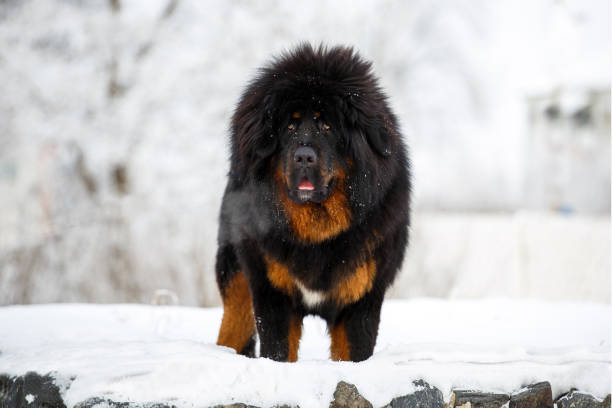
Insulating Double Coat: The breed features a dense, weather-resistant outer coat of coarse guard hair over a thick, woolly undercoat. This natural thermal barrier repels freezing winds, heavy snow, and moisture, allowing the dogs to sleep comfortably directly on frozen ground during blizzards.
Why Do Tibetans Raise Tibetan Mastiffs? A Matter of Survival
In modern urban settings, dogs are primarily kept for companionship or recreation. On the isolated Tibetan Plateau, however, raising a Tibetan Mastiff is driven by stark survival necessity:
Livestock Represent the Family Wealth
For nomadic families moving across seasonal pastures, their entire net worth and livelihood reside in their livestock—herds of domestic yaks and Tibetan sheep. These animals provide milk, butter, meat, wool, fuel, and the financial means to trade for grain and supplies. In a landscape without banks, insurance, or emergency services, losing a herd to predator attacks means instant ruin and potential starvation for a family.
The First Line of Defense in No-Man’s-Land
The Himalayan wilderness is vast and sparsely populated. A nomad camp may sit tens of miles away from the nearest neighbor and hours or days away from formal law enforcement or medical help. When wild predators descend from the mountains or threats arise, the Tibetan Mastiff serves as the family’s sole, unyielding line of defense.
The Four Core Roles of the Tibetan Mastiff on the Plateau
The formidable reputation of the Tibetan Mastiff is rooted in functional reality. In everyday nomadic life, the dog fulfills four crucial roles:
Defending Against Apex Predators (Wolves and Bears)
The high pastures are inhabited by formidable predators, including Himalayan wolves, snow leopards, Eurasian lynx, and Tibetan brown bears. During harsh winters when wild prey is scarce, hungry wolf packs often launch coordinated attacks on livestock corrals, while massive brown bears can easily destroy tents and stores.
Tibetan Mastiffs possess acute senses of hearing and smell, capable of catching the scent of predators downwind from miles away. An adult male mastiff can weigh between 50 to 70 kg (110–150 lbs) with immense jaw bite force. The deep, resonant bark of a mastiff often deters approaching wolf packs before a fight even begins. When forced into confrontation, multiple mastiffs working in unison can repulse apex predators and protect the herd.
Nighttime Perimeter Security
Tibetan Mastiffs are natural nocturnal guardians. While they may appear calm or resting during the day, their vigilance peaks after dusk. Throughout the night, they endlessly circle the perimeter of the encampment and livestock pens. Nomads often remark that as long as the steady, rhythmic bark of their mastiff echoes through the night, the family can sleep in peace.
Escorting Seasonal Migrations
Four times a year, nomadic families undergo grueling seasonal migrations (transhumance), driving their herds across rugged mountain passes between winter and summer pastures. During these multi-day journeys, mastiffs act as flank guards and rear scouts. They keep the herd together, navigate difficult terrain, and protect vulnerable young calves from lurking predators along the margins of the trail.
Spiritual Comfort and Loyal Companionship
Life on the high pastures can be deeply quiet and isolated. In the face of a harsh climate, the mastiff is a steady, reassuring presence. Despite their fierce demeanor toward threats, mastiffs are remarkably gentle, patient, and tolerant with family members—especially children. In the solitary rhythms of nomadic life, the dog is both a protector and a cherished member of the household.
Cultural Reverence, Folklore, and Travel Safety Tips
In Tibetan tradition, the mastiff holds an honored place in folklore and daily culture:
Divine Gifts and the “Four-Eyed Dog”: Local legends often describe the mastiff as a heavenly creature granted to humans by mountain deities to protect herds. Mastiffs with tan spots directly above their eyes are traditionally called “four-eyed dogs” . Local lore holds that these extra spots act as “heavenly eyes” capable of seeing spirits and warding off misfortune in the dark.
Unwavering One-Owner Loyalty: The breed is renowned for forming an intense, lifelong bond with its primary household. Once trust is established, a Tibetan Mastiff displays unwavering devotion and will fearlessly risk its life to protect its family.
Travel and Safety Advisory for Visitors
With expanding road networks and growing tourism in high-altitude regions, travelers frequently encounter Tibetan Mastiffs near scenic spots, cultural centers, or village settlements.
If you travel to Tibet:
Never approach, provoke, or attempt to pet a tethered or working Tibetan Mastiff without the explicit guidance of its owner.
Maintain a respectful distance, keep voices calm, and allow local hosts to introduce you safely. Respecting the working instincts of this ancient breed ensures both personal safety and an authentic appreciation of Tibet’s unique pastoral culture.