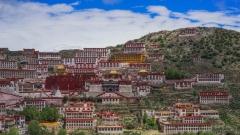

Lhasa is one of the highest major cities in the world, sitting at approximately 3,650 meters (11,975 feet) above sea level on the Tibetan Plateau. For international travelers arriving from low-altitude destinations, the elevation is one of the most important differences to understand before visiting Tibet. The thin air can make ordinary activities feel more demanding during the first few days, while destinations outside Lhasa can be significantly higher. Knowing the altitude of Lhasa, understanding how your body may respond, and allowing enough time to acclimatize can make your Tibet journey much more comfortable.
Key Points About Lhasa Altitude
- Lhasa sits at about 3,650 meters (11,975 feet), so visitors arriving from sea-level or low-altitude regions should expect thinner air and reduced oxygen availability.
- Altitude sickness is possible during the first days in Tibet, but mild symptoms often improve as the body gradually adapts over approximately 1–3 days.
- Many attractions around Lhasa are higher than the city itself, including Yamdrok Lake at about 4,441 meters (14,570 feet) and Namtso at approximately 4,718 meters (15,479 feet).
- A gradual itinerary is one of the most useful ways to adapt, particularly for first-time visitors; spending the first day or two in Lhasa without strenuous activity can help your body adjust.
- Travel beyond Lhasa requires additional preparation, because places such as Everest Base Camp and the Ngari region involve considerably higher elevations and may require a slower itinerary.
How High Is Lhasa?
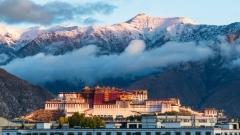
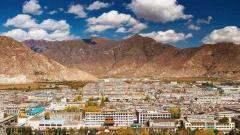
The altitude of Lhasa is approximately 3,650 meters (11,975 feet) above sea level. The city lies in a river valley on the Tibetan Plateau and serves as the capital of the Tibet Autonomous Region as well as one of the most important cultural and religious centers in Tibet.
At this elevation, the atmosphere contains less available oxygen than at sea level. This does not mean that Lhasa is unsafe for ordinary travelers, but it does mean that your body needs time to adapt. Walking uphill, climbing stairs, carrying luggage, or simply moving around the city may feel more tiring than usual during your first few days.
Lhasa is also known as the “City of Sunshine” because of its abundant sunshine, with more than 3,000 hours of sunshine reported annually. The combination of strong sunlight, dry air, cool temperatures and high elevation creates a very different environment from many international travelers’ home cities.
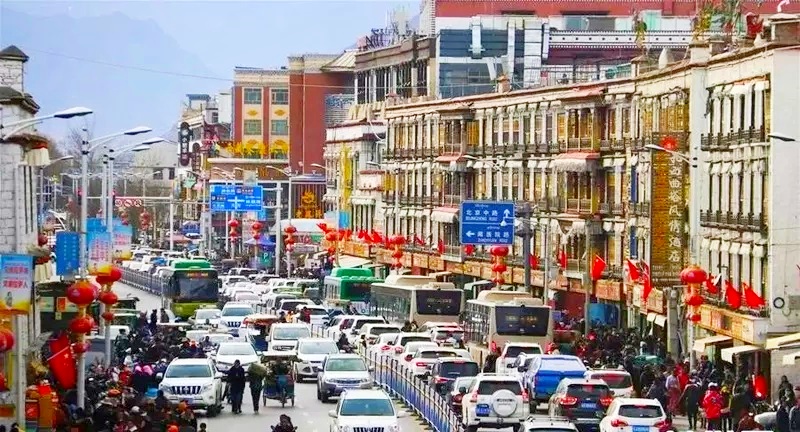
Despite the altitude, Lhasa is a developed urban destination with hotels, restaurants, medical facilities, transportation and other services. Most travelers therefore use Lhasa as the first acclimatization stop before continuing to higher destinations across Tibet.
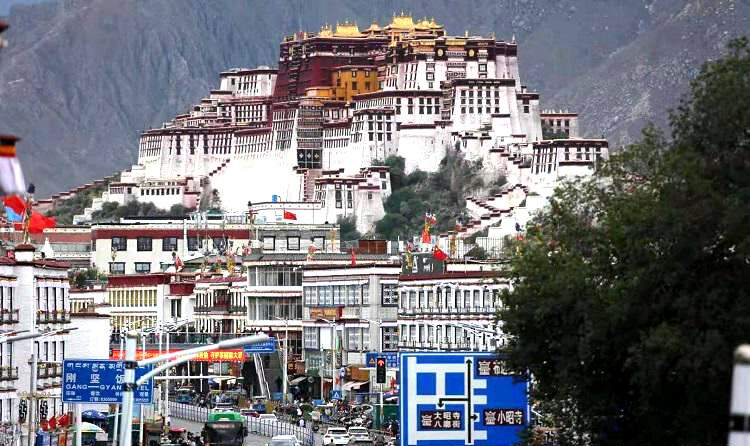
Lhasa City
Why Does Lhasa Altitude Matter to Travelers?
The main issue is not simply the number shown on an altitude chart. The important difference is how your body reacts to the lower atmospheric pressure and reduced oxygen availability at high elevation.
When you arrive in Lhasa from a low-altitude location, your body has not yet fully adapted to the environment. You may breathe more quickly, your heart rate may increase, and you may notice that physical activity requires more effort. Some people feel completely normal, while others experience temporary symptoms commonly associated with altitude sickness.
Typical mild symptoms can include headache, tiredness, reduced appetite, dizziness, difficulty sleeping and shortness of breath during exertion. These symptoms are often most noticeable during the first one or two days and may gradually improve as the body acclimatizes.
This is why a well-designed Tibet itinerary should not treat Lhasa as simply another sightseeing stop. For many international visitors, the first part of the journey should also function as an acclimatization period.
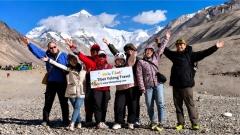
What Is Altitude Sickness?
Altitude sickness refers to a group of symptoms that can occur when a person moves quickly to a high-altitude environment. It is particularly relevant when traveling above approximately 3,000 meters (9,842 feet), although individual reactions vary considerably.
There is no way to predict with certainty who will experience symptoms. Physical fitness alone does not guarantee that someone will adapt easily, and even experienced travelers can react differently on different trips.
Mild altitude-related symptoms can include headache, fatigue, dizziness, loss of appetite, nausea and disturbed sleep. If symptoms are mild, reducing physical activity, resting and allowing additional time for acclimatization can be helpful.
However, serious altitude illness can occur and should not be ignored. Severe or worsening symptoms, especially significant breathing difficulties at rest, confusion, inability to walk normally, or rapidly deteriorating condition, require prompt medical attention and descent to a lower altitude. Travelers with significant cardiovascular, respiratory or other medical conditions should discuss high-altitude travel with a qualified healthcare professional before planning a Tibet trip.
How Long Does It Take to Acclimatize in Lhasa?
There is no universal acclimatization time because people respond differently to altitude. However, many travelers experience the most noticeable adjustment during the first 1–3 days after arriving at high elevation.
For a first visit to Tibet, it is sensible to avoid planning an intensive sightseeing schedule immediately after arrival. Instead, use your first day to rest, stay hydrated, eat light meals and move slowly.
The next day, you can gradually begin exploring Lhasa if you feel well. Major attractions such as the Potala Palace and Jokhang Temple can then be incorporated into the itinerary according to your physical condition.
A private tour can be particularly useful for travelers who want greater flexibility. If someone needs additional rest, the schedule can often be adjusted more easily than on a tightly structured trip.
What Is the Altitude of Lhasa’s Main Districts?
Lhasa is not located at one uniform elevation. The altitude varies significantly across its administrative districts and surrounding areas.
Chengguan District
Chengguan District, the central urban area of Lhasa, has an elevation of approximately 3,650 meters (11,975 feet). This is where many of the city’s best-known attractions are located, including the Potala Palace, Jokhang Temple, Ramoche Temple, Norbulingka, Sera Monastery and Drepung Monastery.
For international visitors, Chengguan District is generally the most important reference point when discussing Lhasa altitude, because it is the main base for sightseeing and accommodation.
Doilungdêqên District
Located west of central Lhasa, Doilungdêqên District has an average elevation of approximately 4,500 meters (14,764 feet). The landscape becomes noticeably more mountainous, and the area includes Tsurphu Monastery, situated at approximately 4,300 meters (14,108 feet).
The higher elevation means travelers should not assume that every destination administratively associated with Lhasa has the same altitude as the city center.
Damxung County
Damxung County lies northwest of Lhasa and has an average elevation of approximately 4,200 meters (13,780 feet), with some areas reaching much higher elevations. One of its most famous attractions is Namtso, whose surface is around 4,718 meters (15,479 feet) above sea level.
This makes a trip from Lhasa to Namtso considerably different from sightseeing within central Lhasa. Visitors should expect colder weather, thinner air and potentially stronger altitude-related effects.
Dagzê District
Dagzê District, east of central Lhasa, has an average elevation of approximately 4,100 meters (13,451 feet). It is home to important cultural attractions such as Ganden Monastery and Drak Yerpa.
Ganden Monastery sits at approximately 3,800 meters (12,467 feet), while some parts of Drak Yerpa are close to 5,000 meters (16,404 feet). Travelers visiting these sites should therefore consider both altitude and the amount of physical walking involved.
Maizhokunggai County
Maizhokunggai County is another high-altitude area east of Lhasa, with an average elevation above 4,000 meters (13,123 feet). Its landscape includes river valleys and grasslands, as well as attractions connected with Tibetan history and Buddhism.
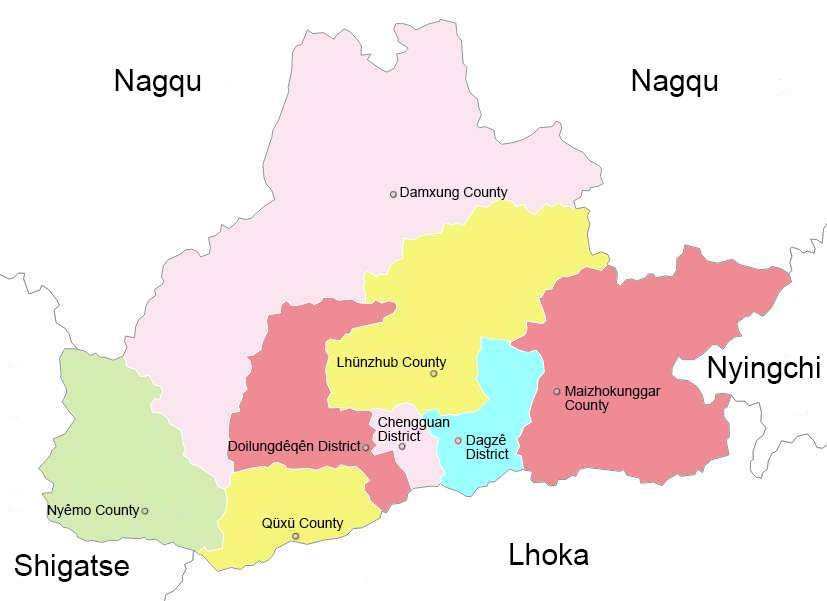
Lhasa’s Main Districts
What Is the Altitude of Places Near Lhasa?
One of the most important things to understand about Tibet travel is that the altitude can rise quickly once you leave Lhasa. A destination that looks relatively close on a map may be hundreds or even more than a thousand meters higher.
Tsedang
Tsedang, located in Shannan approximately 150 kilometers from Lhasa, sits at about 3,560 meters (11,680 feet). Its relatively similar elevation makes it a useful cultural extension of a Lhasa itinerary.
Travelers can visit places such as Samye Monastery, Tradruk Temple and Yungbulakang Palace while exploring the historic Yarlung Valley.
Yamdrok Lake
Yamdrok Lake, one of Tibet’s most famous sacred lakes, is approximately 4,441 meters (14,570 feet) above sea level. It is around 90 kilometers from Lhasa and can be reached by road in roughly 1.5 hours under normal conditions.
The elevation difference between Lhasa and Yamdrok Lake is significant. Even travelers who feel perfectly comfortable in Lhasa may notice the altitude when they reach the mountain passes and lake area.
Gonggar Airport
Lhasa Gonggar Airport is located approximately 60 kilometers from central Lhasa and has an elevation of about 3,570 meters (11,711 feet). This means that travelers flying directly into Tibet begin their high-altitude experience almost immediately after landing.
Because of this, it is particularly important not to schedule strenuous activities immediately after an international flight followed by a flight into Lhasa.
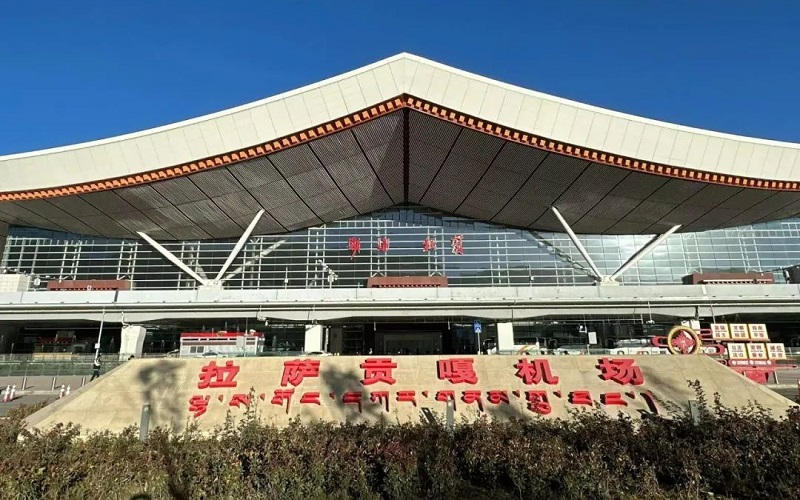
Lhasa Gonggar International Airport
How Can You Prepare for Lhasa Altitude?
Preparation should begin before you arrive in Tibet. You do not need to become an elite athlete to visit Lhasa, but maintaining reasonable physical fitness can make walking and sightseeing more comfortable.
Aerobic activities such as walking, jogging or other moderate exercise can be included in your routine in the weeks before departure. However, physical training cannot completely prevent altitude sickness because acclimatization depends largely on how an individual’s body responds to reduced oxygen availability.
Packing appropriately is equally important. Useful items include sunglasses, sunscreen, comfortable walking shoes, warm layers, rain protection and personal medications. Tibet can experience strong sunlight during the day but much cooler conditions after sunset, so dressing in layers is practical.
Most importantly, arrive with realistic expectations. You may not be able to walk at the same speed or maintain the same level of physical activity as you would at home. Taking things slowly during the first days is not a sign that you are unfit; it is simply part of adapting to the Tibetan Plateau.
How Should You Behave During Your First Days in Lhasa?
The first rule is simple: slow down. Avoid running, strenuous hiking and unnecessary physical exertion immediately after arrival.
Walking slowly is usually better than rushing between attractions. If you need to climb stairs, take your time and stop when necessary. This is especially relevant at attractions such as the Potala Palace, where visitors may encounter considerable stair climbing.
Sleep is also important. Some travelers find it difficult to sleep during their first night at altitude. A quiet first evening and a relaxed schedule can give your body more opportunity to adapt.
Hydration is useful, but there is no need to force excessive amounts of water. Drink regularly according to your thirst and activity level, and remember that Tibet’s dry climate can make you feel dehydrated more quickly.
Alcohol should be avoided or minimized during the initial acclimatization period because it can interfere with sleep and make it harder to judge how your body is responding to altitude.
What Should You Eat at High Altitude?
Your digestive system may feel different at altitude, particularly during the first few days. Large, heavy meals can be uncomfortable, so many travelers find that smaller and easier-to-digest meals work better initially.
Carbohydrate-rich foods can provide a convenient source of energy for sightseeing and walking. Rice, noodles, bread, vegetables and other familiar foods are widely available in Lhasa, alongside Tibetan, Chinese, Indian and other cuisines.
There is no need to force yourself to eat unfamiliar foods simply because you are in Tibet. During the acclimatization period, the priority is to eat enough, stay comfortable and maintain your energy.
Should You Take a Train to Lhasa to Adapt to the Altitude?
Traveling to Lhasa by train is often considered an attractive option for first-time visitors because the journey allows you to spend many hours gradually approaching the Tibetan Plateau.
The Qinghai–Tibet Railway crosses a vast high-altitude landscape of grasslands, mountains and lakes before reaching Lhasa. For travelers who enjoy scenic rail journeys, it can also be one of the highlights of the trip.
However, it is important to understand that a train journey does not eliminate the effects of altitude. The train itself reaches very high elevations, and passengers can still experience altitude-related symptoms. The main advantage is that the journey is gradual rather than an immediate transition from a low-altitude city to Lhasa by air.
Whether flying or taking the train, you should still plan enough time to rest after reaching Lhasa.
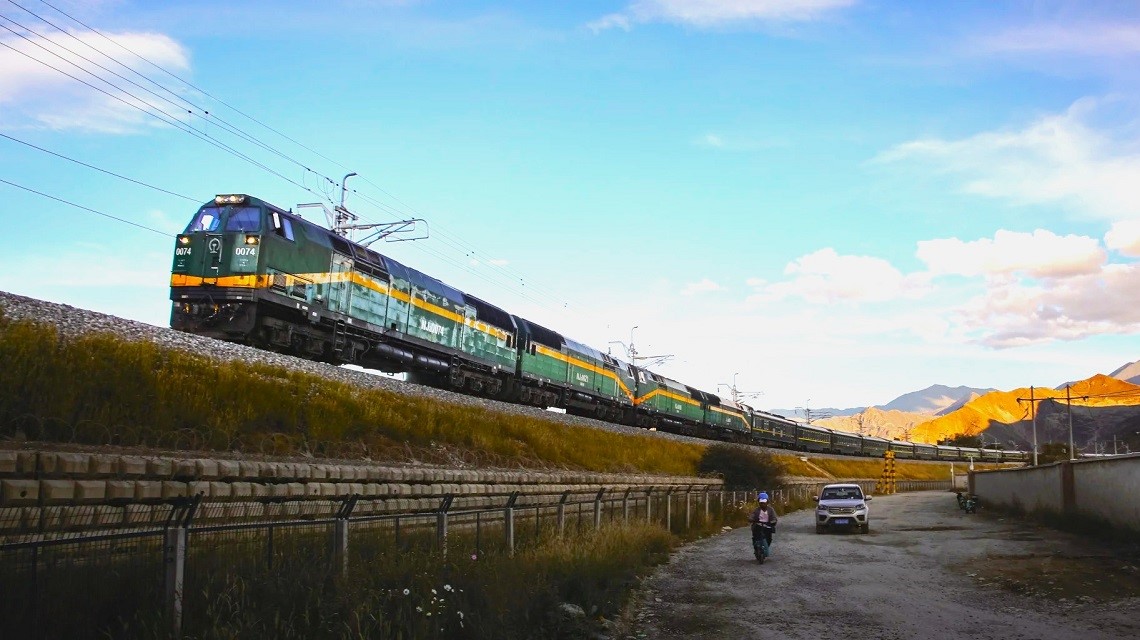
Tibet Train
How Does Lhasa Altitude Compare With Everest Base Camp and Namtso?
Lhasa at approximately 3,650 meters is high, but many popular Tibet destinations are significantly higher.
For example, Yamdrok Lake is around 4,441 meters, while Namtso is approximately 4,718 meters. Everest Base Camp in Tibet is also located at a substantially higher elevation than Lhasa.
Mount Kailash and the Ngari region present an even greater challenge because the journey involves long distances, high mountain passes and extended periods at high altitude.
This is why a Tibet itinerary should be designed progressively rather than simply listing attractions in geographical order. Spending time in Lhasa before traveling farther west or toward Everest can give your body a better opportunity to adapt.
Is Lhasa Safe for First-Time International Visitors?
For most healthy travelers who prepare properly and follow a sensible itinerary, visiting Lhasa is possible. The key is to respect the altitude rather than underestimate it.
The biggest mistake is often trying to do too much too soon. A traveler may feel fine after arriving and assume that they can immediately hike, climb numerous stairs and continue sightseeing at a normal pace. Symptoms can appear later, particularly after physical exertion.
A local guide can also make the journey easier. Guides familiar with Tibet can recognize when travelers are struggling with the altitude and help adjust the daily schedule when necessary. They can also assist with transportation, accommodation and communication, allowing visitors to concentrate on enjoying the journey rather than managing every logistical detail themselves.
When Is the Best Time to Visit Lhasa?
Lhasa can be visited in different seasons, and the ideal period depends on your interests and itinerary. Spring and autumn are popular because of their generally favorable conditions for sightseeing and outdoor travel.
The weather can change rapidly at high altitude, so travelers should prepare for large temperature differences between daytime and nighttime regardless of the season.
Warm clothing remains useful even during relatively mild periods. A combination of layers is generally more practical than relying on one heavy jacket, allowing you to adjust your clothing as temperatures change.
If your itinerary includes higher destinations such as Namtso, Everest Base Camp or Mount Kailash, weather and road conditions become even more important when deciding when to travel.
Practical Lhasa Altitude Checklist
Before traveling to Lhasa, international visitors should keep several points in mind:
Know the elevation. Lhasa is approximately 3,650 meters (11,975 feet) above sea level, considerably higher than most cities around the world.
Allow time to acclimatize. Do not fill your first day with strenuous activities. Give your body time to adjust before moving toward higher destinations.
Stay hydrated and eat sensibly. Drink regularly, choose foods that are comfortable for you and avoid overeating during the initial adjustment period.
Dress in layers. Strong sunlight does not necessarily mean warm temperatures. Nights can be cold, and mountain destinations are often considerably colder than Lhasa.
Take symptoms seriously. Mild discomfort can occur during acclimatization, but severe or worsening symptoms require medical attention and potentially moving to a lower elevation.
Plan higher destinations carefully. Yamdrok Lake, Namtso, Everest Base Camp and western Tibet are much higher than central Lhasa and should not be treated as ordinary day trips without considering altitude.
How Tibet Yulong Travel Helps With High-Altitude Trips
For international travelers, altitude is only one part of planning a Tibet journey. Transportation, permits, accommodation, route design and the pace of the itinerary all need to work together.
Tibet Yulong Travel is a local Tibet travel agency that helps international visitors organize Tibet tours with local guides and transportation. Instead of creating an itinerary based only on distances between attractions, a local travel team can consider elevation changes and arrange a more comfortable progression from Lhasa to destinations such as Shigatse, Everest Base Camp, Namtso or Mount Kailash.
For first-time visitors, the most important thing is not to be intimidated by the number 3,650 meters. Lhasa’s altitude is certainly something to take seriously, but with appropriate preparation, a gradual itinerary and enough time for acclimatization, it does not have to prevent you from experiencing the cultural and natural highlights of Tibet. Planning your trip around how your body adapts to altitude can make the journey safer, more comfortable and much more enjoyable.