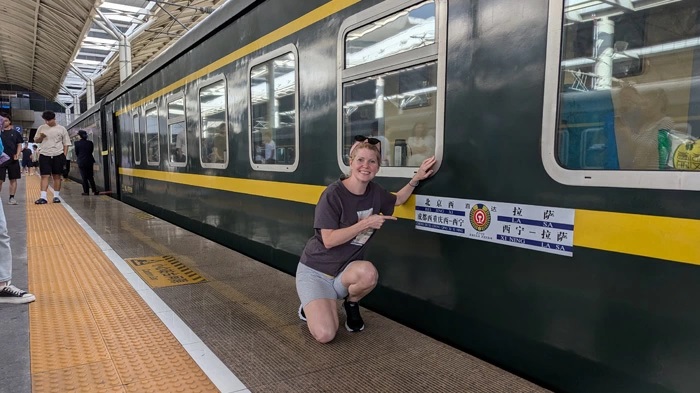
Among all ways to enter Tibet, taking the train remains the most iconic. The Z264 Train (returning as Z266) from Guangzhou to Lhasa stands out as the ultimate rail experience, spanning nearly 50 hours and almost 5,000 kilometers. More than mere transportation, this journey offers a mesmerizing transition from lush southern riverlands to the snow-capped Roof of the World.
Key Takeaways
Longest Rail Journey: The Z264 train takes nearly 50 hours and covers 4,980 kilometers, making it the longest direct rail route to Tibet across multiple climate zones.
Massive Geographic Span: Starting from the subtropical Pearl River Delta (Guangzhou), the route travels north through Central China, across the Northwest plains, and onto the Roof of the World.
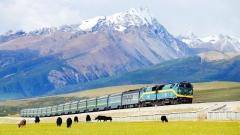
World-Class Scenery: Beyond Xining, the train runs along the premier section of the Qinghai-Tibet Railway, offering views of Qinghai Lake, the Kunlun Mountains, Hoh Xil, Tanggula Pass, and the Qiangtang Grassland.
Ideal Traveler Profile: Perfect for travelers with flexible schedules, photography and railway enthusiasts, first-time visitors seeking gradual altitude acclimatization, and slow-travel advocates.
Origins & History: The Evolution of the Z264 Train
The story of the Z264 began in 2006 with the full opening of the Qinghai-Tibet Railway. Introduced as the T264/265 and T266/263 express services, the route was established to bridge southern China’s coastal economic hub with Tibet.
In 2014, the service was upgraded to the Z264/265 Direct Express. Despite its “Express” classification, safety protocols across high-altitude terrain and major rail intersections keep it as the longest-duration Tibet rail route. Today, it serves as a vital link for commerce and local travel, as well as a bucket-list journey for international travelers worldwide.
Across the Continent: Key Cities and Route Stops
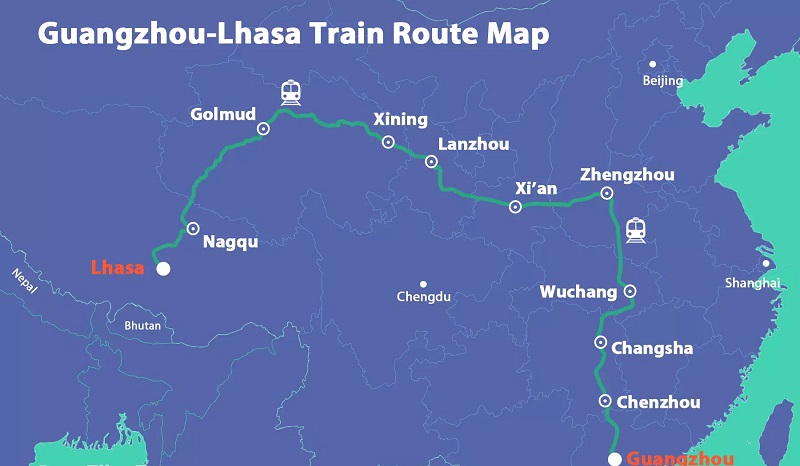
Departing from Guangzhou Station, the Z264 crosses 10 provinces and autonomous regions—including Guangdong, Hunan, Hubei, Henan, Shaanxi, Gansu, Qinghai, and Tibet—covering a total distance of 4,980 kilometers in 49 to 50 hours.
Major Waypoints Along the Route
South & Central China: Guangzhou (Origin), Shaoguan East, Chenzhou, Hengyang, Changsha.
Central Plains: Wuchang (Wuhan), Zhengzhou, Luoyang.
Northwest Rail Hubs: Xi’an, Lanzhou, Xining.
Qinghai-Tibet Plateau: Delingha, Golmud, Nagqu, Lhasa (Destination).
Traveler Note: Upon reaching Xining Station in Qinghai, passengers transfer to a specialized high-altitude train equipped with oxygen-enrichment systems and UV-filtered pressurized windows designed for travel above 4,000 meters.
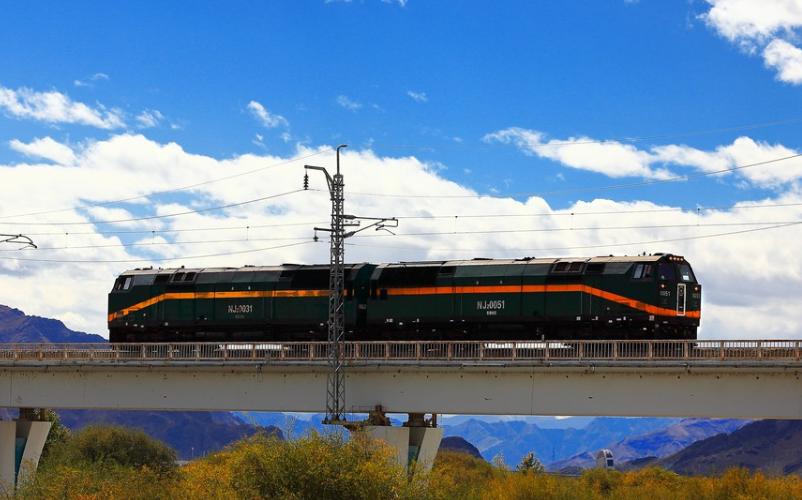
A Moving Gallery: Scenic Highlights Along the Way
The true magic of the Z264 lies in its dramatic landscape transitions. The first 24 hours showcase China’s urban heartland, while the second half opens into world-class high-altitude panoramas.
① Qinghai Lake
Shortly after leaving Xining, the train skirts the northern shores of Qinghai Lake. On clear days, sapphire waters contrast against distant snowy peaks and brilliant rape blossom fields (in summer).
② Qaidam Basin & Salt Lakes
Between Delingha and Golmud, the terrain shifts into the vast, otherworldly desert expanses and salt flats of the Qaidam Basin.
③ Hoh Xil & the Kunlun Mountains
Ascending the Kunlun Mountains, the train enters the Hoh Xil National Nature Reserve, home to Tibetan antelopes and wild donkeys roaming across the high-altitude plains.
④ Tanggula Pass (5,072 meters)
As the highest railway point on Earth, Tanggula Pass offers views of glaciers and snow peaks right outside your window.
⑤ Qiangtang Grasslands & Mt. Nyenchen Tanglha
Entering northern Tibet near Nagqu, endless alpine meadows unfold, dotted with nomadic herds against the backdrop of the majestic Nyenchen Tanglha mountain range.
Who Should Choose the Z264 Train to Tibet?
While a 50-hour train ride requires patience, it offers distinct advantages for specific traveler profiles:
Slow Travel Enthusiasts: Ideal for travelers with generous itineraries who enjoy reading, unwinding, and taking in shifting horizons.
First-Time Visitors & Acclimatization Seekers: The gradual ascent—from sea level at Guangzhou to Xining (2,200m) and onto the plateau—helps the body adjust to higher altitudes compared to direct flights.
Photographers & Rail Fans: Captures China’s full geographic diversity, offering endless opportunities for landscape and documentary photography.
Budget-Conscious Travelers: Sleeper berths offer an affordable alternative to high-season flights while saving two nights of hotel accommodation.
The Z264 train is far more than a rail route; it is an epic journey through geography, culture, and nature. For those seeking an unforgettable passage to Tibet, boarding this sky train from Guangzhou offers a front-row seat to the transformation of landscapes into the pure, sacred beauty of the Himalayas.