Arriving on the Roof of the World is an experience that awakens every sense, and exploring Lhasa Restaurants is a vital part of understanding this ancient city. Beyond the towering monasteries and sacred prayer wheels, the culinary scene offers a deeply comforting way to acclimatize to the high altitude. The food here reflects centuries of trade along the Tea Horse Road, blending hearty pastoral traditions with subtle Himalayan spices. Whether you are seeking a steaming bowl of thukpa after a long day at the Potala Palace or craving a plate of momos tucked away in the winding alleys of Barkhor Street, the dining options will surprise you. Navigating the local food scene requires a bit of insider knowledge. This guide walks you through the most authentic, reliable, and delicious places to eat, ensuring your journey through Tibet is as flavorful as it is memorable.
Key Takeaways:
- Traditional Tibetan staples like tsampa, yak butter tea, and momos are essential dining experiences.
- Barkhor Street and its surrounding alleys host some of the oldest and most authentic eateries.
- Nepalese and Indian restaurants offer excellent vegetarian options and familiar Himalayan flavors.
- High-altitude digestion is slower; eating light, warm meals helps with acclimatization.
- Many traditional teahouses double as social hubs where locals gather daily.
Understanding the Culinary Scene at Lhasa Restaurants
The foundation of Tibetan cuisine is built on survival and sustenance in one of the harshest environments on earth. When you sit down at local Lhasa Restaurants, you will notice that the menus heavily feature ingredients designed to provide warmth and energy. Yak meat is the primary protein, often dried, stewed, or minced into dumplings. Barley, specifically roasted barley flour known as tsampa, is the absolute staple carbohydrate. It is typically mixed by hand with yak butter tea to form a dense, dough-like ball that has sustained nomads and monks alike for centuries.
Yak butter tea itself is an acquired taste for many international travelers. Unlike the sweetened teas common in Western cultures, traditional Tibetan tea is churned with salt and rich yak butter, resulting in a savory, heavy broth that tastes more like a light soup than a beverage. It is highly recommended to try it, as the fats and salts help combat altitude sickness and dehydration. Sweet tea, introduced later through trade routes, is also wildly popular in Lhasa today. Made with black tea, milk, and sugar, it closely resembles Indian chai and is served in almost every teahouse across the city.
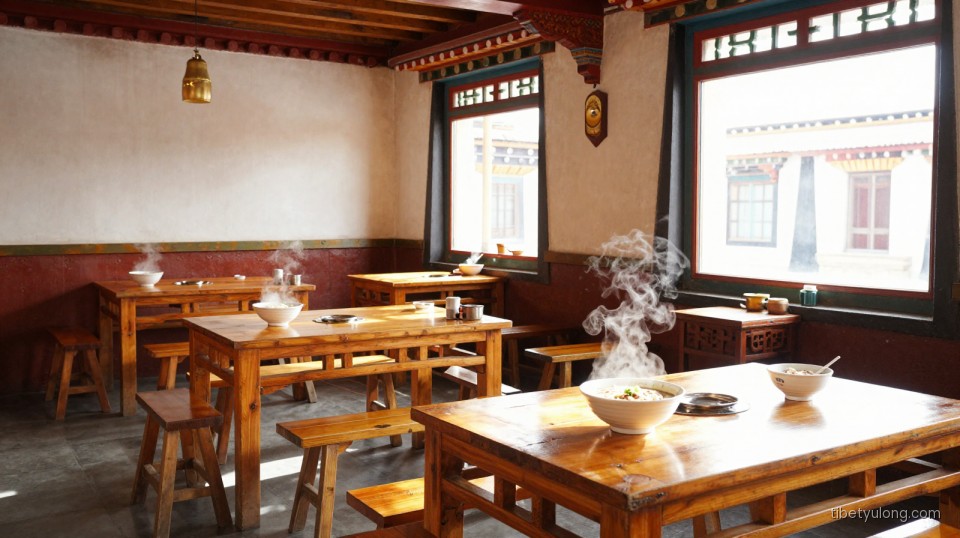
Another cornerstone of the local diet is thukpa, a hearty noodle soup packed with vegetables and either yak or mutton broth. For those who prefer something drier, thenthuk features hand-pulled, flat noodles tossed in a rich, savory sauce. Exploring these foundational dishes provides immediate insight into the culture and history of the region.
Top Traditional Lhasa Restaurants for Authentic Tibetan Food
To truly experience the local flavor, you must venture beyond the large hotel dining rooms and step into the narrow, sun-dappled courtyards of the old town. The area surrounding Jokhang Temple and Barkhor Street is densely packed with historic eateries that have been serving the community for generations.
Makye Ame is arguably the most famous restaurant in the city. Located in a striking yellow building on the southeastern corner of Barkhor Street, it is steeped in legend, famously associated with the 6th Dalai Lama, Tsangyang Gyatso, who was said to have composed poetry here. While it leans slightly tourist-oriented today, sitting on the second-floor balcony overlooking the kora (pilgrimage circuit) while enjoying Tibetan pizza, fried yak cheese, and sweet tea remains an unforgettable experience. The atmosphere alone makes it a mandatory stop.
For a more localized experience, seek out the smaller, unnamed teahouses hidden in the alleyways off Barkhor Street. Places like Gangjintei Teahouse offer a glimpse into daily Tibetan life. Here, elderly residents sit on wooden benches spinning prayer beads, sipping endless thermoses of sweet tea, and playing dice or cards. The food is simple—steamed momos, basic noodle soups, and fried bread—but the cultural immersion is unmatched. These spots are incredibly affordable and operate on a relaxed pace, encouraging you to sit, rest, and observe.
Tibetan Family Kitchen is another standout among Lhasa Restaurants for travelers wanting a hands-on approach. Often operating as both a dining venue and a cultural workshop, these types of establishments allow visitors to learn how to fold momos or mix tsampa before eating the meal they helped prepare. It bridges the gap between tourism and genuine cultural exchange.
Nepalese and Indian Flavors Among Lhasa Restaurants
Due to Tibet’s geographical proximity to Nepal and India, and the historical movement of traders across the Himalayas, South Asian cuisine has deeply influenced the dining landscape. If you find yourself missing familiar spices or requiring strict vegetarian options, the Nepalese and Indian restaurants in Lhasa are outstanding.
House of Shambhala and similar venues located near the old town offer extensive menus featuring dal bhat, chicken tikka masala, garlic naan, and various vegetable curries. The transition from heavy, salty Tibetan fare to aromatic, spice-driven Himalayan food is a welcome change for many palates after several days at high altitude. These restaurants often feature beautiful, carved wooden interiors and cushioned seating, providing a cozy retreat from the dusty streets.
Many of these establishments are run by Nepalese expatriates who have lived in Lhasa for years, ensuring the recipes remain authentic. They also serve as excellent meeting points for international trekkers and overland travelers moving between Kathmandu and Lhasa. The fusion of Tibetan hospitality with South Asian culinary techniques creates a unique sub-genre of dining that you will not easily find elsewhere.
Modern Dining and Chinese Cuisine in Lhasa
Lhasa is a rapidly developing city, and its modern infrastructure supports a wide variety of dining options beyond traditional regional food. Along Beijing East Road and Dekyi Nub Lam, you will find numerous Sichuan hotpot restaurants, Cantonese dim sum parlors, and standard Chinese noodle shops. Because Sichuan province borders Tibet and historically supplied much of its labor and trade, spicy Sichuan food is incredibly prevalent. If you enjoy numbing peppercorns and fiery broths, the hotpot restaurants here rival those in Chengdu.
For travelers who prefer Western comforts, several cafes and bakeries have opened in recent years, catering to the growing number of domestic and international tourists. You can find freshly brewed coffee, croissants, and even pizza in certain boutique hotels and standalone cafes. However, relying solely on imported foods misses the point of traveling to Tibet. It is always better to use these modern conveniences as occasional backups rather than your primary dining strategy.
When planning your itinerary, balancing traditional meals with familiar foods helps prevent digestive fatigue. Working with experienced local operators like Tibet Yulong Travel ensures that your daily schedule accounts for proper meal times and recommends safe, hygienic Lhasa Restaurants tailored to your dietary preferences. Their guides know exactly which kitchens maintain the highest standards, saving you the trial and error of navigating a foreign food scene at 3,650 meters above sea level.
Practical Tips for Dining at Lhasa Restaurants
Eating at high altitude requires a different physiological approach than dining at sea level. Digestion slows down significantly when oxygen levels drop, meaning heavy, greasy meals can lead to discomfort, nausea, or disrupted sleep. During your first two days in Lhasa, prioritize warm, liquid-based foods. Thukpa and clear broths are much easier for your stomach to process than large portions of fried yak meat.
Hydration is critical, but avoid excessive alcohol. While Tibetan barley wine (chang) is a traditional delicacy offered in many local homes and rural teahouses, consuming alcohol during the initial acclimatization period can exacerbate altitude sickness. Stick to sweet tea, boiled water, or mild ginger tea until your body adjusts.
Food safety is generally good in established Lhasa Restaurants, but caution is advised with street food. Avoid raw vegetables or unpeeled fruits that may have been washed in tap water. Opt for foods that are cooked thoroughly and served piping hot. Most reputable restaurants in the city center cater regularly to tourists and maintain strict hygiene standards, but trusting your instincts—if a place looks unsanitary, simply walk next door—is always wise.
Finally, embrace the pacing of the city. Service in traditional teahouses is not rushed. Meals are meant to be savored slowly while resting your legs after hours of walking around monasteries. Tipping is not a widespread custom in local Tibetan eateries, though leaving small change in tourist-focused cafes is appreciated. By approaching the culinary landscape with patience and curiosity, you transform every meal into a meaningful chapter of your Tibetan adventure.