
Mount Everest doesn’t have just one base camp – it has two, and they sit at noticeably different elevations. Because the mountain straddles the border between Tibet (China) and Nepal, each country has developed its own base camp, reached by a completely different route and offering a completely different experience. If you’re deciding which side to visit, understanding the elevation difference – and what that difference actually means for your trip – is a good place to start.
Why Do The Two Everest Base Camps Sit At Different Heights
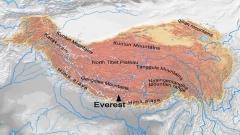
The short answer is geography. Everest Base Camp in Tibet sits on the mountain’s north side, while Everest Base Camp in Nepal sits on the south side, and the terrain on each side happens to level out at a different altitude.
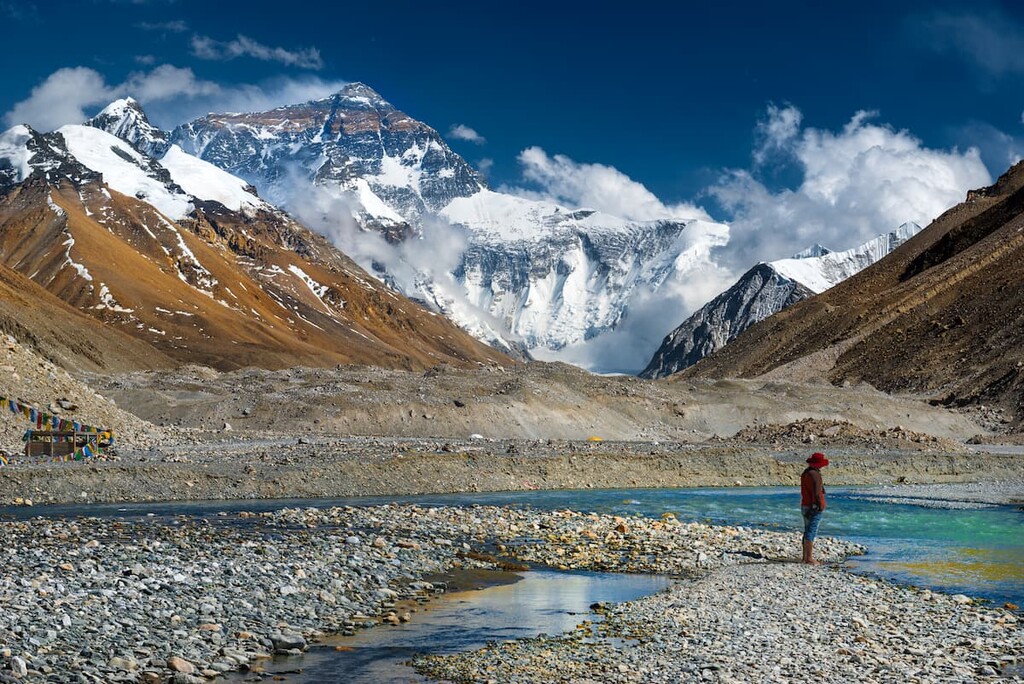
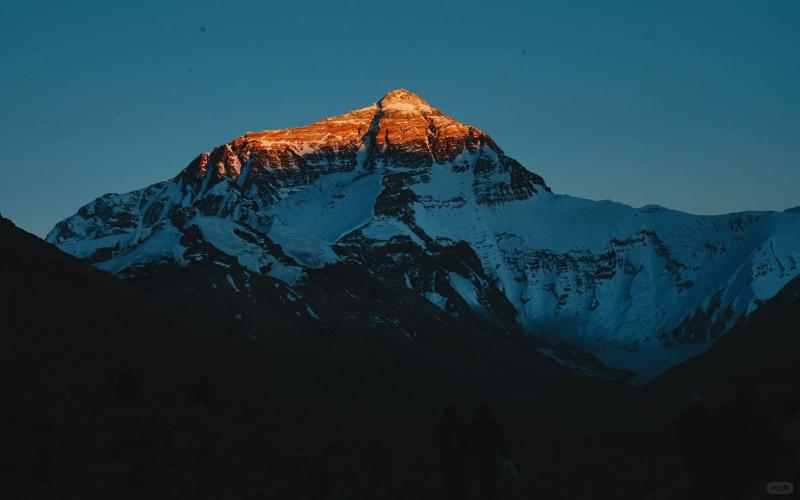
Tibet Everest Base Camp (North Side, around 5,200 meters) lies in Tingri County, within Shigatse Prefecture. It functions mainly as a viewing area for travelers, along with serving as the starting point for expeditions attempting Everest’s northern route.
Nepal Everest Base Camp (South Side, around 5,364 meters) sits inside Sagarmatha National Park, on the opposite face of the mountain. It’s used almost exclusively as the launch point for climbers tackling the southern route, and reaching it requires several days on foot.
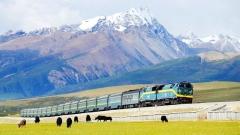
The surrounding landscape differs just as much as the elevation. On the Tibetan side, a paved road leads travelers across the open, high-altitude Tibetan plateau all the way to the base camp area. On the Nepal side, there’s no road at all – visitors trek through the glacier-carved valleys and Sherpa villages of the Khumbu region to reach it.
Mount Everest
How High Is Everest Base Camp On The Tibet Side
Tibet’s Everest Base Camp, often called the North Base Camp, sits at roughly 5,200 meters (17,060 feet) above sea level. That said, a few nearby elevations get mentioned interchangeably, so it helps to see them side by side.
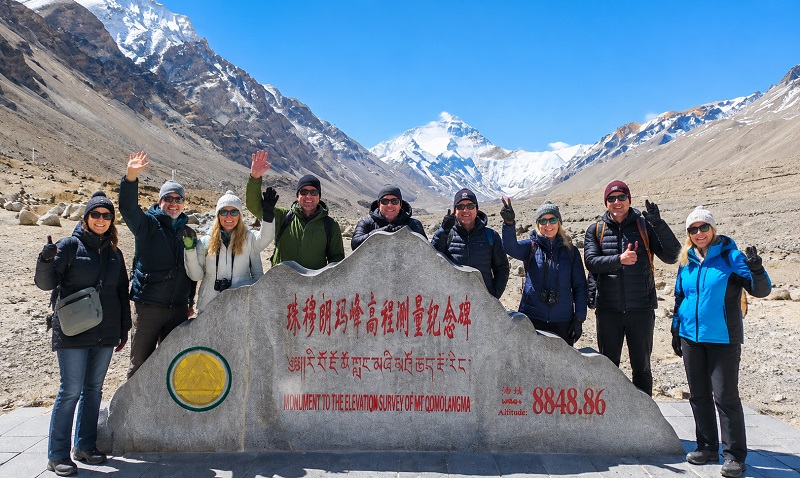
- Mount Everest summit: 8,848.86 m (29,031.7 ft)
- Tibet Everest Base Camp area: around 5,200 m (17,060 ft)
- Tourist viewing area near base camp: around 5,010 m (16,437 ft)
- Rongbuk Monastery: 5,154 m (16,910 ft)
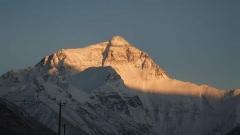
The viewing area currently used by tourists sits slightly below the traditional expedition base camp, a deliberate step taken to protect the fragile environment around the mountain. Even from this lower point, the view of Everest’s north face is still spectacular.
What makes the Tibet side particularly appealing is how it’s reached: entirely by vehicle. A typical journey begins in Lhasa, continues through Shigatse and Tingri, and ends at Everest – no trekking gear required. That road route also happens to double as a natural acclimatization schedule. Spending time in Lhasa (3,650 m) and Shigatse (3,850 m) before pushing on to Everest gives your body several days to adjust before it has to handle 5,200 meters.
How High Is Everest Base Camp On The Nepal Side
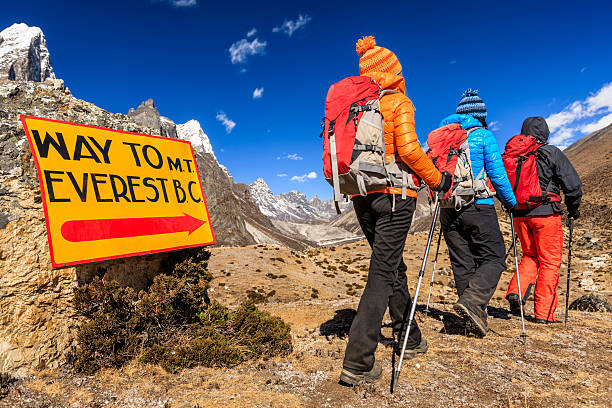
Nepal’s Everest Base Camp, on the mountain’s south side, sits at approximately 5,364 meters (17,598 feet) – noticeably higher than its Tibetan counterpart. Unlike the Tibet side, there’s no road access here at all; reaching it means several days of trekking through the Khumbu region.
Most travelers start with a short flight from Kathmandu to Lukla, then walk for days through mountain villages, forests, and high alpine valleys before arriving at the camp itself.
- Mount Everest summit: 8,848.86 m (29,031.7 ft)
- Nepal Everest Base Camp: 5,364 m (17,598 ft)
- Lukla: 2,860 m (9,383 ft)
- Namche Bazaar: 3,440 m (11,286 ft)
- Gorak Shep (near base camp): 5,164 m (16,942 ft)
This route delivers a classic Himalayan trekking experience – suspension bridges, Buddhist monasteries, traditional Sherpa villages, and some of the most dramatic mountain scenery on earth. It asks a lot more physically than the Tibet side, but in exchange it offers an entirely different perspective on Everest and the surrounding peaks.
Tibet Vs Nepal Everest Base Camp: Which One Is Higher
Between the two, Nepal’s Everest Base Camp is the higher of the pair – about 5,364 meters, compared to roughly 5,200 meters on the Tibet side. That’s a gap of around 164 meters, which sounds small on paper but translates into two very different trips.
- Elevation: Tibet around 5,200 m (17,060 ft); Nepal around 5,364 m (17,598 ft)
- Location: Tibet sits on Everest’s north side, China; Nepal sits on the south side
- Access: Tibet is reachable by vehicle; Nepal requires a multi-day trek
- Main experience: Tibet offers plateau views and Everest’s north face; Nepal offers Himalayan trekking and Sherpa culture
- Best suited for: Tibet suits travelers who want easier access and dramatic views; Nepal suits travelers after a classic trekking adventure
A higher elevation doesn’t automatically mean a harder trip for everyone. The real difficulty comes from how you get there – Nepal’s route means days of trekking at altitude, while Tibet’s road access removes that physical demand entirely, even though the base camp itself sits at a comparable height.
In short: Nepal has the higher elevation, Tibet has the easier access, Tibet offers the better north-face views, and Nepal offers the stronger trekking experience.
Is Everest Base Camp The Highest Point On Everest
No – not even close. Everest’s summit reaches 8,848.86 meters, more than 3,600 meters above either base camp.
- Mount Everest summit: 8,848.86 m (29,031.7 ft)
- Tibet Everest Base Camp: around 5,200 m (17,060 ft)
- Nepal Everest Base Camp: 5,364 m (17,598 ft)
Base camp isn’t the top of the mountain – it’s simply one of the highest points an ordinary traveler can safely reach. For most people, standing above 5,200 meters at the foot of the world’s tallest mountain is already a remarkable achievement in its own right.
What Does 5,200 Meters Actually Feel Like
At 5,200 meters, the air holds roughly half the oxygen you’d breathe at sea level. The first thing most visitors notice is that everyday movement suddenly takes more effort – a short walk, a few steps up a slope, or even carrying a daypack can leave you breathing harder than usual.
Some travelers experience mild altitude symptoms, including shortness of breath, a faster heartbeat, headache, fatigue, or trouble sleeping.
The environment itself feels different too. The air is noticeably dry and thin, making any brisk movement harder work. Temperatures swing sharply, dropping well below freezing in the early morning and at night. And with thinner atmosphere overhead, sunlight feels far more intense, making UV exposure a real concern even on a cool day.
Gradual acclimatization is what makes all of this manageable. On the Tibet route, most travelers spend a few days in Lhasa (3,650 m) and Shigatse (3,850 m) before continuing to Everest, giving the body a chance to adjust in stages rather than all at once – which meaningfully lowers the risk of altitude sickness.
Can Ordinary Travelers Visit Everest Base Camp
Yes – most healthy travelers can, particularly on the Tibet side, where the base camp is reached entirely by road rather than a multi-day trek. Trekking enthusiasts who want the classic approach can still take on the Nepal route with the right preparation.
Build In Time To Acclimatize
Letting your body adjust gradually is the single biggest factor in a comfortable trip. A well-designed Tibet itinerary spreads the altitude gain over several days rather than jumping straight from low elevation to Everest.
Pack With Altitude In Mind
The right gear makes a real difference at height – think warm layered clothing, sunglasses and sunscreen for the intense UV exposure, and comfortable shoes for walking around the viewing area.
Travel With An Experienced Local Agency
Because this is genuinely high-altitude, remote terrain, local expertise matters. A specialized Tibet ground operator can arrange your Tibet Travel Permit and other required documents, book suitable accommodation such as Rongbuk Hotel, provide experienced local guides, plan a sensible altitude schedule, and supply transportation with an oxygen supply on board.
Tibet Yulong builds each Everest itinerary around exactly this kind of gradual acclimatization, pairing it with experienced Tibetan guides so travelers can focus on the scenery rather than the logistics.
Best Time To Visit Everest Base Camp
Spring (April to May) and autumn (September to November) are widely considered the best windows for visiting either base camp, thanks to more stable weather and clearer skies.
Spring And Autumn: Best For Clear Views
These two seasons bring the clearest views of Everest and the surrounding Himalayan peaks, comfortable daytime temperatures, strong conditions for photography, and a lower chance of cloud cover blocking the summit.
Winter: Best For Fewer Crowds
Winter is the coldest stretch of the year at Everest Base Camp, but it comes with real upsides – noticeably fewer tourists, some of the clearest mountain views all year, and the chance to experience Tibetan winter traditions such as the Losar New Year celebrations. Night temperatures do drop well below freezing, so proper cold-weather gear is essential.
Summer: Possible, But Less Predictable
Summer coincides with the monsoon in much of the Himalayas. Tibet sees less rainfall than Nepal, but clouds can still occasionally hide the summit. Travelers visiting in summer should build some flexibility into their plans and allow extra time in case weather affects the schedule.
Mount Everest
Frequently Asked Questions About Everest Base Camp Elevation
How high is Everest Base Camp in Tibet?
Around 5,200 meters above sea level. The tourist viewing area sits slightly lower, at roughly 5,010 meters, but still offers a striking view of Everest’s north face.
How high is Everest Base Camp in Nepal?
Approximately 5,364 meters above sea level, reached via a multi-day trek through Nepal’s Khumbu region.
Which Everest Base Camp is higher, Tibet or Nepal?
Nepal’s base camp is higher, by roughly 164 meters. The elevation gap is small, but the two travel experiences are very different.
Is Everest Base Camp the highest point on Mount Everest?
No. The summit, at 8,848.86 meters, is the highest point – base camp sits near the mountain’s foot, thousands of meters below it.
Can ordinary travelers visit Everest Base Camp?
Yes, with proper preparation. The Tibet side is especially accessible, since it can be reached by vehicle rather than a long trek.
Is Everest Base Camp difficult to reach?
The main challenge is the altitude itself rather than the physical journey. On the Tibet side, the road gets you there – the key is allowing time to acclimatize and avoiding a rushed schedule.
Two Mountains, One Everest: Choosing Your Side
Whether you’re drawn to the open plateau views and easy road access on the Tibet side, or the trekking culture and Sherpa villages of the Nepal route, both base camps put you face to face with the same extraordinary mountain – just from opposite directions and at slightly different heights.
If the Tibet route appeals to you, Tibet Yulong can help design an itinerary that paces the altitude gain properly, arranges the required Tibet Travel Permit, and puts you in the hands of experienced local guides for a comfortable, well-timed journey to 5,200 meters.