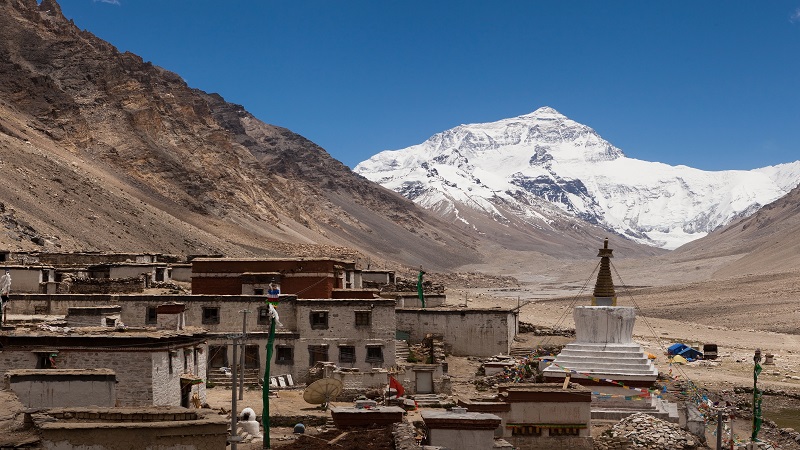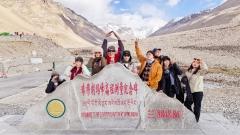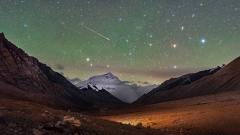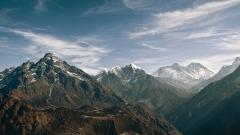

Mount Everest is more than the highest mountain on Earth. Rising dramatically in the Himalayas, it sits along the international border between Nepal and China, with the northern side located in Tibet. For travelers, this unique position means Everest can be experienced from two very different directions, each offering its own landscapes, culture, viewpoints, and travel experience.
Key Takeaways
- Mount Everest is located in the Mahalangur Himal sub-range of the Himalayas, on the border between Nepal and China.
- The mountain reaches 8,848.86 meters (29,031 feet) above sea level, making it the highest point on Earth.
- Everest is known as Sagarmatha in Nepal and Chomolungma in Tibet. Travelers can experience Everest from both the Nepal side and the Tibet side, with different base camps and access routes. The Nepal side is famous for trekking through the Khumbu region, while the Tibet side provides road access to the northern Everest Base Camp.
- Kathmandu and Lhasa are two major gateways for travelers visiting Everest from opposite sides of the Himalayas.
- You do not need to climb Everest to experience its grandeur; trekking, sightseeing, and visiting Everest Base Camp offer more accessible alternatives.
- For international travelers visiting the Tibet side, travel permits and organized local travel arrangements are required.
- A well-planned Tibet Everest journey with a local operator such as Tibet Yulong can combine Everest with Lhasa, Shigatse, Gyantse, and other major Tibetan destinations.
Where Is Mount Everest Located?
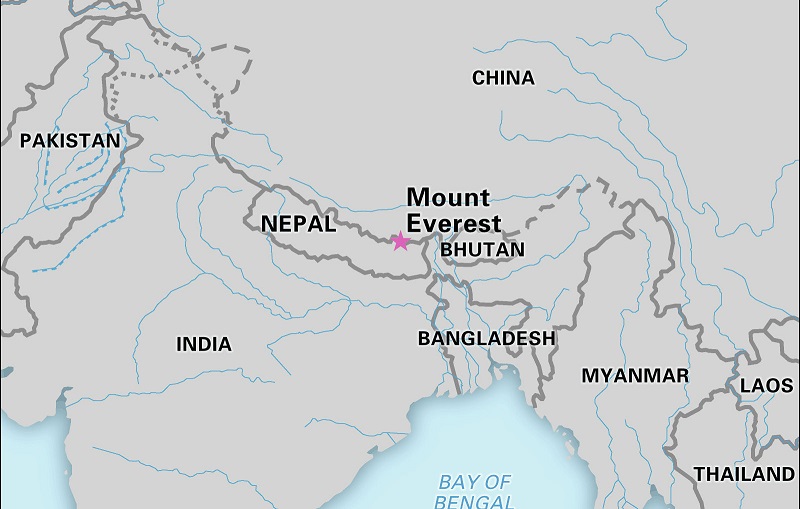
Mount Everest stands in the heart of the Himalayas, along the border between Nepal and China. Geographically, it belongs to the Mahalangur Himal range, one of the most spectacular sections of the Himalayan mountain system.
The mountain is positioned between two dramatically different landscapes. To the south lies Nepal, where the Everest region is associated with the Khumbu Valley, Sherpa communities, trekking trails, and Sagarmatha National Park. To the north is Tibet, part of China, where the landscape opens into the vast Tibetan Plateau and travelers can reach the northern Everest Base Camp by road.
This geographical position is one of the reasons Everest has such a special place in international tourism. The same mountain can be approached from two countries, but the experience is completely different depending on which side you choose.
For travelers interested in Himalayan scenery, the location of Everest also makes it possible to combine the mountain with a broader journey through Nepal or Tibet. A trip to the northern side, for example, can include Lhasa, Shigatse, Yamdrok Lake, Gyantse, and Everest Base Camp, creating a much more comprehensive introduction to the Tibetan Plateau.
Location of Mount Everest
How High Is Mount Everest?
Mount Everest rises to 8,848.86 meters (29,031 feet) above sea level. At this elevation, the summit is almost 9 kilometers above sea level, making the mountain an extraordinary natural landmark as well as one of the greatest challenges in mountaineering.
The extreme altitude is one of the main reasons climbing Everest is so demanding. The higher you travel, the thinner the atmosphere becomes, reducing the amount of oxygen available to the human body. Above 8,000 meters, climbers enter what is commonly known as the “Death Zone,” where prolonged exposure can be extremely dangerous.
However, the extreme elevation does not mean that ordinary travelers must climb the mountain to experience it. Visitors can reach viewpoints and base camp areas on both sides without attempting a summit climb.
On the Tibet side in particular, travelers can travel by vehicle toward the northern Everest Base Camp. This makes the Tibetan side especially attractive to visitors who want to see Everest without committing to a multi-week high-altitude expedition.
What Are the Local Names of Mount Everest?
Mount Everest has different names in the surrounding Himalayan cultures, and these names reflect the mountain’s deep cultural importance.
In Nepal, Everest is commonly known as Sagarmatha, a name associated with the sky and the heavens. In Tibet, it is called Chomolungma, traditionally interpreted as “Goddess Mother of the World.”
These names are more than simple translations of “Mount Everest.” They reveal how the mountain has been understood by local communities for centuries. Long before Everest became an international symbol of adventure, it was already part of the spiritual and cultural landscape of the Himalayas.
For visitors traveling through Tibet, the name Chomolungma is especially significant. The mountain is not simply treated as a geographical object or climbing destination. It forms part of a broader sacred landscape that includes monasteries, high-altitude lakes, glaciers, pilgrimage routes, and traditional Tibetan communities.
Why Is It Called Mount Everest?
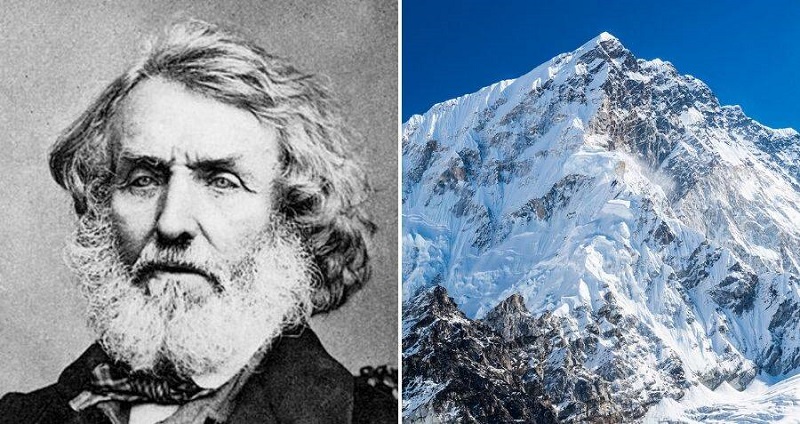
The international name “Mount Everest” comes from Sir George Everest, a British surveyor associated with the Great Trigonometrical Survey of India.
The mountain was officially given the name Mount Everest in the 19th century after Andrew Waugh, who was then Surveyor General of India. Sir George Everest himself had not personally surveyed the mountain, nor had he visited it. Nevertheless, his contribution to surveying and mapping in the region led to the mountain eventually being named in his honor.
Interestingly, Sir George Everest was reportedly not enthusiastic about having the mountain named after him. His surname was difficult to pronounce in many languages, and he preferred the use of local names.
Today, however, Mount Everest has become the internationally recognized name, while Sagarmatha and Chomolungma remain important cultural names used in Nepal and Tibet.
Sir George Everest
Which Countries Share Mount Everest?
Mount Everest is situated along the border between Nepal and China, with the northern side belonging to the Tibet Autonomous Region of China and the southern side facing Nepal.
This geographical arrangement gives travelers two primary ways to experience the mountain.
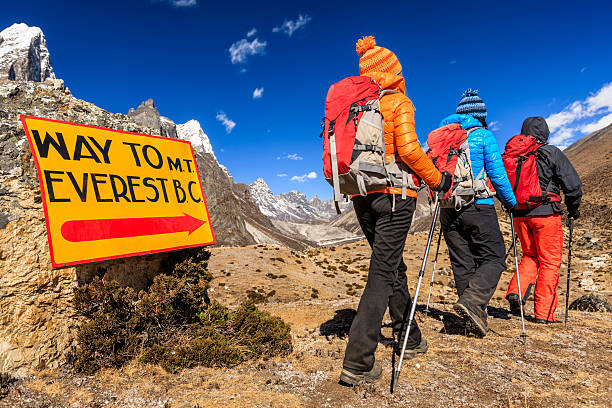
From Nepal, the classic approach takes visitors into the Khumbu region. Trekkers generally travel through mountain villages and valleys before reaching Everest Base Camp. This route is famous for its walking experience, Sherpa culture, suspension bridges, dramatic mountain scenery, and high-altitude trekking.
From Tibet, travelers can reach the northern side of Everest through a road journey across the Tibetan Plateau. The northern Everest Base Camp area provides spectacular views of the mountain and can be incorporated into a broader Tibet tour.
The two sides are therefore not simply two entrances to the same destination. They provide two distinct Himalayan experiences.
Everest From The Nepal Side
The Nepal side is perhaps the most famous approach among international trekkers and mountaineers.
Most visitors begin their journey in Kathmandu before traveling toward the Everest region. The traditional trekking route passes through places such as Lukla, Namche Bazaar, and other settlements in the Khumbu region.
Trekking Through The Khumbu Region
The Nepal route is ideal for travelers who enjoy walking and want to experience the Himalayas gradually. Instead of simply arriving at a viewpoint by vehicle, trekkers spend days moving through mountain valleys, forests, villages, suspension bridges, and high-altitude terrain.
Namche Bazaar is an important stop along the route and serves as a major commercial and acclimatization center for trekkers. The surrounding mountains become increasingly dramatic as travelers move deeper into the Everest region.
This makes the Nepal side particularly attractive for travelers who consider the journey itself as important as the destination.
The Nepal Everest Base Camp Experience
Reaching Everest Base Camp on the Nepal side is a major achievement for trekkers. However, visitors should understand that the actual base camp is not directly at the summit and that reaching it requires considerable physical effort.
The journey involves sustained walking at high altitude, making acclimatization essential. Trekkers need to allow enough time for their bodies to adjust to decreasing oxygen levels.
For travelers whose primary goal is to see Everest rather than complete a demanding trek, the Tibet side can offer a more convenient alternative.
Everest From The Tibet Side
The northern side of Mount Everest offers a very different experience. Instead of undertaking a long trekking expedition, visitors can travel across the Tibetan Plateau by vehicle and reach the Everest Base Camp area by road.
The journey itself is one of the major attractions.
The landscape changes dramatically as travelers leave the urban environment of Lhasa and head toward the Himalayan mountains. High-altitude plains, snow-covered peaks, turquoise lakes, glaciers, Tibetan villages, and Buddhist monasteries gradually become part of the journey.
Why Choose The Tibet Side?
One of the biggest advantages of visiting Everest from Tibet is accessibility. Travelers can approach the northern Everest Base Camp by vehicle, making the experience suitable for people who want to see Mount Everest but are not interested in a long-distance trek.
The Tibetan route can also be combined with several iconic destinations.
A typical journey may connect Lhasa with Shigatse, Gyantse, Yamdrok Lake, Karola Glacier, and Everest Base Camp. Instead of spending the entire trip focused on one mountain, travelers experience a much broader section of the Tibetan Plateau.
The Northern Everest Base Camp
The Tibet Everest Base Camp area offers an extraordinary perspective of Mount Everest’s northern face.
When weather conditions are favorable, the mountain rises dramatically above the surrounding plateau, creating one of the most memorable landscapes in Tibet.
The area around Everest also contains important cultural attractions, including Rongbuk Monastery, which is one of the highest monasteries in the world. Combining the mountain with Tibetan Buddhist culture makes the northern route particularly distinctive.
Nepal Everest Base Camp vs. Tibet Everest Base Camp
Choosing between the two sides depends largely on what kind of journey you want.
If you enjoy trekking, physical challenges, mountain villages, and spending several days walking through the Himalayas, the Nepal side may be the better choice.
If you prefer scenic road trips, high-altitude landscapes, Tibetan culture, monasteries, and convenient access to Everest by vehicle, the Tibet side may be more suitable.
The Nepal Side Is Better For Trekking
The Nepal route is strongly associated with trekking. The journey through the Khumbu region is an important part of the experience, and travelers have the opportunity to interact with local communities and experience traditional mountain life.
The downside is that reaching the Everest region requires more physical effort and more time.
The Tibet Side Is Better For Road Travel
The Tibet route is particularly appealing to travelers who want to experience Everest without completing a long trek.
You can travel from Lhasa toward Shigatse and eventually continue to the northern Everest Base Camp. Along the way, the journey includes some of the most impressive scenery in Tibet.
For first-time visitors to Tibet, this also creates an opportunity to combine Everest with the cultural highlights of Lhasa and central Tibet.
How To Find Mount Everest On A Map
If you want to locate Mount Everest digitally, its commonly used geographic coordinates are approximately 27.9881°N, 86.9250°E.
Open a mapping application such as Google Maps or another global mapping service and search for Mount Everest. The mountain can be found in the Himalayan range close to the Nepal-China border.
Several important destinations help put Everest’s location into perspective.
Kathmandu
Kathmandu is the capital of Nepal and one of the major gateways to the Everest region. It lies southwest of Everest and serves as an important starting point for travelers exploring the Nepal side.
Lukla
Lukla is one of the best-known gateways to the Everest trekking region in Nepal. Many trekkers begin their journey here before continuing toward Namche Bazaar and the higher valleys.
Namche Bazaar
Namche Bazaar is a major settlement in the Khumbu region and an important acclimatization stop for Everest trekkers.
Lhasa
Lhasa is the capital of Tibet and one of the most important gateways to the northern side of Everest. Travelers visiting Everest from Tibet commonly begin by exploring Lhasa before traveling west toward Shigatse and the Himalayan region.
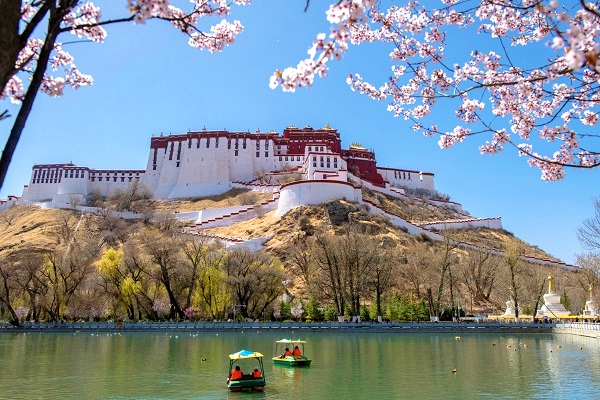
The Potala Palace in Lhasa
How Was Mount Everest Formed?
Mount Everest is the product of enormous geological forces that have operated for millions of years. The Himalayas were created primarily through the collision of the Indian tectonic plate with the Eurasian plate. The Indian plate moved northward and pushed against the Eurasian landmass, compressing and uplifting the Earth’s crust.
Rather than forming suddenly, the Himalayas developed through an incredibly slow process over geological timescales. The rocks that make up Everest were once part of ancient geological formations. Continuous tectonic movement gradually pushed these formations upward, eventually creating the towering mountain landscape we see today.
The process has not completely stopped. The Indian and Eurasian plates continue to interact, meaning the Himalayas remain a geologically active mountain system.
Is Mount Everest Still Growing?
Mount Everest is still subject to geological uplift, although the changes are far too small to notice during a human lifetime.
Tectonic activity continues to affect the Himalayas as the Indian plate moves toward the Eurasian plate. Measurements of mountain uplift vary depending on the location and geological processes being studied, but Everest remains part of an active and changing mountain system.
This is one of the fascinating facts about Everest. The mountain that appears timeless from a distance is actually part of an Earth that is constantly moving.
Why Is Mount Everest So Difficult To Climb?
Everest’s enormous elevation is only one part of the challenge.
Climbers must deal with extremely low oxygen levels, freezing temperatures, strong winds, snow, ice, crevasses, unpredictable weather, and long periods of physical exertion.
The Effects Of Extreme Altitude
At nearly 9,000 meters, the summit environment is fundamentally different from conditions at sea level. The human body cannot remain comfortable at such altitude for long periods, which is why acclimatization and supplemental oxygen are important components of many expeditions.
Ice, Snow, And Crevasses
Depending on the route and season, climbers may encounter unstable ice, crevasses, steep snow slopes, and technically demanding sections.
The mountain therefore requires far more than enthusiasm. Successful expeditions involve detailed preparation, experienced guides, appropriate equipment, weather monitoring, logistics, and carefully planned acclimatization.
When Is The Best Time To See Mount Everest?
The ideal time depends on which side of Everest you visit and what you want to do.
For travelers visiting Tibet, spring and autumn are generally attractive because of relatively stable weather and clearer mountain views. The months around April and May can provide excellent conditions for sightseeing, while September and October are also popular for Himalayan scenery.
Nepal’s main trekking seasons are also associated with periods of clearer skies and more favorable mountain conditions.
Spring
Spring brings warmer conditions and gradually improving travel conditions. In the Everest region, blooming vegetation can add another layer of beauty to the Himalayan landscape.
Autumn
Autumn is widely considered one of the most favorable periods for Himalayan travel. After the summer monsoon, skies often become clearer, creating better opportunities for mountain photography and panoramic views.
Summer
Summer coincides with the monsoon season on the Nepal side. Rain can affect trekking routes and visibility, while mountain views may be obscured by clouds.
On the Tibet side, summer can still be suitable for travel, but weather conditions around Everest can change quickly.
Winter
Winter brings cold temperatures and challenging conditions at high elevations. However, Tibet can also offer exceptionally clear skies and fewer tourists during the colder months.
Travelers considering Everest in winter should prepare carefully for low temperatures and check current road and weather conditions before departure.
Can You Visit Mount Everest Without Climbing It?
Absolutely. In fact, the vast majority of people who visit Everest do not attempt to climb the summit. There are several ways to experience the mountain without becoming a mountaineer.
Travelers can trek toward Everest Base Camp, visit viewpoints, take photographs, explore nearby villages, or travel by vehicle to the Tibet Everest Base Camp area.
For many international tourists, seeing the mountain from a base camp is more than enough. Standing beneath an 8,848-meter peak and watching the sunlight change across its snow-covered face can be an unforgettable experience without the risks associated with a summit expedition.
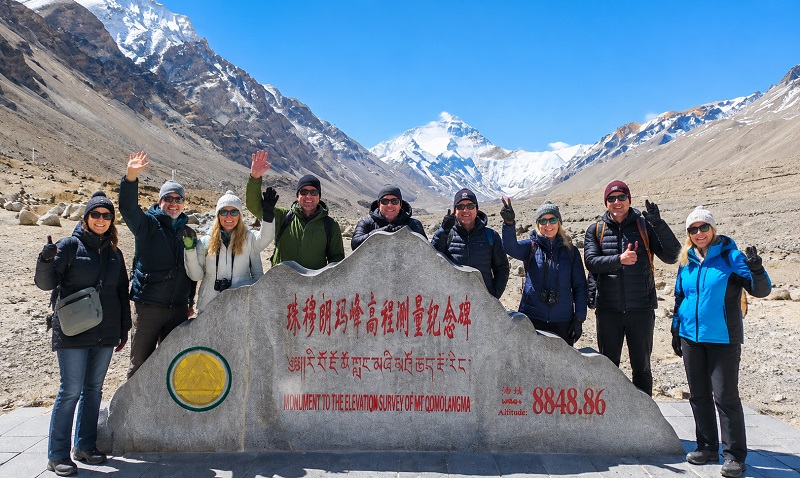
Mount Everest
How Much Does It Cost To Climb Mount Everest?
Climbing Mount Everest is an entirely different undertaking from visiting Everest Base Camp.
A full expedition can cost tens of thousands of US dollars and may require around two months or more when preparation, acclimatization, climbing, and logistical arrangements are included. Major expenses can include climbing permits, high-altitude equipment, professional guides, Sherpa support, oxygen, food, accommodation, transportation, insurance, expedition logistics, and emergency arrangements.
The exact cost varies significantly depending on the route, operator, services, expedition length, and level of support. For ordinary travelers, an Everest Base Camp tour is considerably more practical than a summit expedition.
Is Everest More Famous From Nepal Or Tibet?
Both sides of Everest have international significance, but they attract different types of travelers.
Nepal has long been associated with the classic Everest trekking experience. Its trekking infrastructure, Sherpa communities, and famous routes have made the southern side extremely popular among hikers and mountaineers.
Tibet offers a different attraction: the ability to combine a visit to Everest with an extensive cultural and road journey across the Tibetan Plateau.
Rather than asking which side is “better,” it is more useful to ask what kind of experience you want. If your dream is to trek through the Himalayas, Nepal may be your preferred destination. If you want a road adventure through Tibet and a relatively accessible view of Everest’s northern face, Tibet can be an excellent choice.
Why Visit Everest From Tibet?
For international travelers already interested in Tibet, Everest can be one of the highlights of a broader Tibetan journey.
Instead of flying directly into the mountains, you can begin in Lhasa and gradually travel toward the Himalayas. This allows you to experience Tibetan culture before entering the high-altitude mountain environment.
A typical journey can include Lhasa’s Potala Palace and Jokhang Temple, the ancient streets around Barkhor, Shigatse’s Tashilhunpo Monastery, Gyantse, Yamdrok Lake, Karola Glacier, and eventually Everest Base Camp.
This combination creates a journey with several layers: Tibetan history, Buddhist culture, high-altitude lakes, glaciers, Himalayan peaks, and finally Mount Everest.
What Can You See On A Tibet Everest Journey?
The journey to Everest is not simply a transfer from one city to another. The road itself becomes part of the destination.
Lhasa
Lhasa is the cultural starting point for many Tibet journeys. The Potala Palace, Jokhang Temple, and Barkhor Street introduce travelers to the religious and historical heart of Tibet.
Shigatse
Shigatse is Tibet’s second-largest city and home to Tashilhunpo Monastery, one of the most important monasteries in the region.
Yamdrok Lake
Yamdrok Lake is famous for its striking turquoise color and dramatic mountain surroundings. It is regarded as one of Tibet’s sacred lakes and is an important stop on many routes between Lhasa and western Tibet.
Karola Glacier
Karola Glacier provides a close look at the high-altitude glacial landscape of Tibet. Its enormous walls of ice contrast sharply with the surrounding dry plateau.
Everest Base Camp
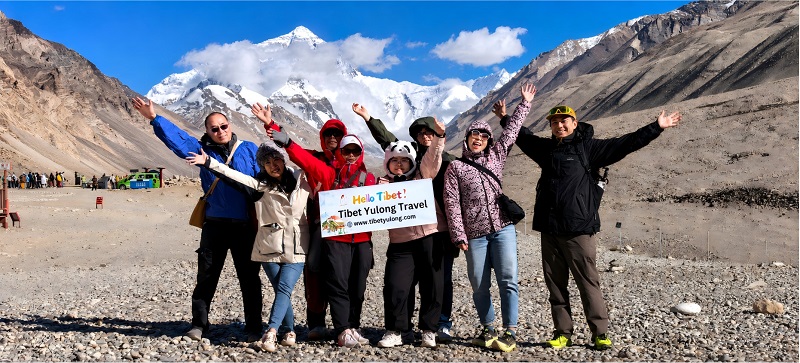
The final highlight is the northern Everest Base Camp area, where travelers can enjoy views of Mount Everest’s north face when weather conditions permit.
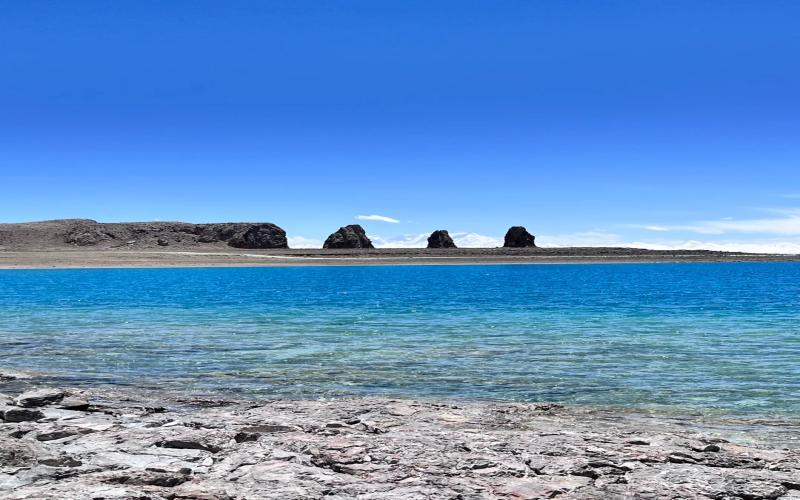
Yamdrok Lake
Can International Tourists Visit Everest In Tibet?
Yes, international travelers can visit the Tibet side of Mount Everest, but Tibet tourism is subject to specific travel requirements.
International visitors cannot simply arrive independently in Lhasa and travel wherever they want. Tibet Travel Permits and other necessary travel arrangements must be organized in advance through an authorized local travel agency.
This is particularly important for travelers planning to visit Everest because the route involves areas requiring additional permits and organized transportation.
Tibet Travel Permit
The Tibet Travel Permit is an essential document for international travelers entering Tibet. A registered local travel agency normally handles the application process based on the traveler’s passport and visa information.
Additional permits may be required depending on the destinations included in your itinerary.
Why Use A Local Travel Agency?
Working with a local Tibet travel agency can simplify transportation, permits, accommodation, guides, and route planning.
This is especially useful for Everest journeys because conditions at high altitude can change quickly, and travel arrangements need to be coordinated across multiple destinations.
A local team can also adjust the itinerary according to road conditions, weather, permit requirements, and the traveler’s preferred pace.

Tibet Travel Permit – Tibet Yulong
A Complete Everest Experience With Tibet Yulong
For international travelers who want to visit Mount Everest from the Tibet side, Tibet Yulong can help organize a complete Tibet journey rather than simply arranging transportation to the mountain.
A well-designed itinerary can begin in Lhasa, allowing travelers time to explore the Potala Palace, Jokhang Temple, and Barkhor Street before heading toward Shigatse. From there, the journey can continue through Yamdrok Lake, Karola Glacier, and other high-altitude landscapes before reaching the northern Everest Base Camp.
The advantage of arranging the journey with a local Tibet travel agency is that the experience can be planned around the entire route rather than one destination. Transportation, accommodation, permits, local guides, and travel timing can be coordinated together, making the journey easier for international visitors who may be unfamiliar with Tibet’s high-altitude environment and travel regulations.
Mount Everest may be the headline attraction, but the journey across Tibet is what turns a visit to the mountain into a complete Himalayan adventure.
Frequently Asked Questions About Mount Everest
Where exactly is Mount Everest?
Mount Everest is located in the Mahalangur Himal section of the Himalayas, along the border between Nepal and China. The northern side is in Tibet, while the southern side faces Nepal.
How tall is Mount Everest?
Mount Everest is 8,848.86 meters (29,031 feet) above sea level, making it the highest mountain on Earth.
Can tourists visit Mount Everest without climbing?
Yes. Tourists can visit Everest Base Camp areas on both the Nepal and Tibet sides without attempting to climb the summit.
Is Everest in Nepal or Tibet?
Everest is located along the border between Nepal and China, with the northern side in Tibet. Therefore, it is inaccurate to describe Everest as belonging exclusively to either Nepal or Tibet.
Which side of Everest is easier to visit?
The answer depends on the type of travel. The Tibet side is particularly convenient for travelers who prefer road access to the Everest Base Camp area, while the Nepal side is famous for its trekking routes.
What is Everest called in Tibet?
Everest is known as Chomolungma in Tibetan, a name associated with the mountain’s sacred and cultural significance.
What is Everest called in Nepal?
In Nepal, Mount Everest is known as Sagarmatha.
Can international tourists visit Everest from Tibet?
Yes, but international travelers need to follow Tibet’s travel regulations and obtain the required permits through an authorized travel agency.
Where Is Mount Everest And Which Side Should You Visit?
So, where is Mount Everest? The simplest answer is that the world’s highest mountain stands along the border between Nepal and China, with its northern face rising above the Tibetan Plateau and its southern side extending toward Nepal’s Khumbu region.
But knowing its location is only the beginning. Everest is surrounded by some of the world’s most extraordinary landscapes and cultures, from Sherpa villages and Himalayan trekking trails in Nepal to Tibetan monasteries, sacred lakes, glaciers, and vast high-altitude plains in Tibet.
For travelers who want a more accessible Everest experience, the Tibet side is particularly appealing because the northern Everest Base Camp can be reached as part of an overland journey. With a carefully planned route from Lhasa through Shigatse and onward to Everest, you can experience much more than a single mountain.
If your dream is to stand beneath the world’s highest peak, photograph its snow-covered summit, and experience the landscapes of the Himalayas without undertaking a full-scale climbing expedition, a Tibet Everest tour with Tibet Yulong can be an unforgettable way to make that dream a reality.