
Lhasa is home to three of Tibet’s most significant Buddhist sites, and each offers a completely different window into the region’s spiritual life. Jokhang Temple sits at the heart of the old city, revered as Tibet’s holiest shrine. Drepung and Sera Monasteries, both perched on the city’s outskirts, are sprawling monastic universities where the daily rhythms of monk life continue much as they have for centuries.
If you’re trying to figure out which to prioritize, how much time to set aside for each, or simply how to fit all three into a short trip without overexerting yourself at altitude, this guide breaks down exactly what makes each site unique.
Jokhang Temple: The Spiritual Heart of Tibet
If your goal is to experience centuries-old pilgrimage traditions and stand at the true spiritual center of Tibetan Buddhism, Jokhang Temple should top your list in Lhasa.
Built in the 7th century, Jokhang Temple is one of three UNESCO World Heritage Sites in the city, alongside the Potala Palace and Norbulingka. As the most sacred temple in Tibet, it’s also considered the first major structure built in Lhasa, marking the very beginning of the city’s development and the early arrival of Buddhism on the plateau.
According to tradition, the temple was commissioned by the 33rd king, Songtsen Gampo, to commemorate his marriage to Princess Bhrikuti of Nepal. Visiting Jokhang today means standing at the literal starting point of Lhasa’s history, in the spot where the holy city first took form.
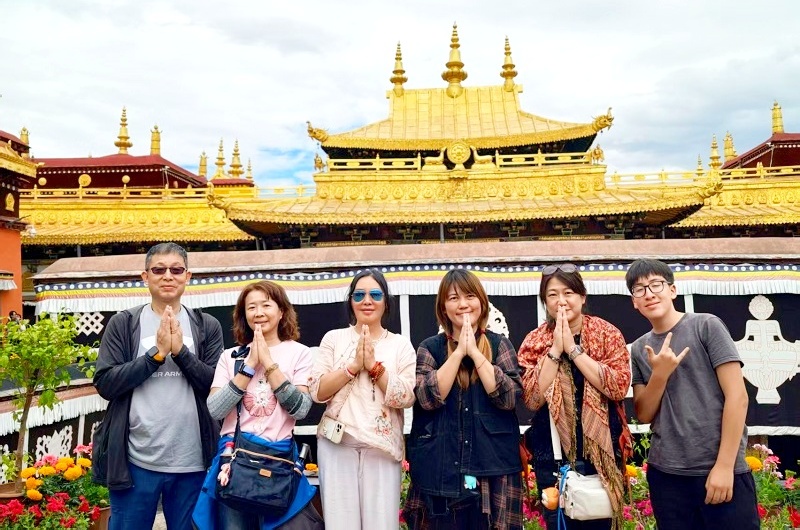
Jokhang Temple
The 12-Year-Old Shakyamuni Buddha Statue
Inside Jokhang Temple, surrounded by ancient murals and intricate wood carvings, sits the temple’s most treasured relic: a life-size statue of the 12-year-old Shakyamuni Buddha, known as the Jowo Shakyamuni.
This statue is said to have been brought to Tibet by Princess Wencheng of the Tang Dynasty more than 1,300 years ago. It’s one of only three life-size representations of Shakyamuni Buddha at this particular age known to exist anywhere in the world, and this 1.5-meter figure is widely considered the most elaborately adorned of the three. The statue is set with precious stones, draped in silk and jewelry, and framed by silver pillars carved with dragon motifs.
For Tibetans, standing before this statue is akin to encountering the living presence of the Buddha himself. It’s not unusual to see pilgrims who have traveled for months, walking or performing full-body prostrations the entire way, arriving here simply to offer a single prayer. Visitors are welcome to join local worshippers in this moment of devotion, and for many travelers, it becomes one of the most memorable experiences of their entire trip to Tibet.
Walking the Barkhor Kora
Beyond the temple’s treasures and architecture, stepping outside leads directly into Barkhor Street, a lively one-kilometer pilgrimage circuit that wraps around the temple.
Here, you’ll witness the most authentic expression of Tibetan pilgrimage life. Devout pilgrims perform full prostrations and walk clockwise around the temple as an act of devotion, and visitors are welcome to walk alongside them, spinning prayer wheels, murmuring mantras, and taking in the scent of burning juniper incense drifting through the street.
This multi-sensory experience feels entirely different from anything you’ll encounter at Drepung or Sera, and it’s precisely why Jokhang Temple remains such an essential stop for anyone hoping to understand Tibetan spiritual life firsthand.
Location and Accessibility
Jokhang Temple sits right in central Lhasa, within the Barkhor district. It’s easy to reach on foot from most downtown hotels, and the surrounding streets are flat and lined with lively local teahouses, making it simple to pause for a cup of Tibetan sweet tea while soaking in the neighborhood’s everyday rhythm.
Drepung and Sera, by contrast, sit further out — Drepung to the west and Sera to the north — and both are large, spread-out complexes that generally require a vehicle transfer and more time to explore comfortably.
Drepung Monastery: Where Monastic Life Comes Alive
If your priority is understanding how Tibetan monks actually live, study, and practice their faith day to day, Drepung Monastery offers the deepest look available in Lhasa.
As one of the “Great Three” Gelug monasteries in the city (alongside Ganden and Sera), Drepung spans roughly 250,000 square meters and once housed more than 7,700 monks at its peak. Walking through this vast complex, you’ll notice vibrant Buddhist imagery and depictions of Tsongkhapa, founder of the Gelug school, painted directly onto the towering rock faces surrounding the monastery.
Compared to Jokhang and Sera, Drepung offers a more intimate, extended glimpse into the daily rhythms of monastic life than anywhere else in the city.
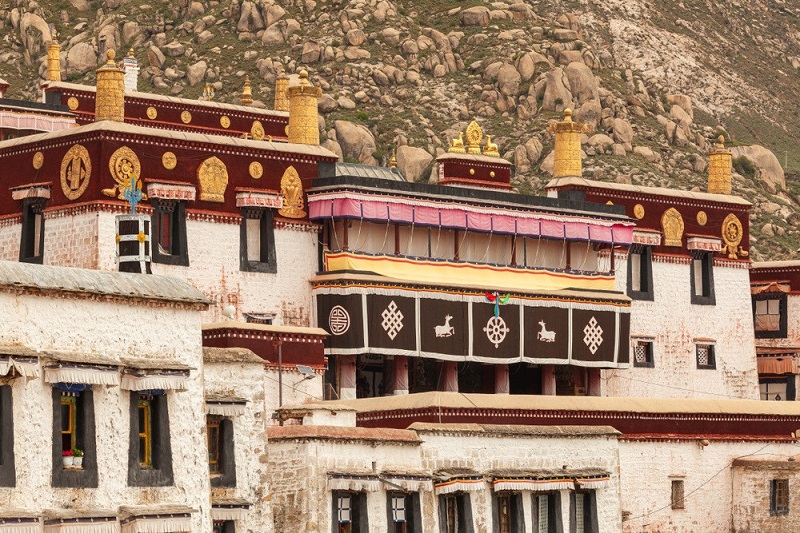
Drepung Monastery
Highlights Worth Seeking Out
- The Main Assembly Hall (Coqen Hall) serves as the spiritual center of the monastery. Time your visit right, and you may witness hundreds of monks gathered together, their deep chanting resonating through the hall’s 182 ancient, painted pillars.
- Ganden Phodrang offers a genuinely powerful sense of history. Long before the Potala Palace expanded into its current form, this building served as the residence of the second through fifth Dalai Lamas, and that historical weight is still palpable today.
- Loseling College, the largest of Drepung’s colleges, has served as a center of Buddhist philosophical study and debate for centuries. Walking its courtyards, you might catch the sound of chanting or glimpse young monks deep in study, all set against a quiet but unmistakably scholarly atmosphere.
- The monks’ kitchen and dormitories offer a rare, practical look at daily monastic life. Drepung is home to Tibet’s largest monastery kitchen, where enormous copper woks are still used to prepare tea and tsampa for the resident monks, while the surrounding dormitories hint at the simple, disciplined routines that structure their days.
- The giant Thangka wall becomes the focus of the Shoton Festival each August, when an enormous Buddha scroll is unfurled at dawn before thousands of gathered worshippers — one of the most visually striking events in the Tibetan Buddhist calendar.
- Sweeping views over the Lhasa Valley round out the experience. Built into the slopes of Mount Gambo Utse, Drepung offers panoramic views that feel especially dramatic after stepping out from the dim, incense-filled halls into the open mountain air.
Sera Monastery: Home of the Famous Monk Debates
If witnessing Tibet’s iconic monk debates is high on your list, Sera Monastery is where you’ll want to be.
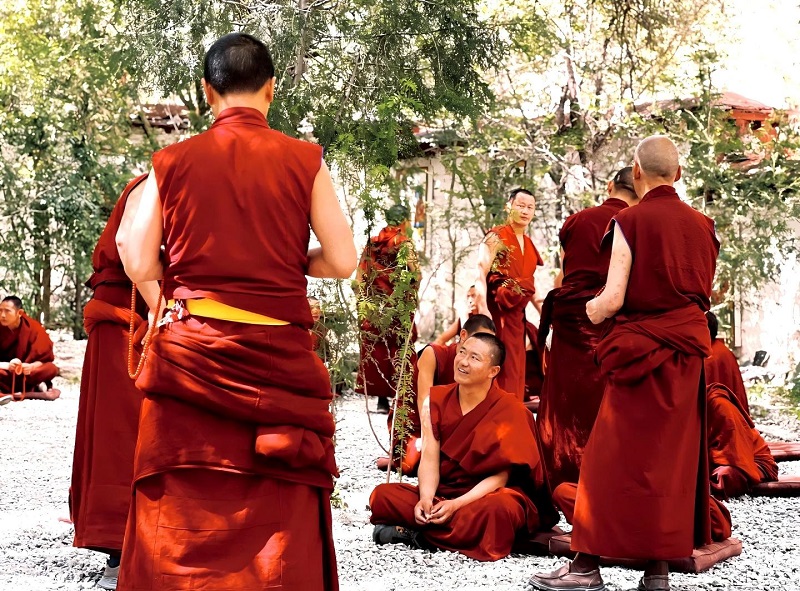
In fact, most of the widely circulated photos of Tibetan monks clapping their hands, stepping forward dramatically, and engaging in animated exchanges were taken right in Sera’s debating courtyard. Every afternoon, typically between 3:00 and 5:00 pm, Monday through Saturday, the courtyard fills with energy and motion as monks gather in small groups for what looks, at first glance, like a heated argument but is actually a highly structured, centuries-old method for studying Buddhist philosophy.
Sera Monastery
Understanding the Debate Ritual
The atmosphere is electric. One monk stands, posing questions with sharp, deliberate gestures, while a seated partner responds with calm composure.
The physical gestures carry real meaning. The standing monk raises his right hand high before bringing it down in a forceful clap, stamping his left foot simultaneously. This clap symbolizes wisdom cutting through ignorance and confusion — lowering the hand represents turning away from suffering, while raising it reflects a wish to help all sentient beings find relief from it.
The verbal exchange moves quickly, with the questioner firing rapid Tibetan phrases while leaning in with animated body language, challenging the seated monk to respond. The defender, in turn, remains composed, drawing on classical Buddhist texts to construct a logical response.
Even without understanding a word of Tibetan, visitors can feel the intensity and quick thinking on display. Guides on-site typically explain the meaning behind specific gestures, helping travelers appreciate a tradition that has been practiced, largely unchanged, for centuries.
Comparing the Monk Debate Experience Across All Three Sites
Sera Monastery remains the best and most reliable place to witness this tradition, with debates held daily in the afternoon, Monday through Saturday, offering a lively, dramatic, and highly visible spectacle.
Drepung Monastery also holds debates, though they occur less consistently and typically take place in inner courtyards that are harder for visitors to access comfortably. The atmosphere here tends to feel quieter and more academic by comparison.
Jokhang Temple, meanwhile, rarely hosts debates at all. The one exception is the highest-level Geshe Lharampa examination, held around early April each year in the temple’s main courtyard — a solemn, intense event that isn’t oriented toward tourist viewing.
For most travelers hoping to witness this iconic tradition, Sera Monastery is clearly the top choice.
A Recommended 3-Day Itinerary for Balancing Altitude and Monastery Visits
For first-time visitors to Tibet, spending your first three days in Lhasa, which sits at roughly 3,650 meters, gives your body time to adjust to the altitude while still covering the city’s essential sights.
Day 1: Arrival and Acclimatization
Keep your first day deliberately relaxed. After arriving at altitude, your body needs time to adjust before tackling anything strenuous.
Rest at your hotel rather than rushing out to explore. Avoid overly physical activity, like running or jumping, which can increase your risk of acute altitude sickness. Drink water consistently throughout the day, and skip hot showers for your first couple of nights, since they can increase oxygen consumption and leave you feeling more fatigued than necessary.
Day 2: Monastic Life and Monk Debates at Drepung and Sera
By your second morning, your body should feel noticeably better adjusted, making this an ideal time to explore Lhasa’s monasteries at a comfortable pace.
Head to Drepung Monastery in the morning, since most halls close by early afternoon. Wandering its courtyards and hillside paths offers a genuine sense of monastic rhythm, from chanting and study to quiet, everyday devotion.
After lunch, continue to Sera Monastery on the northern edge of the city. Arriving in the afternoon window between 3:00 and 5:00 pm lets you catch the famous monk debates in full swing, complete with the energetic clapping, rapid questioning, and calm philosophical responses that make this tradition so compelling to witness firsthand.
Day 3: Potala Palace and Jokhang Temple
By your third day, your body should be well adjusted to the altitude, making it easier to explore Lhasa’s most iconic landmarks without feeling drained.
Start your morning at the Potala Palace, sitting at roughly 3,700 meters. With better acclimatization behind you, climbing its long stone stairways becomes noticeably more manageable. Moving through the White and Red Palaces takes you through centuries of history, past the former living quarters of successive Dalai Lamas, elaborate gilded burial stupas, and ancient murals. Take the stairs slowly, and don’t rush past the sweeping views over the Lhasa Valley along the way.
In the afternoon, head into the old quarter to visit Jokhang Temple. Arriving sometime between 1:00 and 3:00 pm typically means the busiest morning pilgrim crowds have thinned out, leaving the temple feeling calmer and more intimate. Inside, you’ll stand before the revered Jowo Shakyamuni statue and take in the temple’s ancient murals, sacred relics, and timeless architecture without feeling rushed.
Afterward, join the stream of pilgrims walking clockwise around the temple to experience the Barkhor Kora firsthand, then settle into a local teahouse for a cup of Tibetan sweet tea, a relaxing way to close out your first three days in the city.
Frequently Asked Questions About Jokhang Temple, Drepung and Sera Monasteries
Why Do Pilgrims Walk Clockwise Around Jokhang Temple?
In Tibetan Buddhism, walking clockwise around a sacred site is known as kora, or circumambulation. It’s believed to help accumulate merit, receive blessings, gain protection from Buddhist deities, and purify one’s spirit. Pilgrims walk or prostrate along the one-kilometer Barkhor circuit around Jokhang Temple specifically to show devotion to the Jowo Shakyamuni statue enshrined within.
How Much Time Should I Spend at Each Site?
For Jokhang Temple, plan on roughly 1.5 to 2 hours, plus additional time to wander Barkhor Street and the surrounding old-quarter alleys afterward. Drepung Monastery, given its size, deserves 3 to 4 hours to properly explore its assembly halls, Ganden Phodrang, Loseling College, and other highlights. Sera Monastery typically takes 2.5 to 3 hours, centered around the afternoon monk debate, with additional time available for the main assembly hall and other buildings if your schedule allows.
Which Site Is Best for Photography?
Each offers a distinctly different visual experience. Jokhang Temple excels for street life and pilgrimage scenes — prostrating worshippers, spinning prayer wheels, and the golden rooftop glinting above Barkhor Street’s winding alleys. Drepung Monastery suits architecture and landscape photography, with its massive white buildings, dramatic hillside setting, and sweeping valley views. Sera Monastery is ideal for action and documentary-style shots, particularly in the debating courtyard where gestures and expressions capture the energy of the tradition in motion.
How Many Days Should I Set Aside for Lhasa’s Monasteries?
At minimum, plan for three days to properly visit Jokhang, Drepung, and Sera, with your first day reserved for acclimatization. If you have extra time, consider adding a visit to Drak Yerpa, a striking cliffside meditation retreat, or Ganden Monastery, the first Gelug monastery established outside Lhasa. A full day at Yamdrok Lake, one of Tibet’s three holiest lakes, is another worthwhile addition.
I Only Have Time for One or Two Monasteries — Which Should I Choose?
If your schedule is tight, prioritize Jokhang Temple and Sera Monastery. Jokhang is Tibet’s most sacred site and a UNESCO World Heritage location right in downtown Lhasa, making it easy to reach and pair naturally with a stroll through Barkhor Street. Sera Monastery offers the unforgettable afternoon monk debates alongside a manageable 2- to 3-hour visit that suits travelers of all ages and fitness levels.
What’s the Best Order to Visit These Sites to Manage Altitude Sickness?
Reserve your first day entirely for rest and acclimatization. On day two, visit Drepung Monastery in the morning and Sera Monastery in the afternoon for the monk debate. On day three, explore Potala Palace in the morning, followed by Jokhang Temple and Barkhor Street in the afternoon. This sequence lets your body gradually adjust to the altitude while still covering Lhasa’s most essential landmarks at a comfortable pace.
What Should I Wear, and What Are the Photography Rules Inside These Monasteries?
Dress modestly, keeping shoulders and knees covered, and avoid wearing hats, sunglasses, or short skirts inside the chapels. Since the stone interiors tend to feel cool, layering works well, and comfortable footwear helps with the steep interior stairways. Photography is generally permitted in courtyards, exteriors, and during the Sera monk debates using cellphones, but is strictly prohibited inside chapels to protect the sacred statues and scriptures. It’s also good practice to ask permission before photographing pilgrims or monks up close.
Planning Your Tibet Temple Visit With Local Expertise
Deciding between Jokhang Temple, Drepung Monastery, and Sera Monastery doesn’t have to mean choosing just one — with the right pacing and a bit of local knowledge, all three can fit comfortably into a short Lhasa itinerary, even while your body is still adjusting to the altitude.
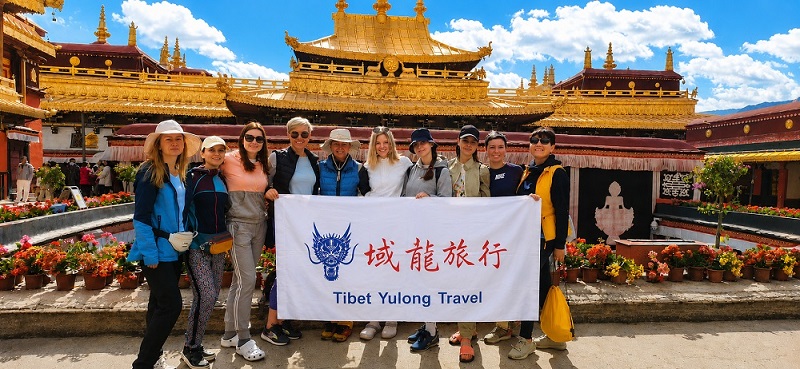
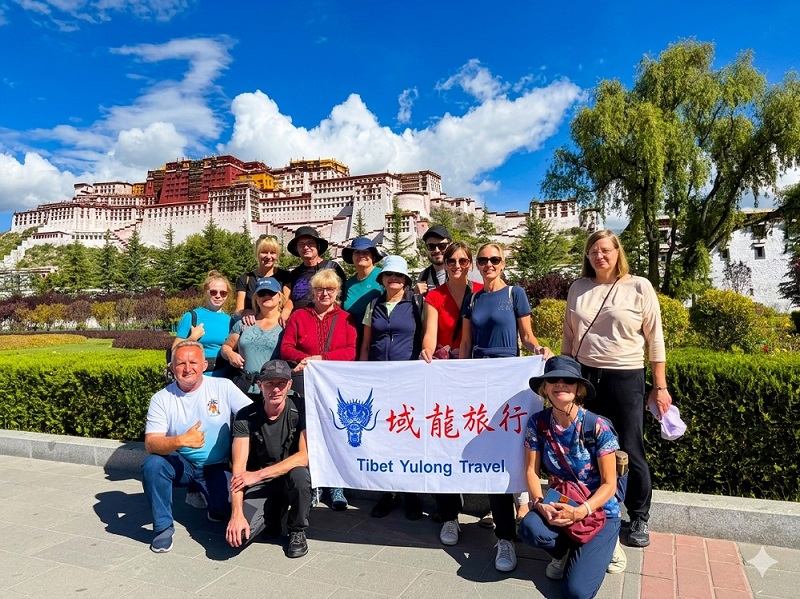
For travelers looking for guidance on timing, transportation between sites, and how to structure a comfortable acclimatization schedule alongside these visits, Tibet Yulong’s local guides bring years of firsthand experience navigating Lhasa’s monasteries and holy sites, helping ensure your first days in Tibet strike the right balance between cultural immersion and a smooth, well-paced introduction to life at altitude.