Losar, widely known as the Tibetan New Year, is one of the most significant and vibrant festivals in Tibetan culture. Rooted deeply in both ancient agricultural traditions and Buddhist spirituality, this multi-day celebration marks the beginning of a new lunar cycle on the Tibetan calendar. Unlike standard Western holidays, Losar is not merely a date on a calendar but a profound period of renewal, purification, and community bonding. Families gather to share elaborate meals, monasteries host mesmerizing ritual dances, and streets fill with the scent of burning juniper incense. For travelers seeking an authentic cultural immersion, experiencing the Tibetan New Year offers a rare window into a way of life that has remained remarkably intact for centuries. The festival typically falls between late January and early March, depending on the lunar calculations, bringing warmth and color to the high-altitude winter landscape.
Key Highlights of Tibetan New Year:
- Traditional house cleaning and spiritual purification before the festival begins.
- Preparation and sharing of Guthuk, a special symbolic noodle soup.
- Cham dance performances held at major local monasteries.
- Exchanging Khata scarves and offering prayers for good fortune.
- A unique opportunity for travelers to witness living Tibetan heritage.
The Origins and Meaning of Tibetan New Year
The origins of the Tibetan New Year stretch back long before Buddhism became the dominant religion on the plateau. Historically, the festival was tied to the winter solstice and the agricultural cycles of early Tibetan communities. It was a time to celebrate the passing of the harsh winter and to pray for a bountiful harvest in the coming spring. When Buddhism spread throughout Tibet, these indigenous practices seamlessly merged with religious observances, creating the layered, deeply spiritual festival celebrated today.
The word “Losar” itself translates simply to “New Year,” with “Lo” meaning year and “Sar” meaning new. However, the philosophy behind the Tibetan New Year goes far beyond a simple change of dates. It is fundamentally about clearing away the old—both physically and spiritually—to make room for positive energy, merit, and good fortune. Monks spend weeks prior to the festival engaged in intensive prayers and rituals designed to dispel negative forces and invite blessings for all sentient beings. This dual focus on household preparation and monastic devotion makes the festival a truly holistic community event.
Preparations and Rituals Before Tibetan New Year
The days leading up to the Tibetan New Year are just as important as the festival itself. Preparation begins well in advance, starting with a thorough cleaning of the home. Every corner must be swept, and old, broken items are discarded. This physical cleaning mirrors the spiritual intention of sweeping away the misfortunes, illnesses, and negative karma accumulated over the past twelve months. Fresh coats of paint might be applied to walls, and windows are washed to let the new light in.
One of the most fascinating pre-festival events occurs on the 29th day of the last lunar month, known as Nyi-Shu-Gu. On this evening, families gather to eat Guthuk, a traditional noodle soup. Guthuk is far more than a meal; it is a playful divination game. Hidden inside the dough balls are small objects or symbols made of dough, wool, charcoal, or chili peppers. Each item represents a specific personality trait or fortune. For example, finding wool suggests a kind heart, while charcoal playfully implies a black or mischievous mind. The laughter and teasing that accompany the opening of these dough balls create a warm, familial atmosphere that perfectly sets the stage for the Tibetan New Year.
Later that same night, a fire ritual takes place. People carry torches through their homes and out into the streets, shouting to drive away evil spirits. Effigies made of dough, which have absorbed the family’s bad luck throughout the year, are thrown into a large communal bonfire, symbolizing the complete eradication of past negativities.
Celebrating the First Days of Tibetan New Year
The actual celebration of the Tibetan New Year spans several days, each with its own specific customs and meanings. On the first day, known as Lama Losar, activities are generally confined to the immediate family. People wake up before dawn, dress in their finest traditional clothing—often colorful Chubas made of silk or heavy brocade—and set up offerings on the family altar. These offerings typically include Dresi, a sweet dish made of rice, butter, raisins, and droma (a type of wild ginseng root), alongside bowls of Changkol, a beverage brewed from barley beer.
The first day is considered highly sacred, and many Tibetans choose to visit their local monastery to offer prayers and receive blessings from the monks. No sweeping is done on this day, as it is believed that sweeping might accidentally brush away the newly arrived good fortune. Water is often drawn from a local well or river very early in the morning, as the first water of the Tibetan New Year is thought to possess special purifying properties.
On the second day, known as King’s Losar, the social aspect of the festival expands. This is the day when people step outside their homes to visit relatives, friends, and neighbors. The exchange of Khata—traditional white silk scarves—is a central practice during these visits. Offering a Khata represents pure intentions, respect, and a wish for happiness. Hosts greet guests with bowls of butter tea and plates of dried meats, cheeses, and pastries. The atmosphere is joyous, filled with conversation, singing, and the clinking of cups filled with Chang (barley wine).
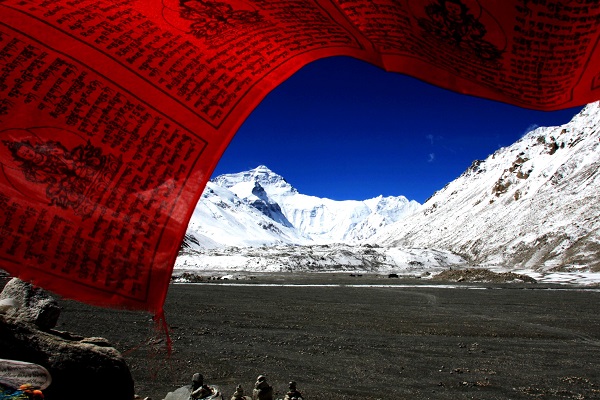
The third day is often dedicated to raising new prayer flags. Old, faded flags from the previous year are taken down and respectfully burned, while vibrant new flags in blue, white, red, green, and yellow are hoisted on rooftops and mountain passes. These colors represent the five elements, and as the wind blows through the flags, the printed mantras are believed to spread peace and compassion across the land.
Traditional Foods of the Tibetan New Year
Food plays an indispensable role in the Tibetan New Year celebrations, serving as both sustenance for the cold winter climate and a medium for cultural expression. The centerpiece of the festive table is the Derkha, a towering, stepped structure made of deep-fried pastry dough. Arranged symmetrically, the Derkha is not meant to be eaten immediately but serves as a ceremonial offering representing abundance and prosperity.
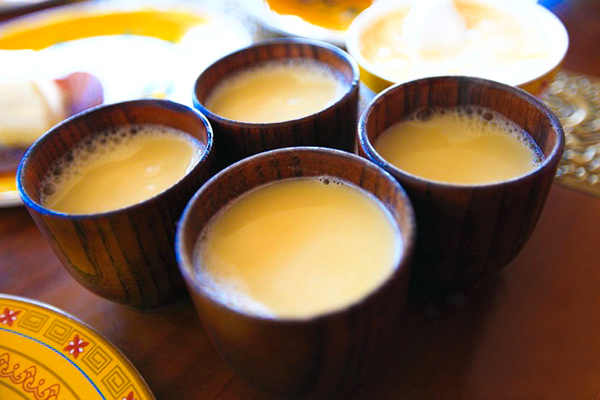
Beyond the Guthuk soup mentioned earlier, momos (Tibetan dumplings) are a staple during the festival. Filled with yak meat, mutton, or vegetables, they are steamed or fried and served with spicy dipping sauces. Sha Phaley, a pan-fried bread stuffed with seasoned meat and cabbage, is another favorite that provides hearty energy for the cold weather. Sweet treats like Khapse, intricately shaped and deep-fried cookies, are prepared in massive quantities days before the festival. They are piled high on plates to welcome guests and are enjoyed alongside endless cups of Po Cha, the traditional salted butter tea that keeps everyone warm during the winter gatherings.
Monastic Festivals and Cham Dances During Tibetan New Year
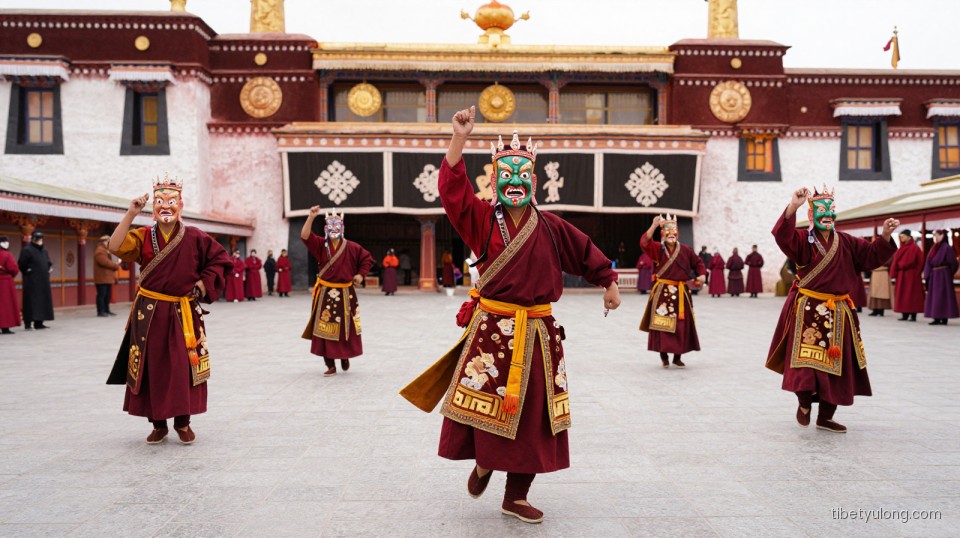
For visitors, one of the most visually spectacular aspects of the Tibetan New Year is the monastic activity. Major monasteries across the region host elaborate ceremonies that draw thousands of pilgrims and travelers. The highlight of these events is often the Cham dance, a sacred masked performance executed by trained monks.
These dances are not mere entertainment; they are profound spiritual rituals. The monks wear magnificent, oversized costumes and intricately carved masks depicting various deities, protectors, demons, and historical figures. Accompanied by the deep, resonant sounds of long copper horns (Dungchen), crashing cymbals, and rhythmic drums, the dancers move in precise, choreographed patterns. The Cham dances serve to subdue evil spirits, recount Buddhist teachings, and bless the audience for the coming year. Witnessing a Cham dance during the Tibetan New Year is an unforgettable experience that connects observers directly to centuries of unbroken spiritual tradition.
Travel Tips for Experiencing Tibetan New Year
Traveling to Tibet during the Tibetan New Year requires careful planning, as the combination of high altitude, winter weather, and cultural sensitivity demands respect and preparation. First and foremost, foreign travelers must obtain a Tibet Travel Permit, which can only be arranged through a registered travel agency. Because the festival dates shift annually based on the lunar calendar, it is essential to verify the exact timing well in advance to align your itinerary with the main celebratory days.
Winter in Tibet means cold temperatures, especially at night, so packing thermal layers, a heavy down jacket, and sturdy footwear is mandatory. However, daytime skies are often brilliantly clear and sunny. Altitude sickness is a real consideration; spending a few days acclimatizing in Lhasa before traveling to higher elevations is highly recommended. Drink plenty of fluids, avoid strenuous exercise upon arrival, and rest adequately.
When participating in or observing Tibetan New Year festivities, cultural etiquette is paramount. Always ask for permission before photographing locals, monks, or religious ceremonies. Walk clockwise around stupas, mani stones, and monastery courtyards. When offered a Khata, accept it graciously with both hands. If you are looking to navigate the logistics of permits, transportation, and culturally respectful itineraries, working with experienced local operators like Tibet Yulong Travel can significantly enhance your journey. Their deep understanding of regional customs ensures that travelers can witness the magic of the Tibetan New Year authentically and responsibly, connecting you with local families and lesser-known monastic events that independent travel might miss.
Experiencing the Tibetan New Year is much more than checking off a destination on a travel list. It is an invitation to pause, reflect, and participate in a culture that values spiritual purity, community bonds, and the enduring hope for a better tomorrow. From the smoky juniper fires of the 29th night to the fluttering of fresh prayer flags on the third day, every moment of Losar carries profound meaning, leaving an indelible mark on anyone fortunate enough to witness it.