✨Highlights:
- 🥾 A half-day ridge walk from Pabonka Hermitage to Purbuchok Monastery, right on the edge of Lhasa
- 🕳️ Enter the cliff cave at Pabonka where Songtsen Gampo, the king who built Lhasa, is said to have meditated
- ⛰️ Climb 300 metres to Tagdenri Drok, a cliffside retreat with spring water, birdsong and the whole city laid out below
- 🏯 Descend past Tashicholing and Lhakazak hermitages to Sera Monastery at 4,100 metres
- 🌄 Walk the last hour above the Nyangla and Tokde valleys, with views that no bus tour reaches
- 🏛️ Combine the walk with the Potala Palace, the Jokhang, the Barkhor and the monk debates in one five-day trip
- 🍵 Welcome dinner, sweet milk tea and a local guide who explains what you are actually looking at
- 🫁 A gentle, well-paced first altitude experience for travellers who want to move, not just look
Most visitors treat Lhasa as a base: two nights, three monuments, then out to the mountains. The result is that they see the city from car windows and courtyards, and never from above. Yet the hills immediately north of the old town are full of hermitages, cliff retreats and pilgrim paths that connect them, and walking between two of them is one of the most rewarding half days available anywhere in Tibet.
Pabonka
This five-day Lhasa hike does exactly that. It gives you the city’s essential sights across two days, then takes you up to Pabonka Hermitage at 3,900 metres, along a ridge to a cliff retreat, down past Sera, and across to Purbuchok Monastery at 3,940 metres. You walk for perhaps four hours in total, with 300 metres of climbing at the crux, and you finish with a panorama that includes the whole Lhasa valley, the Kyichu river and the distant snow line.
Because the altitude gain is modest and the start is already 3,650 metres, this is also an intelligent acclimatisation day. It teaches your body to work at height without asking it to sleep at height, and it does so on trails that pilgrims have used for centuries rather than on a treadmill in a gym.
At a glance
- Duration: 5 days and 4 nights, based in Lhasa throughout
- Hike: about 4 hours of walking, roughly 8 to 9 km, with 300 m of ascent and 360 m of descent
- Altitudes: Pabonka 3,900 m, Tagdenri Drok around 4,200 m, Sera 4,100 m, Purbuchok 3,940 m
- Difficulty: moderate; the climbing section is short but steep, and the altitude is the main factor
- Best months: March to November, with April, May, September and October the most comfortable
- Group size: 2 to 12 travellers, private departures available
- Start and finish: Lhasa Gonggar International Airport or Lhasa Railway Station
Day 1: Arrive, and resist the urge to explore
Your guide meets you at the airport or station with a white hada and drives you into the city, past the Lhasa River and the first low ranges of the plateau. At the hotel, the instruction is the same as on every good Tibet itinerary: rest, drink water, eat lightly, sleep early.
The temptation on arrival day is to walk to the Potala for a photograph. Do it from the car if you must, and leave the walking for tomorrow. A quiet first evening is the cheapest insurance you can buy against three days of headache.
Day 2: Drepung and Sera, with the debate as the main event
The morning goes to Drepung Monastery, the white hillside complex that once held more than ten thousand monks. Your guide walks you through the Coqen Hall and into Loseling College, where the dormitories are small, the kitchens are communal, and the curriculum has barely changed in centuries.
The afternoon belongs to Sera. Between 15:30 and 17:00, Monday to Saturday, the courtyard fills with monks debating in the traditional way: a seated defender, standing challengers, a sharp hand clap to close each argument, a sweeping arm to demand proof. The performance is loud, fast and surprisingly funny, and with an explanation it becomes legible: you start to hear the structure of the argument rather than just the noise.
The welcome dinner in the evening is the social start of the trip, with traditional gifts, practical briefings and the first proper conversation between travellers.
Day 3: Potala Palace, Jokhang Temple and the Barkhor
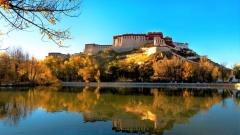
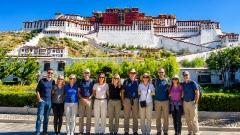
A full day of the two UNESCO sites that define Lhasa. The Potala Palace first, climbed slowly through chapels, assembly halls and the private quarters of the winter residence, with gold stupas and the cave associated with Songtsen Gampo among its treasures. Then down to Longwangtan Park for the reflection photograph across the pond.
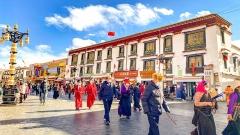
After lunch, the Jokhang Temple, whose inner shrine holds the Jowo Shakyamuni image brought to Tibet in the seventh century. Outside, pilgrims prostrate on worn boards in an endless rhythm; around the temple, the Barkhor circuit runs clockwise past prayer wheels, coral, turquoise and butter lamps. Walk it with the current, buy nothing you do not need, and finish in a tea house with a thermos of sweet milk tea.
This is also the day to check your footwear. Tomorrow’s hike is short but the descent is on loose stone, and boots that felt fine on marble may not feel fine on scree.
Day 4: The Pabonka to Purbuchok hike
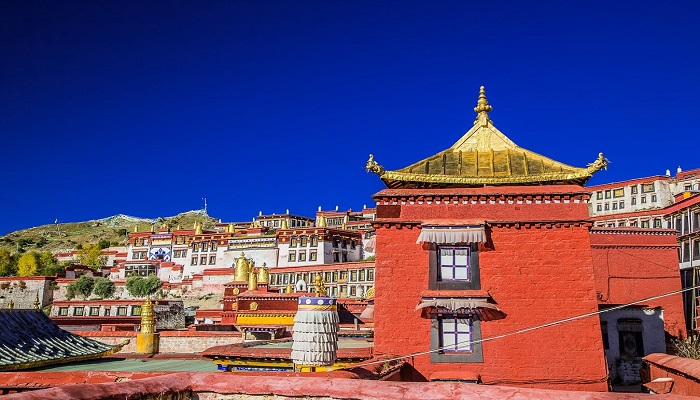
A short drive north, about fifteen kilometres from the centre, brings you to Pabonka Hermitage, perched on a cliff at 3,900 metres. The complex is old, quiet and layered: white buildings, red trim, prayer flags, and a meditation cave where Songtsen Gampo is said to have practised. Spend half an hour there, in the cave and on the terrace, before the walking begins.
The route then heads northeast for about thirty minutes to Tashicholing Monastery. On this stretch you may see, at a distance, a sky burial site on the hillside. It is a place of ritual significance and strictly off limits to visitors: you do not enter, you do not photograph, and your guide will explain why in a low voice. Treat it as you would any funeral ground anywhere in the world.
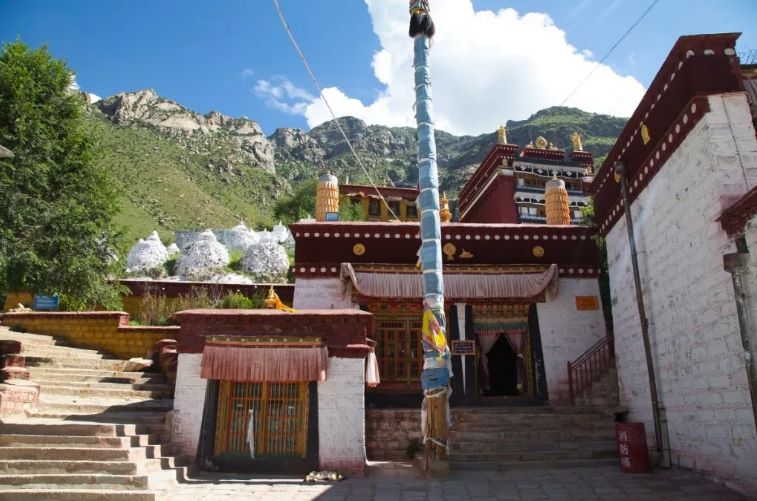
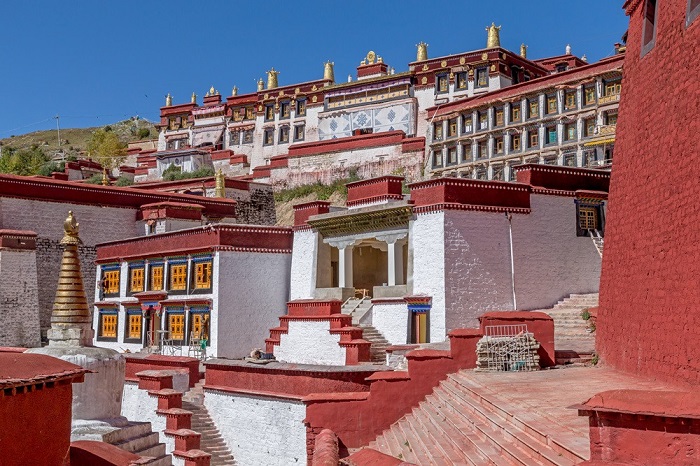
Tsongkhapa Chapel in Pabongka Monastery
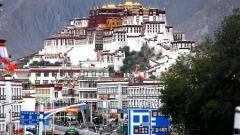
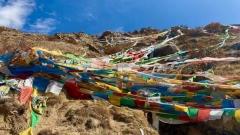
After a short break, the trail turns onto a separate path and climbs about 300 metres to Tagdenri Drok, a cliffside retreat. This is the hardest part of the day, and it is where pace matters: short steps, steady breathing, and stops that are deliberately long enough to be useful. At the top there is spring water, birdsong, prayer flags and a panoramic view over the whole of Lhasa, with the Potala visible on its hill and the river flat beyond. Packed lunch is served here, which is the best possible use of the view.
The descent heads gently towards Sera Monastery at 4,100 metres, about forty minutes on foot, with the city opening up as you drop. Then roughly an hour more, past Lhakazak Hermitage, to Purbuchok Monastery, also called Purbuchok Retreat, at 3,940 metres. This last stretch looks over the Nyangla and Tokde valleys, green in summer and copper in autumn, and is the quietest part of the day.
At Purbuchok, explore the small monastery, then meet the vehicle for the drive back to your hotel. Total walking: about four hours, with the hardest 300 metres behind you by lunchtime.
What the three hermitages actually are
Pabonka, Tashicholing, Tagdenri Drok, Lhakazak and Purbuchok belong to a network of small retreat houses that ring Lhasa’s northern hills. Some are caves with a shrine and a caretaker; others are small monasteries with a handful of monks. Historically they served as places where practitioners could withdraw from the city for periods of retreat, supported by local families who brought food and fuel.
That is why the walk feels different from a normal day hike. You are not on a scenic trail; you are on a supply path between places where people pray for months at a time. The cairns, the flag poles, the worn steps and the small stone benches all exist because someone needed them.
Why this day works better than another monastery visit
By day four of a Lhasa trip, most people have seen enough golden roofs to blur them together. Movement changes the way you absorb a place. Walking between hermitages forces you to notice the gradient of the land, the way water runs down the gullies, the way the city sits in its bowl, and the distance between the palace and the hills where the monks went to get away from it.
It also gives you the physical experience of altitude in small doses: 300 metres of climbing at 4,100 metres is a fraction of a Himalayan pass, but it is enough to teach you what your breathing does and how much slower you need to go than you expect.
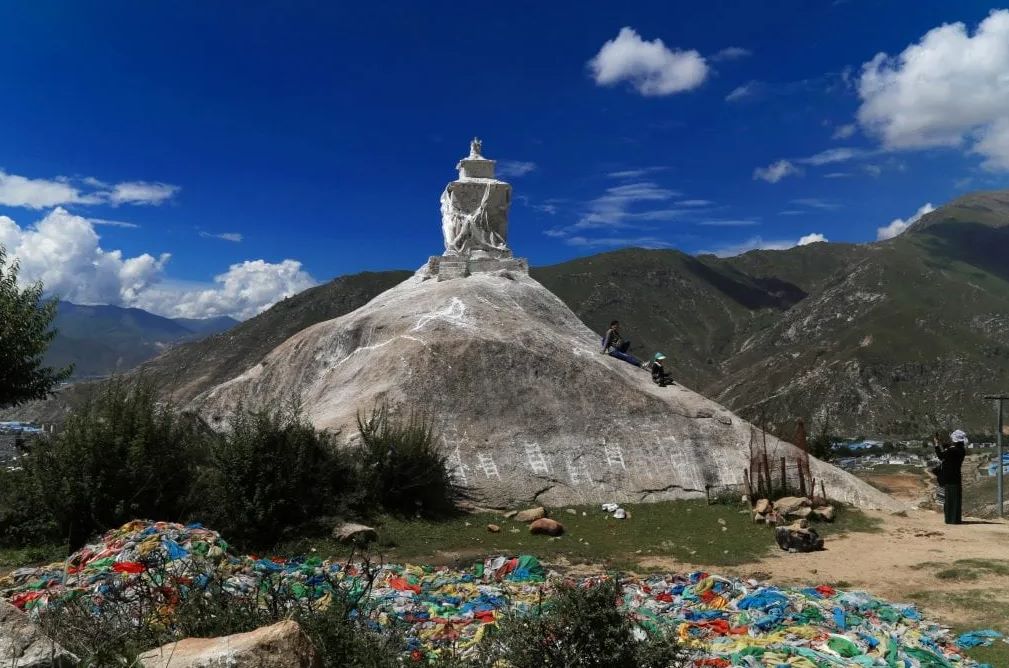
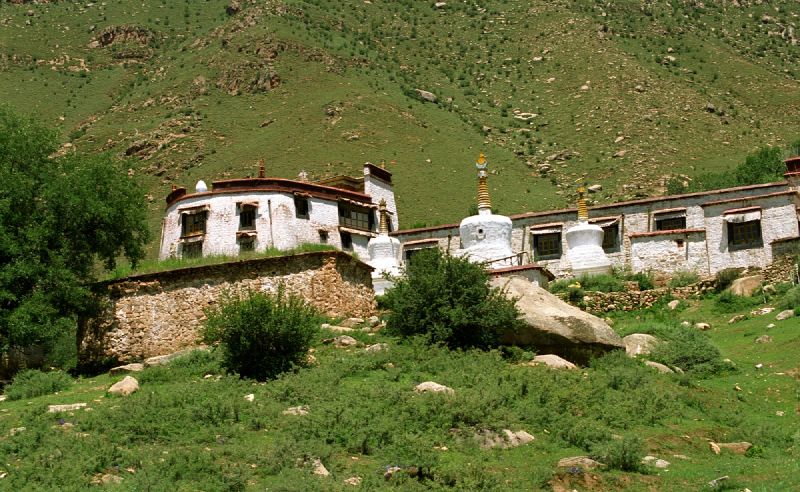
Stupa by Pabongka monastery in Lhasa
What you see from the ridge, and how the light changes
The panorama from Tagdenri Drok is not a single view but a sequence, depending on when you arrive. In the morning, before ten, the city below is still under a shallow layer of haze and the Potala’s white walls catch the sun before anything else does, so the palace appears to float above a grey sea. By eleven the haze lifts, the Kyichu valley turns green-gold, and the flat roofs of the old town resolve into individual courtyards, with the Barkhor’s circuit visible as a darker ring around the Jokhang.
To the north, the hills continue in a series of bare ridges, each with its own line of prayer flags and its own small white building. To the south, beyond the river, the ground rises towards the far ranges where snow stays through most of the year. In autumn, the poplars along the valley floor turn yellow in bands, which from above look like brush strokes.
The light matters more than the map. Late morning gives the clearest visibility; early afternoon flattens the contrast; and the two hours before dusk turn the whole valley amber, which is why some travellers ask to start the hike later and finish at Sera in the low sun. That variation is easy to arrange on a private departure: the walk is short enough that the timing can follow the weather rather than a fixed schedule.
What the ridge also gives you is scale. From the courtyard of the Jokhang, Lhasa feels dense and devotional. From 4,100 metres on the hill above it, the same city looks small and provisional, a settlement in a wide braided valley with mountains on three sides. Both views are accurate. Having both in one trip is the reason this day exists.
Altitude, headaches and honest expectations
At these heights, most travellers feel breathless on the climb and perfectly normal at rest. Symptoms that deserve a conversation with your guide: a headache that ignores painkillers, nausea, dizziness, confusion, or breathlessness while sitting still. The itinerary keeps you in Lhasa, at the same sleeping altitude every night, which is the safest possible structure for a first trip. Portable oxygen travels in the vehicle, and hotels have oxygen supply available.
Anyone with uncontrolled heart or lung problems, or with a respiratory infection in the previous two weeks, should postpone the trip.
Best season for a Lhasa hike
Spring, from late March to May, is dry and clear with cold mornings; the hills turn green in April. June to August is warm and green but the monsoon brings afternoon cloud and occasional rain, which can make the descent slippery. September and October are the best months for this route: stable air, sharp light, golden grass on the ridge and comfortable walking temperatures. Winter walks are possible on clear days but the trails hold ice and the wind is unkind at 4,100 metres.
Permits, tickets and logistics
Foreign visitors require a Tibet Travel Permit, arranged by a licensed local operator before arrival, together with the correct Chinese visa or group visa. We handle the permit and the Potala Palace timed-entry booking, which needs your passport details in advance. The itinerary includes a private vehicle with driver, a licensed English- or Chinese-speaking guide, all entrance fees for listed sites, airport or station transfers, four-star or equivalent hotels with breakfast, a packed lunch on hike day, portable oxygen and bottled water. Not included: travel to Lhasa, meals not listed, personal expenses, tips and single supplements.
Sleeping and eating
Four nights in a four-star or equivalent hotel in Lhasa, chosen for warm rooms, hot water and central location. Breakfast is included daily. Dinners are free to arrange: Tibetan noodles, momo, Sichuan restaurants, vegetarian cafés and hotel dining all work, and your guide will steer you away from the places that overcharge tourists. The hike day includes a packed lunch; bring extra snacks and a thermos.
Fitness and packing
The hike is moderate: four hours, 300 metres of climb, uneven ground. If you can walk uphill for twenty minutes without stopping at home, you can do this with patience. Bring grippy shoes or light boots, a windproof layer, a warm hat, sunglasses, sunscreen, a one-litre bottle, a small daypack, and poles if your knees prefer them. A light pair of gloves helps on the ridge in October.
Etiquette on sacred ground
At hermitages, keep voices low, remove hats inside shrines, do not point feet at altars, and ask before photographing monks or caretakers. Do not enter caves or rooms that are closed or marked private. Walk clockwise around stupas and prayer-flag poles. At the sky burial site visible from the trail, no entry and no photography, without exception. Leave no plastic or non-biodegradable offerings, and do not take stones, plants or relics.
FAQ
How difficult is the Pabonka to Purbuchok hike?
Moderate. About four hours of walking with 300 metres of ascent at around 4,100 metres, on trails that are clear but uneven. The altitude, not the terrain, is the challenge.
Can I do the hike on arrival day?
No. The itinerary places it on day four, after three nights of acclimatisation, and that sequencing is part of the safety design.
Is there a shorter version?
Yes. The vehicle can pick you up after the Tagdenri Drok viewpoint, cutting the walk to about two hours while keeping the best panorama.
Will I see a sky burial?
You may glimpse the site at a distance. Visitors cannot enter or photograph it, and your guide will explain the practice respectfully rather than turning it into spectacle.
Do I need trekking boots?
Light hiking shoes with grip are enough in dry conditions. Boots are better in rain and after snow.
What if the Potala Palace slot changes?
Timed entry can shift with festivals and maintenance, so the guide may swap days two and three. The hike day stays fixed because it depends on weather.
Walk above Lhasa with Tibet Yulong
Tibet Yulong is a locally owned operator, and this route exists because our guides kept walking it on their days off. We book the permits, the palace tickets and the vehicle, and we keep the group small enough that a cliff retreat stays quiet. Tell us your dates, and we will tell you which week gives the clearest ridge views.