The vast landscapes of the Qinghai-Tibet Plateau have shaped not only the resilient spirit of its people but also their remarkable sartorial traditions. Tibetan clothing is far more than a simple way to keep warm against the harsh mountain winds; it is a living canvas of history, spirituality, and regional identity. From nomadic herders roaming the northern steppes to farmers tending terraced fields in the southern valleys, every stitch tells a story. Understanding these garments offers travelers a profound window into local life. Whether you are planning a journey with Tibet Yulong Travel or simply researching high-altitude cultures, exploring this topic enriches your appreciation of the region.
Key Takeaways:
- The chuba robe adapts to extreme daily temperature shifts.
- Regional climates dictate fabric choices and garment thickness.
- Jewelry serves as both spiritual protection and family wealth.
- Festival attire features elaborate brocades and vibrant colors.
- Monastic robes follow strict color codes and draping rules.
The Chuba: The Heart of Tibetan Clothing
No discussion about traditional attire on the plateau is complete without examining the chuba. This long, thick robe is the foundational piece of Tibetan clothing, worn by men and women across nearly all regions. Its design is a masterclass in practical engineering for high-altitude survival. Temperatures on the plateau can swing drastically from freezing dawns to surprisingly warm afternoons, and the chuba is built to handle this volatility.
Typically, the robe is wrapped around the body and secured with a wide sash or belt made of cloth or leather. What makes this garment truly unique is how it is worn. Locals rarely tie the belt tightly at the natural waistline. Instead, they pull the upper portion of the robe up before fastening the belt, creating a deep, pouch-like fold over the chest. This oversized bosom pocket acts as a convenient carrying space where herders store wooden bowls, roasted barley (tsampa) pouches, small knives, and even infant animals during the cold months.
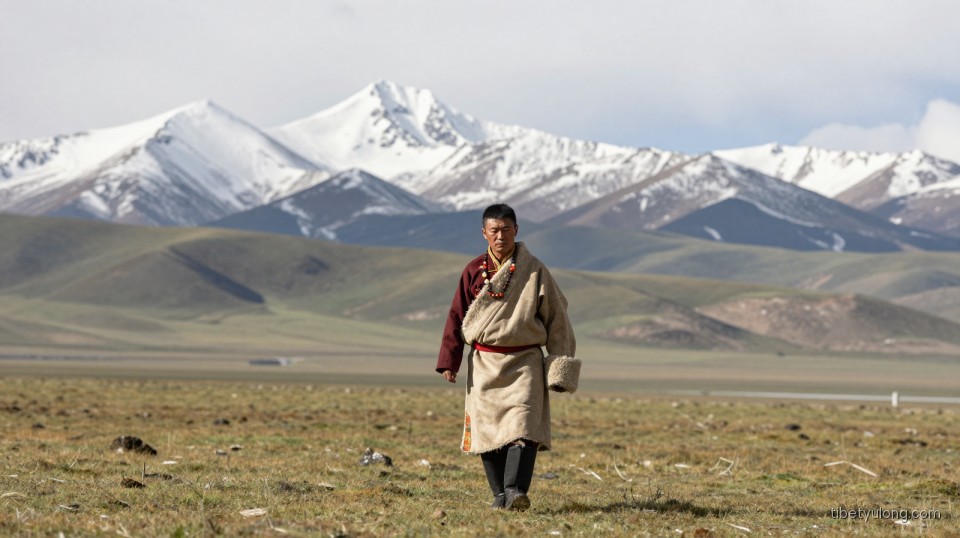
When the afternoon sun beats down and temperatures rise, wearers often slip one arm—usually the right—out of the sleeve, letting it hang loosely behind them. If it gets warmer still, both arms might be freed, with the top half of the robe tied around the waist. This constant adjustment allows individuals to regulate their body temperature without needing to change outfits entirely. For travelers exploring remote areas with operators like Tibet Yulong Travel, spotting locals adjusting their robes throughout the day is a common and fascinating sight that highlights the intimate connection between environment and attire.
Regional Variations in Tibetan Dress Culture
The sheer size of the Tibetan cultural sphere means there is no single uniform style. Geography and microclimates heavily influence the diversity of Tibetan clothing. In the pastoral northern regions, such as Nagqu and parts of Qinghai, the climate is bitterly cold and windy. Here, heavy sheepskin chubas are the standard. These robes are often lined with thick wool and feature wide borders made of otter fur, leopard skin, or brightly colored brocade, which denote the wearer’s social standing and wealth.
Moving south toward Lhasa, Shigatse, and the fertile Yarlung Tsangpo river valley, the climate becomes milder. Agricultural communities favor lighter materials. Pulu—a hand-woven woolen fabric—is widely used to craft thinner, more fitted robes. Women in these central regions often wear a pangden, a brightly striped apron tied around the waist. Historically, the pangden indicated that a woman was married, though today it is widely worn as a beautiful decorative accessory regardless of marital status. The stripes vary in width and color depending on the specific village, acting almost like a geographic signature woven into the fabric.
In the eastern regions of Kham and Amdo, the styles become even more distinct. Khampa men are famous for their imposing presence, enhanced by massive chubas trimmed with luxurious furs and adorned with large, heavy silver ornaments. Their hair is often braided with red or black silk threads, adding to a striking visual profile that distinguishes them instantly from their central or western counterparts. Exploring these differences firsthand is one of the most rewarding aspects of cultural travel in the region.
Materials and Craftsmanship Behind Tibetan Garments
The creation of traditional garments relies heavily on locally sourced materials and centuries-old techniques. Yak wool and sheep fleece are the primary raw materials, spun and woven by hand in many rural communities. The process of making pulu involves washing, carding, spinning, and weaving the wool on traditional wooden looms. The resulting fabric is dense, wind-resistant, and incredibly durable, perfectly suited for the rugged lifestyle of plateau dwellers.
Silk and brocade, historically imported through ancient trade routes connecting the plateau with mainland China, India, and Central Asia, are reserved for trimming, lining, and festive garments. The integration of these foreign textiles into local designs showcases the historical interconnectedness of the region’s trade networks. Artisans spend weeks embroidering intricate motifs onto collars, cuffs, and hems. Common patterns include auspicious Buddhist symbols like the endless knot, lotus flowers, and stylized clouds, each carrying specific blessings for the wearer.
Dyeing is another crucial step. Before synthetic dyes became available, locals extracted colors from minerals, roots, and plants found in the mountains. Indigo provided deep blues, walnut husks yielded rich browns, and safflower produced vibrant reds and yellows. Even today, many artisans prefer natural dyes for high-quality pieces because they age beautifully, developing a soft patina that synthetic colors cannot replicate. When traveling with knowledgeable guides from Tibet Yulong Travel, visitors often have the opportunity to observe local weavers at work, gaining a deeper respect for the labor involved in every garment.
The Role of Jewelry and Accessories
Accessories are not mere afterthoughts; they are integral components of Tibetan clothing. Due to the historically nomadic nature of many communities, wealth was traditionally carried on the body rather than stored in banks. As a result, jewelry serves as a wearable treasury, passed down through generations.
Coral, turquoise, amber, and dzi beads are the most prized materials. Coral, often sourced from ancient maritime trade, represents fire and vitality. Turquoise, mined locally or traded from neighboring regions, symbolizes water and sky, offering spiritual protection. Dzi beads—ancient, etched agate stones—are considered highly sacred and are believed to possess protective powers. A single authentic antique dzi bead can hold immense financial and spiritual value.
Men typically wear large amulet boxes called ga’u, suspended on heavy silver chains across the chest. These boxes contain rolled prayers, sacred images, or blessed substances meant to protect the wearer during long journeys or while herding livestock in dangerous terrain. Women’s headdresses can be incredibly elaborate, especially during festivals. In some areas, women wear heavy frameworks covered in silver coins, coral branches, and turquoise plaques, which can weigh several kilograms. These accessories transform everyday Tibetan clothing into spectacular displays of heritage and devotion.
Festivals and Ceremonial Tibetan Attire
While daily wear focuses on durability and warmth, festival seasons reveal the true opulence of the culture. During events like Losar (the New Year), Saga Dawa, or local horse racing festivals, communities bring out their finest garments. The distinction between everyday wear and ceremonial dress is stark.
Festive chubas are crafted from premium silk brocade, featuring raised gold or silver threadwork. The colors are intensely saturated—deep crimsons, royal blues, and emerald greens dominate. Fur trims are wider and more luxurious. Women layer multiple pangdens and adorn themselves with their entire family collection of jewelry, turning public squares into dazzling exhibitions of wealth and artistry.
Monks and lamas also wear specific ceremonial robes during major religious dances, known as Cham. These costumes include massive, colorful masks representing deities, demons, and animals, paired with voluminous silk robes that swirl dramatically during the ritual dances. Witnessing these ceremonies is a highlight for any traveler. Agencies like Tibet Yulong Travel frequently organize itineraries timed around these cultural events, ensuring visitors experience the full spectrum of traditional expression.
Modern Influences and Preservation Efforts
Today, the landscape of fashion on the plateau is evolving. Younger generations in urban centers like Lhasa often blend modern streetwear with traditional elements. It is common to see a teenager wearing jeans and sneakers paired with a traditional pulu shirt or a turquoise pendant. This fusion does not signal the death of tradition but rather its adaptation to contemporary life.
However, in rural and nomadic areas, classic Tibetan clothing remains the dominant daily wear due to its unmatched functionality in the harsh climate. There is also a growing movement among local designers to revitalize traditional weaving and tailoring techniques. By incorporating ancient motifs into modern silhouettes, they ensure that the skills required to make these garments are not lost to industrialization.
For visitors, engaging respectfully with this culture is essential. Purchasing authentic, locally made crafts directly supports these preservation efforts. When exploring the region, whether independently or through experienced operators like Tibet Yulong Travel, taking the time to understand the stories woven into every hem and bead transforms a simple sightseeing trip into a deeply meaningful cultural exchange. The enduring legacy of these garments stands as a testament to human ingenuity and artistic brilliance in one of the world’s most challenging environments.