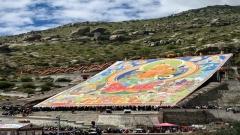
Tibetan Handicrafts represent a living testament to the spiritual depth, resilience, and artistic brilliance of the people who inhabit the roof of the world. For centuries, artisans across the Tibetan Plateau have transformed raw materials—wool, silver, turquoise, and wood—into functional objects and sacred art. These creations are not merely souvenirs; they are tangible expressions of Buddhist philosophy, nomadic heritage, and the harsh yet beautiful Himalayan environment. Whether you are exploring the bustling markets of Lhasa or visiting remote monasteries, encountering Tibetan Handicrafts is an essential part of understanding this unique culture.
Key Takeaways:
- Thangka paintings serve as sacred meditation tools.
- Tibetan carpets feature traditional motifs woven from highland wool.
- Silver and turquoise jewelry carries deep spiritual symbolism.
- Woodcarving and metalwork adorn monasteries and homes.
- Buying directly from artisans supports local cultural preservation.
The Spiritual Significance of Tibetan Handicrafts
To appreciate Tibetan Handicrafts, one must first understand the worldview that shapes them. In Tibetan culture, art and spirituality are inseparable. The creation of an object is often considered a meditative practice, a way to accumulate merit, or a method to honor the Buddha’s teachings. Unlike mass-produced goods, traditional items are crafted with specific intentions, guided by ancient texts and passed-down techniques. Monks and lay artisans alike dedicate months or even years to completing a single piece, ensuring every proportion, color, and symbol aligns with religious iconography. This spiritual foundation elevates everyday objects into vessels of meaning, making Tibetan Handicrafts highly sought after by collectors, practitioners, and culturally curious travelers worldwide.
Thangka Paintings: Sacred Canvas Art Among Tibetan Handicrafts
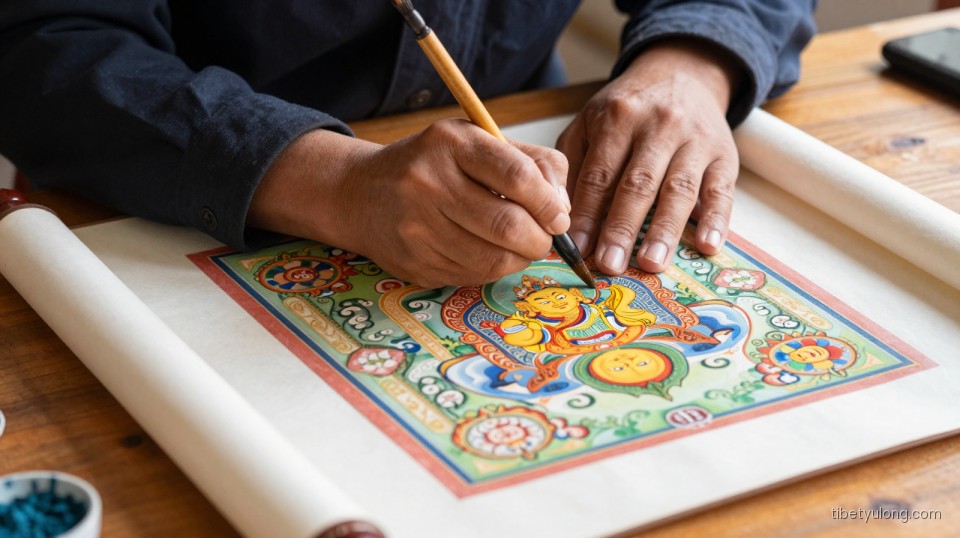
Perhaps no art form is more synonymous with Tibetan Handicrafts than the Thangka. A Thangka is a scroll painting depicting Buddhist deities, mandalas, historical figures, or scenes from scripture. Traditionally painted on cotton or silk using natural mineral pigments and pure gold dust, these works are designed to last for generations without fading. The process of creating a Thangka begins with preparing the canvas, stretching it tightly over a wooden frame, and polishing it smooth with a stone. The artist then sketches the deity according to strict geometric grids outlined in ancient sutras, ensuring every limb, eye, and gesture is anatomically and spiritually correct.
Colors in Thangka paintings are never arbitrary. White represents purity, red signifies power, blue denotes wrathful compassion, and yellow symbolizes renunciation. Once completed, a Thangka is consecrated by a lama before it can be used for meditation or hung in a shrine room. For travelers, purchasing a genuine Thangka requires careful attention. Authentic pieces take weeks to paint and command higher prices, while cheaper printed versions flood tourist markets. Seeking out dedicated studios in Lhasa or Shigatse allows visitors to watch artists at work and invest in genuine Tibetan Handicrafts.
Tibetan Carpets and Textiles: Weaving Heritage into Tibetan Handicrafts
Tibetan carpets, known locally as khaden, are among the most practical and visually striking examples of Tibetan Handicrafts. Woven primarily from the thick, durable wool of highland sheep, these carpets were originally designed to insulate monastery floors and provide seating for monks during long hours of chanting and meditation. The weaving technique involves tying individual knots around vertical warp threads, a painstaking process that results in incredibly dense, resilient textiles capable of withstanding the extreme wear of nomadic life.
The motifs woven into these carpets tell stories of the landscape and mythology. Common designs include snow lions, dragons, lotus flowers, endless knots, and stylized clouds. Colors are traditionally vibrant, derived historically from plant-based dyes like walnut husks, madder root, and indigo, though synthetic dyes are also used today for broader color palettes. Beyond floor coverings, Tibetan textiles encompass heavy woolen aprons called pangden, worn by married women, and intricately patterned saddle blankets used by nomads. When exploring the markets, feeling the weight and knot density of a carpet is the best way to gauge its quality, distinguishing true artisanal Tibetan Handicrafts from factory-made imitations.
Metalwork and Jewelry: The Adornment of Tibetan Handicrafts
Silver, gold, copper, and brass play central roles in the creation of Tibetan Handicrafts, particularly in jewelry and ritual objects. Tibetan silversmithing is renowned for its elaborate repoussé work, where metal is hammered from the reverse side to create raised, three-dimensional designs on the front. Jewelry is rarely subtle; it is bold, heavy, and deeply symbolic. Pieces are often set with turquoise, coral, amber, and dzi beads, each stone carrying specific protective or auspicious properties. Turquoise, for instance, is believed to bring good fortune and protect the wearer from harm, while coral represents vitality and life force.
Beyond personal adornment, metalwork extends to religious implements such as prayer wheels, singing bowls, vajras (ritual thunderbolts), and butter lamp stands. A prayer wheel, whether handheld or the massive cylinders found outside temples, contains thousands of printed mantras. Spinning the wheel is believed to send those prayers into the universe. Singing bowls, forged from an alloy of multiple metals, produce resonant tones used in sound healing and meditation. The craftsmanship required to shape these items ensures that metalwork remains one of the most respected disciplines within the realm of Tibetan Handicrafts.
Woodcarving and Furniture: Structural Beauty in Tibetan Handicrafts
Wood is a precious resource on the treeless expanses of the high plateau, which makes woodcarving a highly valued skill among creators of Tibetan Handicrafts. Carved wood is predominantly seen in the architecture of monasteries, the pillars of noble estates, and the intricate furniture used in traditional homes. Tibetan cabinets, tables, and chests are typically painted in bright reds, blues, and greens, adorned with carved motifs of mythical beasts, floral patterns, and auspicious symbols like the Eight Auspicious Signs of Buddhism.
The carving style blends influences from neighboring regions, including Nepal, China, and India, resulting in a uniquely Tibetan aesthetic. Doors and window frames in older buildings in Lhasa’s Barkhor Street showcase masterful relief carvings that have survived for centuries. Because large timber is scarce, artisans historically became experts at joining smaller pieces seamlessly and maximizing the visual impact of every carved surface. Today, finding antique or newly crafted wooden Tibetan Handicrafts offers a glimpse into the domestic and architectural elegance of plateau life.
Where to Buy Authentic Tibetan Handicrafts During Your Journey
Navigating the market for Tibetan Handicrafts requires a discerning eye. The Barkhor Street area surrounding the Jokhang Temple in Lhasa is the most famous marketplace, lined with shops selling everything from incense and singing bowls to thangkas and jewelry. However, the sheer volume of vendors means quality varies drastically. To ensure authenticity, travelers should look for cooperatives, established artisan workshops, and galleries recommended by knowledgeable guides.
This is where partnering with experienced local operators becomes invaluable. Agencies like Tibet Yulong Travel specialize in curating immersive journeys that go beyond standard sightseeing. By traveling with Tibet Yulong Travel, visitors gain access to trusted artisan studios and rural workshops where genuine Tibetan Handicrafts are produced away from the commercial hustle. Their guides help bridge language barriers, explain the cultural context behind each item, and assist in negotiating fair prices that directly benefit the craftspeople. Whether arranging a visit to a Thangka painting school or a nomadic family’s weaving tent, Tibet Yulong Travel ensures your cultural encounters are respectful, educational, and authentic.
When shopping independently, always ask about the materials used, the time taken to create the piece, and the origin of the artisan. Genuine Tibetan Handicrafts will have slight imperfections—the hallmark of human hands rather than machines. Be cautious of items made from endangered animal products, as purchasing these is both unethical and illegal. Instead, focus on textiles, metalwork, woodcraft, and paintings that sustain traditional livelihoods.
Preserving the Legacy of Tibetan Handicrafts
The survival of Tibetan Handicrafts relies heavily on continued patronage and the willingness of younger generations to learn ancestral skills. Modernization and economic shifts pose challenges to traditional artisanship, as machine-made alternatives offer cheaper, faster options. Yet, there is a growing movement among locals and international supporters to preserve these arts through cooperatives, cultural centers, and ethical tourism.
By choosing to invest in handmade items, travelers contribute directly to the economic stability of artisan families and the preservation of intangible cultural heritage. Every purchased Thangka, woven carpet, or silver amulet acts as a lifeline for these ancient traditions. Engaging deeply with Tibetan Handicrafts transforms a simple trip into a meaningful cultural exchange, leaving visitors with not just a physical object, but a profound connection to the spirit of the Himalayas.