Every year, as temperatures drop across the Tibetan Plateau, a remarkable migration unfolds. Thousands of birds leave their high-altitude summer breeding grounds and descend into milder river valleys to survive the harsh winter months. Among these travelers, none is more revered than the black-necked crane, a species deeply woven into Tibetan culture and ecology. For nature enthusiasts and photographers alike, black-necked crane winter birdwatching in Lhasa valley offers one of the most extraordinary wildlife experiences on earth. The combination of stark snowy landscapes, brilliant blue skies, and the elegant presence of these rare birds creates a scene unlike any other. Whether you are a seasoned birder or a curious traveler, understanding where, when, and how to observe these majestic creatures transforms a simple trip into a profound journey into the heart of the Himalayas.
✨ Highlights:
- Best viewing runs from November through March.
- Linzhou County is the primary observation hotspot.
- Morning hours offer the most active crane behavior.
- High altitude requires careful physical preparation.
- Local guides significantly enhance the birding experience.
Understanding Black-Necked Crane Winter Birdwatching in Lhasa Valley
The black-necked crane (Grus nigricollis) holds a unique distinction as the only crane species that breeds and winters entirely on the high-altitude plateaus of Central Asia. Standing nearly five feet tall with a striking white body, dark neck, and a distinctive red patch above the eye, this bird is a visual masterpiece adapted to extreme environments. While they spend their summers in remote alpine wetlands above 4,500 meters, the freezing of these high lakes forces them downward. This seasonal movement makes black-necked crane winter birdwatching in Lhasa valley not just possible, but highly rewarding, as the birds congregate in predictable, accessible agricultural lands along the river basins.
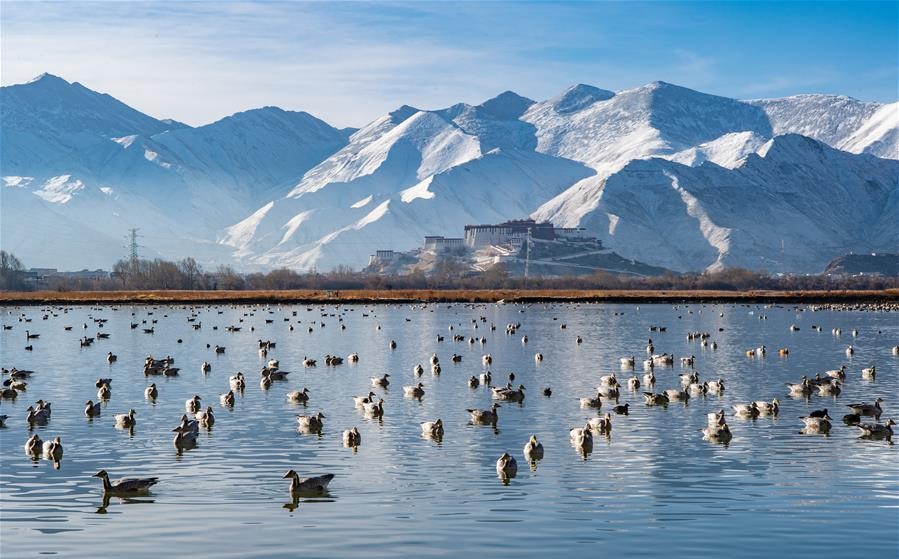
Black-Necked Crane in Lhasa River
In Tibetan culture, the black-necked crane is considered a sacred bird, often referred to as the “divine bird” or a messenger of good fortune. Local folklore suggests that harming a crane brings terrible luck, a belief that has inadvertently served as a powerful conservation tool for centuries. Monks and farmers alike respect the birds, allowing them to forage in harvested fields without disturbance. This harmonious coexistence between humans and wildlife is precisely what makes the Lhasa valley such a reliable sanctuary. When you engage in black-necked crane winter birdwatching here, you are not merely watching animals; you are witnessing a living cultural tradition where agriculture, religion, and ecology intersect seamlessly.
The ecological role of these cranes during winter is also significant. By foraging for leftover barley grains, roots, and small invertebrates in the soil, they help turn the earth and manage pest populations before the spring planting season. Their droppings fertilize the fields, creating a symbiotic loop that benefits local farmers. Understanding this relationship adds immense depth to the birdwatching experience, shifting it from passive observation to active appreciation of a delicate, functioning ecosystem.
Why the Lhasa Valley is a Premier Destination for Winter Birdwatching
The geography of the Lhasa valley provides a natural microclimate that is significantly milder than the surrounding northern plateau. Carved by the Lhasa River and its tributaries, the valley floor sits at roughly 3,650 meters above sea level. While still high by global standards, this elevation represents a crucial thermal refuge for the cranes. The south-facing slopes absorb intense solar radiation during the day, melting frost and exposing the stubble of autumn-harvested barley fields. These fields become the primary dining halls for the wintering flocks, making black-necked crane winter birdwatching in Lhasa valley exceptionally convenient compared to tracking them in wilder, inaccessible terrains.
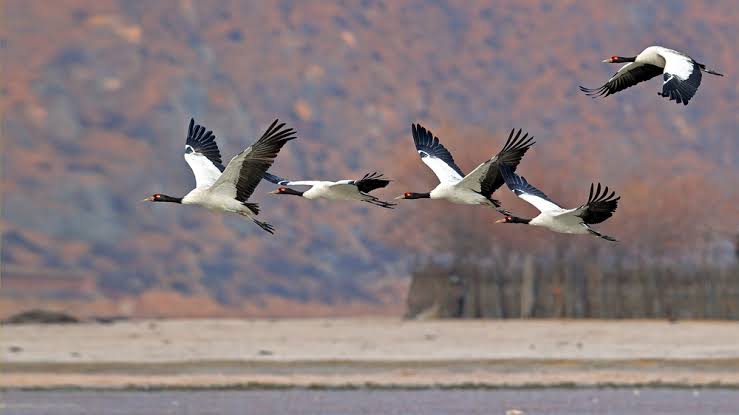
Furthermore, the valley acts as a funnel for multiple migratory routes. Birds descending from the Changtang Nature Reserve and other northern breeding grounds naturally follow the river systems southward. The convergence of water sources, unfrozen marshes, and human-cultivated grain reserves creates an irresistible winter habitat. It is not uncommon to see flocks ranging from dozens to several hundred individuals gathered in a single valley basin.
Beyond the cranes, the Lhasa valley supports a rich community of wintering avifauna. Birders who travel specifically for black-necked crane winter birdwatching often find themselves captivated by the supporting cast. Species such as the bar-headed goose, ruddy shelduck, brown-headed gull, and various birds of prey like the Himalayan griffon vulture share the same airspace. This biodiversity ensures that every excursion yields new sightings, keeping binoculars busy from dawn until dusk.
Top Locations for Black-Necked Crane Winter Birdwatching in Lhasa Valley
Knowing exactly where to position yourself is the difference between a frustrating search and a spectacular morning of observation. The Lhasa region encompasses several distinct zones, each offering unique advantages for spotting these magnificent birds. Planning your itinerary around these specific locations will maximize your success rate.
Linzhou County: The Heartland of Crane Conservation
Linzhou County, located approximately 65 kilometers north of central Lhasa, is universally recognized as the premier destination for black-necked crane winter birdwatching in Lhasa valley. The county’s broad river plains and extensive farming communities provide the perfect habitat matrix. During peak winter months, Linzhou hosts the largest concentration of wintering cranes in the entire Tibet Autonomous Region. The local government and conservation groups have established designated observation points where visitors can watch the birds without encroaching on their feeding grounds.
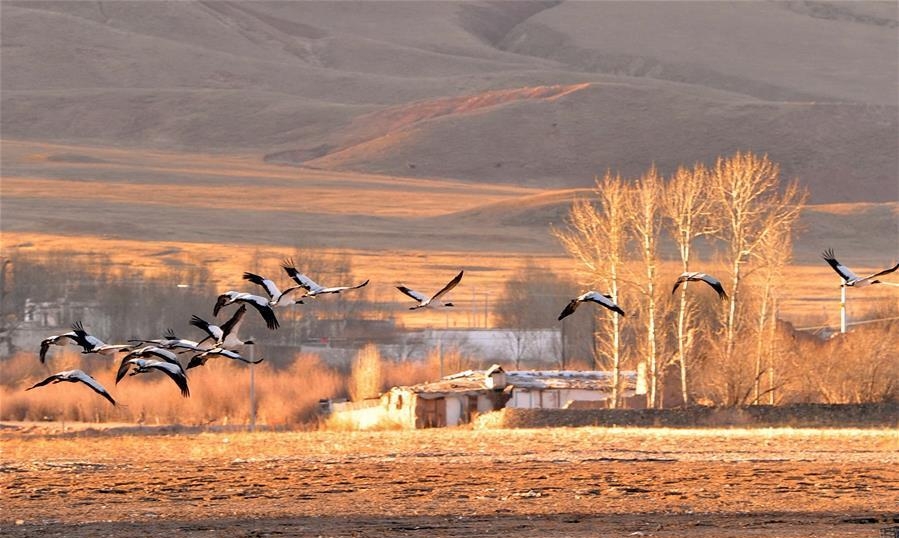
The landscape here is characterized by flat, golden-brown fields bordered by traditional Tibetan villages with whitewashed houses and fluttering prayer flags. Cranes often walk directly behind village walls, completely accustomed to the distant presence of humans. Early morning visits to the edges of Linzhou’s agricultural zones frequently reward birders with the sight of hundreds of cranes lifting off from their roosting sites in synchronized, chaotic beauty. The sound of their trumpeting calls echoing off the valley walls is an auditory experience that defines the essence of winter in Tibet.
Pengbo Farm and Surrounding Wetlands
Adjacent to the broader Linzhou area, the historical Pengbo Farm and its surrounding wetlands represent another critical node for black-necked crane winter birdwatching in Lhasa valley. Historically a state-run agricultural enterprise, this area features vast tracts of uniform cropland that are left fallow during winter. The residual grains and open soil attract massive flocks. Additionally, sections of the farm retain shallow wetland characteristics, providing drinking water and safe roosting areas away from terrestrial predators.
Birders visiting Pengbo should focus on the transitional zones where dry fields meet marshy depressions. Cranes often utilize these boundaries, moving between foraging and resting throughout the day. The flat terrain also allows for excellent long-distance viewing through spotting scopes, enabling observers to study courtship dances and family dynamics without causing stress to the birds.
Doilungdeqen District and Riverbanks
Closer to the urban center of Lhasa, the Doilungdeqen District offers surprisingly accessible birdwatching opportunities. The stretches of the Lhasa River flowing through this district maintain pockets of unfrozen water and riparian vegetation even in the coldest months. While the flocks here might be smaller than those in Linzhou, the convenience factor is unmatched. Travelers staying in Lhasa city can arrange half-day excursions to the riverbanks for productive black-necked crane winter birdwatching without committing to long overland journeys.
The riverbanks also attract diverse waterfowl, creating mixed-species flocks that are fascinating to observe. Bar-headed geese and various ducks often share the water margins with cranes, providing excellent comparative photography opportunities. The backdrop of snow-dusted mountains rising directly from the river plain adds dramatic scale to any visual record of the trip.
Yamdrok Lake Periphery
While Yamdrok Lake itself is situated at a higher altitude and often partially freezes, its lower peripheral valleys and connecting river corridors serve as transit and temporary wintering zones. Some dedicated birders include the approach routes to Yamdrok as part of their broader black-necked crane winter birdwatching in Lhasa valley itinerary. Smaller, more skittish groups of cranes can sometimes be spotted in the sheltered agricultural pockets along the way. However, this location is secondary to Linzhou and is best treated as a supplementary site rather than a primary base camp.
Optimal Timing and Seasonal Patterns
Timing your visit correctly is essential for a successful birding expedition. The window for black-necked crane winter birdwatching in Lhasa valley is relatively well-defined, dictated by the harsh climatic shifts of the Tibetan Plateau.
The Arrival: Late October to November
The first scouts typically arrive in late October, but the main influx occurs throughout November. During this period, the birds are establishing territories and familiarizing themselves with the food sources. Flocks are highly mobile, moving between different fields as they assess the best foraging grounds. Birding in November can be slightly unpredictable regarding exact locations, but the sheer volume of arriving birds makes it an exciting time. The weather is generally crisp, with clear skies dominating, providing excellent lighting for photography.
Peak Winter: December to February
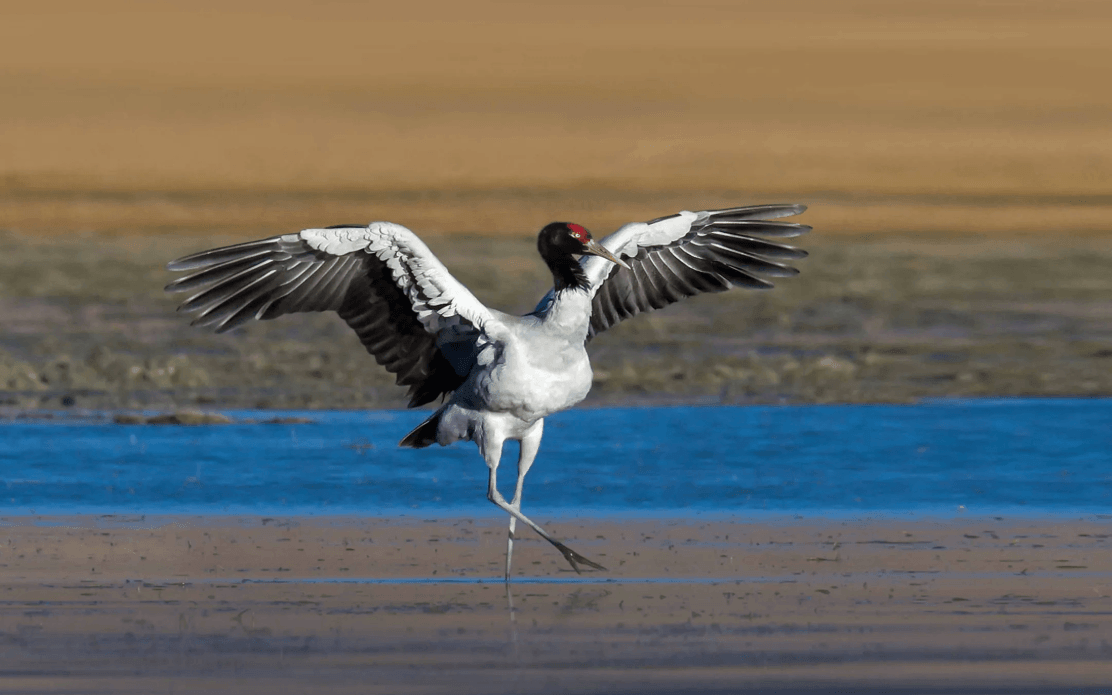
This three-month block represents the absolute prime time for black-necked crane winter birdwatching in Lhasa valley. The cranes have settled into predictable daily routines. They roost in specific marshy areas or shallow waters overnight to avoid foxes and stray dogs, flying out to the barley fields shortly after sunrise. By mid-morning, they are actively feeding, and during the warmest part of the afternoon, they often engage in social behaviors, including their famous unison dancing. This dancing, characterized by leaping, bowing, and tossing vegetation into the air, is particularly frequent among younger, non-breeding birds practicing for future mating seasons.
Temperatures during these months drop significantly, often falling below -10°C (14°F) at night, though daytime sunshine pushes temperatures into comfortable ranges. The contrast between the freezing mornings and the sun-warmed afternoons dictates the birds’ activity levels, which in turn dictates the observer’s schedule.
The Departure: March to Early April
As the days lengthen and the snow begins to melt on the higher passes, the cranes start their return migration. March offers a final opportunity for black-necked crane winter birdwatching in Lhasa valley, but the flocks become restless. You may observe increased vocalization and practice flights as families group together for the arduous journey back to the northern breeding grounds. By mid-April, the valley is largely emptied of its winter guests.
Daily Rhythms
On a micro-level, the best hours for observation are the first two hours after sunrise and the last two hours before sunset. Midday is typically spent resting, preening, or digesting, during which the birds are less active and harder to photograph dynamically. Arriving at your chosen spot before dawn ensures you witness the spectacular lift-off from the roosting sites, arguably the most thrilling moment of the entire day.
Essential Gear and Preparation for High-Altitude Birding
Engaging in black-necked crane winter birdwatching in Lhasa valley demands specific equipment tailored to both ornithological needs and extreme environmental conditions. Standard birding gear must be augmented for cold weather and high altitude.
Optics are paramount. A high-quality pair of binoculars (8×42 or 10×42) is necessary for scanning fields and identifying individual behaviors. However, because maintaining distance is crucial for ethical observation, a spotting scope with a magnification range of 20x to 60x is highly recommended. Mount the scope on a sturdy tripod; the winter winds sweeping down the valley can easily shake lightweight stands, ruining the viewing experience.
Photography enthusiasts should bring telephoto lenses, ideally in the 400mm to 600mm range. Cold temperatures drain camera batteries rapidly. Carry multiple spare batteries and keep them in inner jacket pockets close to your body heat until needed. Condensation is another threat when moving between freezing outdoors and heated vehicles or teahouses. Use sealed plastic bags to allow your gear to acclimatize slowly and prevent moisture from damaging internal lens elements.
Personal clothing must follow a strict layering system. Base layers of merino wool wick moisture away from the skin. Mid-layers of fleece or down provide insulation, while a windproof and waterproof outer shell protects against biting valley breezes. Insulated, waterproof boots are essential, as you will likely be standing on frozen ground or walking through frost-covered fields for hours. Do not forget UV-protection sunglasses, a wide-brimmed hat, and high-SPF sunscreen; the high-altitude sun reflecting off snow and pale fields is intensely strong.
Health preparation is equally critical. The Lhasa valley sits above 3,600 meters, and altitude sickness is a real concern. Spend at least two to three days acclimatizing in Lhasa city before venturing out for strenuous birding activities. Stay heavily hydrated, avoid alcohol initially, and move slowly in the fields. Consulting a physician about altitude medication prior to your trip is a wise precautionary step.
Ethical Guidelines and Responsible Wildlife Observation
The privilege of black-necked crane winter birdwatching in Lhasa valley comes with a heavy responsibility to protect the subjects of our admiration. These birds endure immense physiological stress to survive the winter, and human interference can deplete their vital energy reserves.
Always maintain a respectful distance. If a flock stops feeding, raises its heads in alarm, or begins to shift away from you, you are too close. Use your optics to bridge the gap rather than your footsteps. Never attempt to flush the birds for flight photography; forcing them to burn calories taking off unnecessarily can impact their survival rates during severe cold snaps.
Respect local agricultural properties. The cranes feed on private farmland, and walking through these fields can damage dormant crops or disturb the farmers who tolerate the birds. Stick to established paths, roadsides, and designated observation points. Engage with local farmers politely; many are proud of the cranes and may willingly point you toward the best viewing spots if approached respectfully.
Leave no trace. The pristine nature of the Tibetan environment is fragile. Pack out all trash, including food wrappers and hand warmers. Avoid playing recorded crane calls to elicit responses, as this disrupts their natural communication and causes unnecessary stress within the flock. Ethical birding ensures that black-necked crane winter birdwatching in Lhasa valley remains viable for future generations of travelers and scientists.
Navigating Logistics, Accommodation, and Local Expertise
Planning the logistical framework of your trip determines how smoothly your daily birding operations will run. Lhasa serves as the primary gateway, offering international-standard hotels, reliable medical facilities, and easy access to transportation networks. From Lhasa, the drive to key birding sites like Linzhou takes roughly one to two hours, making day trips feasible, though staying closer to the habitats reduces early morning transit times.
Accommodation in rural counties has improved significantly. Basic guesthouses and locally run inns offer heated rooms and traditional meals. Staying in these smaller establishments places you directly in the environment, allowing you to step outside at dawn rather than spending hours driving from the city. Ensure your lodging has reliable heating, as nighttime indoor temperatures can plummet.
Navigating Tibet as an international traveler requires specific permits, including the Tibet Travel Permit, which must be arranged through a registered travel agency prior to arrival. Independent travel is restricted, meaning you will need to be part of an organized tour or hire a licensed guide and driver. This regulatory framework actually benefits birders, as local guides possess invaluable knowledge about recent crane movements, road conditions, and hidden observation spots that are rarely documented in standard guidebooks.
For travelers seeking specialized, seamless itineraries focused on wildlife and nature, agencies like Tibet Yulong Travel offer tailored services that cater specifically to niche interests. Coordinating a trip centered around black-necked crane winter birdwatching in Lhasa valley requires precise timing, knowledgeable drivers who understand where the flocks are currently concentrated, and guides who respect the pace of a birder rather than rushing through a standard tourist checklist. Tibet Yulong Travel has built a reputation for facilitating these deeper, more meaningful explorations of the Tibetan landscape, ensuring that logistics fade into the background so you can focus entirely on the natural world.
Dietary considerations during winter birding trips should not be overlooked. Traditional Tibetan food—heavy on yak meat, barley tsampa, and butter tea—provides the dense caloric intake required to stay warm in the field. Sweet tea houses in Lhasa and larger towns offer warm refuges to review checklists and warm up between excursions. Carry high-energy snacks like nuts and chocolate in your daypack for sustained energy during long morning watches.
The Broader Ecological Context of the Lhasa Valley
To truly appreciate black-necked crane winter birdwatching in Lhasa valley, one must look beyond the birds themselves and understand the broader ecological theater in which they perform. The Lhasa valley is a dynamic intersection of glacial hydrology, high-altitude agriculture, and climate patterns.
The rivers that sustain the valley are fed by glaciers and snowmelt from the Nyainqentanglha mountain range. In winter, flow rates decrease, exposing gravel banks and shallow pools that serve as critical roosting sites. Changes in regional climate patterns directly affect these water levels. Prolonged droughts or unusually rapid freezing can shrink available habitat, concentrating birds into smaller areas and increasing competition for food. Observant birders often notice how water levels dictate the exact placement of the flocks from week to week.
Agricultural practices also shape the environment. The transition from traditional barley farming to varied cash crops in some areas alters the winter food supply. Fortunately, conservation initiatives working alongside local communities emphasize the importance of leaving sufficient crop residue for the cranes. Subsidies and awareness programs encourage farmers to view the birds as assets rather than pests. This ongoing dialogue between conservationists and agricultural workers is the invisible scaffolding that supports successful black-necked crane winter birdwatching in Lhasa valley today.
Predator dynamics add another layer of complexity. While adult cranes have few natural enemies, vulnerable juveniles or sick individuals face threats from foxes, feral dogs, and large raptors. Watching the cranes organize their defensive formations, with adults placing themselves between potential threats and the younger birds, reveals the intense evolutionary pressures shaping their behavior even in the relative safety of the wintering grounds.
Cultural Encounters Along the Birding Trail
A journey dedicated to black-necked crane winter birdwatching in Lhasa valley is inevitably intertwined with encounters of deep cultural significance. The monasteries scattered throughout the valley are not merely architectural landmarks; they are active centers of spiritual life that influence how the surrounding landscape is treated. Many monasteries enforce strict bans on hunting within their domains, creating de facto wildlife sanctuaries that have protected birds for centuries.
Visiting these sites between birding sessions provides context to the environment. You will frequently see monks walking the kora (circumambulation paths) spinning prayer wheels, their chants mingling with the calls of the cranes overhead. The integration of wildlife into daily spiritual practice is palpable. Farmers often leave small offerings near fields frequented by the cranes, expressing gratitude for the birds’ presence.
Interacting with local herders and farmers enriches the experience immeasurably. Despite language barriers, shared enthusiasm for the landscape bridges gaps. Locals are often eager to point out a rare bird or share stories about the changing seasons. These interactions transform a purely scientific pursuit into a holistic cultural immersion. Respecting local customs, asking permission before photographing people, and dressing modestly near religious sites ensures that your presence as a birder is welcomed rather than resented.
The winter light in Tibet possesses a clarity found almost nowhere else on earth. The lack of humidity and atmospheric dust means that colors are rendered with startling intensity. The stark white of the cranes against the deep brown of the harvested fields, framed by the piercing azure of the sky and the vivid colors of Tibetan architecture, creates a visual palette that stays with you long after the trip concludes. This aesthetic dimension is a core reason why photographers and artists are drawn to black-necked crane winter birdwatching in Lhasa valley alongside dedicated ornithologists.
Maximizing Your Birding Success
Success in the field relies on patience, adaptability, and continuous learning. Keep a detailed journal of your observations. Note the times the birds arrive at the fields, their preferred feeding spots, and how their behavior changes with the weather. Overcast days might see them feeding longer into the afternoon, while bright, windy days push them to seek sheltered depressions earlier.
Collaborate with other birders. Information sharing is vital in a landscape where flocks can shift locations overnight due to localized snowfall covering food sources. Establishing contact with local birding communities or relying on the updated knowledge provided by experienced operators like Tibet Yulong Travel ensures you are always directed toward the most active sites. Their guides continuously monitor the valleys, communicating with farmers and other drivers to track the daily movements of the cranes, saving you precious time and effort.
Ultimately, black-necked crane winter birdwatching in Lhasa valley is an exercise in humility. You are entering a harsh, beautiful environment where survival is a daily triumph for every living thing. The cranes do not perform for us; they exist on their own terms, navigating ancient rhythms dictated by ice, sun, and instinct. To stand quietly on the edge of a frozen field, breathing thin air, and watch these towering birds dance in the morning light is to connect with something profoundly wild and enduring. It is a travel experience that redefines the concept of a winter getaway, trading tropical beaches for snow-capped peaks and replacing relaxation with awe-inspiring, raw natural wonder.