Tibet is widely regarded as one of the most extraordinary destinations on Earth for astrophotography. Sitting at an average elevation exceeding 4,000 meters, this vast plateau offers remarkably thin air, minimal light pollution, and exceptionally clear atmospheric conditions. For photographers chasing the cosmos, finding the best spots in Tibet for Milky Way stargazing photography is a transformative experience. The sheer altitude removes much of the atmospheric interference that plagues lower-elevation locations, resulting in stars that appear sharper, brighter, and more densely packed across the sky. Whether you are a seasoned astrophotographer or an enthusiastic beginner, the Tibetan Plateau provides a canvas unlike anywhere else. Planning a trip here requires careful consideration of geography, weather patterns, and physical preparation. This comprehensive guide explores the premier locations, essential techniques, and practical logistics needed to successfully photograph the Milky Way in this remote and breathtaking region.
✨ Highlights:
- High altitude ensures thinner atmosphere and clearer star visibility.
- Remote lakes and peaks offer zero light pollution for pristine shots.
- Late spring to early autumn provides the optimal viewing seasons.
- Specialized cold-weather gear is mandatory for equipment survival.
- Proper acclimatization is critical before attempting nighttime shoots.
Understanding Why Tibet Offers the Best Spots in Tibet for Milky Way Stargazing Photography
The geographical and atmospheric characteristics of Tibet make it a global epicenter for astronomical observation. When evaluating the best spots in Tibet for Milky Way stargazing photography, one must first understand why the plateau outperforms almost every other location on the planet. The primary advantage is elevation. At altitudes ranging from 4,500 to over 5,000 meters, photographers are positioned above a significant portion of the Earth’s dense lower atmosphere. Water vapor, dust, and aerosols—which scatter light and reduce stellar clarity—are drastically reduced at these heights. The result is a sky with unparalleled transparency, allowing faint deep-sky objects and the delicate dust lanes of the Milky Way to be captured with striking contrast.
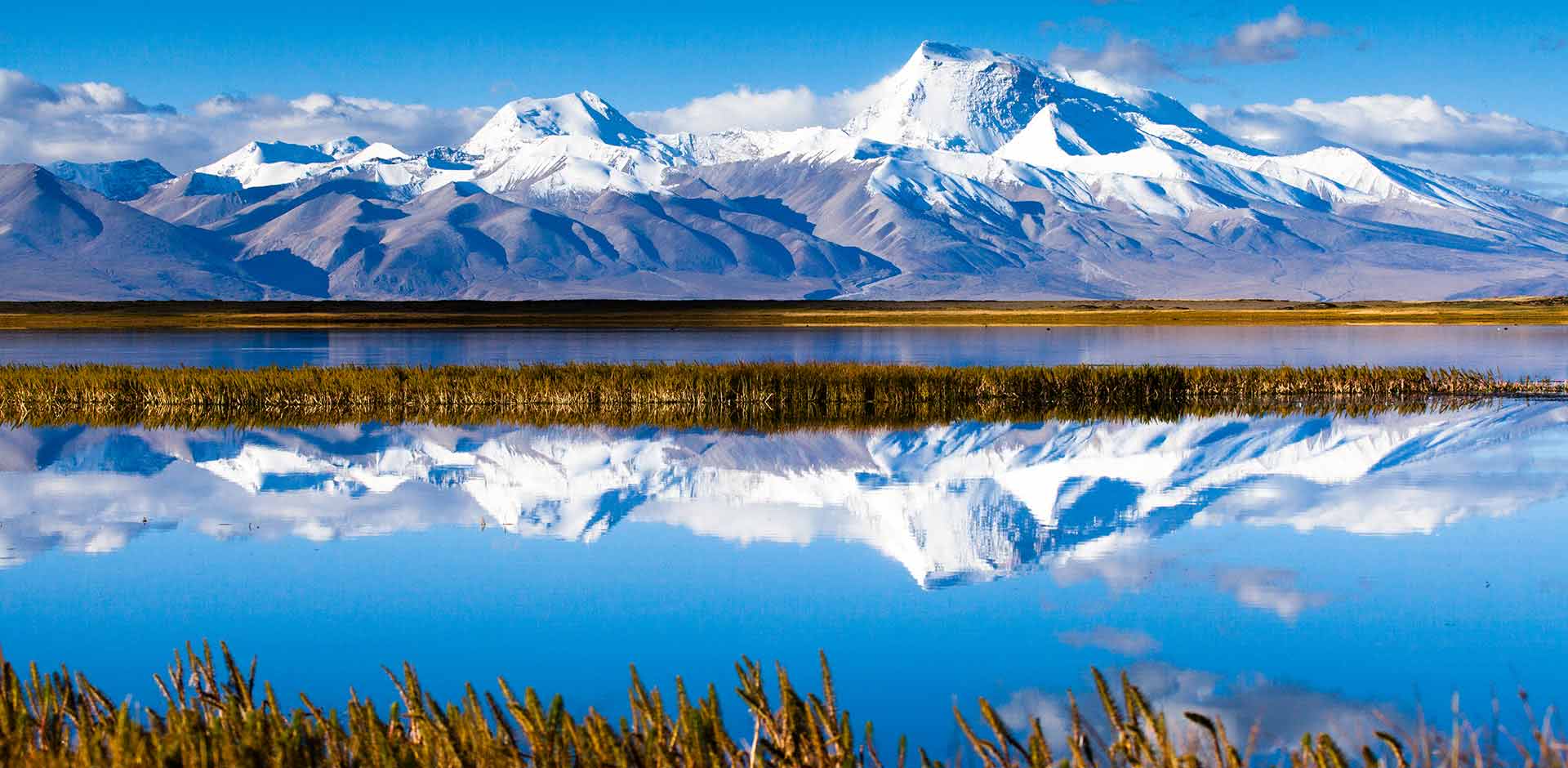
Lake Rakshastal
Another crucial factor is the absence of artificial light pollution. Much of the Tibetan Plateau remains entirely uninhabited or sparsely populated by nomadic herders who do not rely on electrical grids. This creates massive expanses of Bortle Class 1 skies, the darkest rating possible on the light pollution scale. In these zones, the Milky Way casts visible shadows on the ground, and the galactic core dominates the horizon with a brilliance that defies description. Furthermore, Tibet experiences extended periods of dry weather, particularly outside the brief summer monsoon window. High-pressure systems frequently settle over the plateau, bringing stable, cloudless nights that are ideal for long-exposure photography. The combination of dry air, extreme altitude, and total darkness forms the foundation of what makes this region the ultimate destination for night sky enthusiasts.
Mount Everest Base Camp: A Legendary Location for Night Sky Photography
No list detailing the best spots in Tibet for Milky Way stargazing photography would be complete without mentioning Mount Everest Base Camp (EBC). Situated at approximately 5,200 meters above sea level, EBC places photographers directly beneath some of the clearest skies on Earth, framed by the silhouettes of the world’s highest peaks. The Rongbuk Valley, where the base camp is located, serves as a natural amphitheater. During the night, the jagged ridges of Everest, Lhotse, and Nuptse create dramatic foreground elements that elevate standard astrophotography into fine art.
Shooting at Everest Base Camp presents unique compositional opportunities. The iconic Rongbuk Monastery, one of the highest in the world, can serve as a cultural foreground element when illuminated subtly by moonlight or a controlled flashlight. Photographers often position themselves along the glacial moraines to capture the Milky Way arching directly over the summit pyramid. However, working at this altitude demands immense respect for the environment and your own physiology. The air holds roughly half the oxygen found at sea level, making even simple tasks like setting up a tripod physically exhausting. It is highly recommended to spend several days acclimatizing in Shigatse or Tingri before ascending to the base camp.
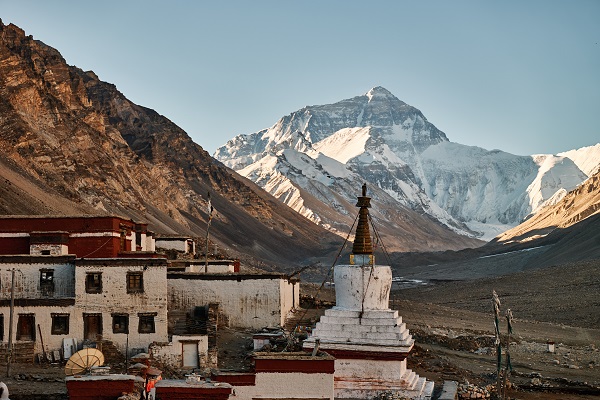
Rongbuk Monastery
The best time to photograph the Milky Way from EBC is during the pre-monsoon months of April and May, or the post-monsoon window in late September and October. During these periods, the jet stream shifts, reducing the persistent winds that normally shroud the peak in snow plumes, while also offering stable, cloudless nights. The galactic core is prominently visible in the southern sky, aligning beautifully with the mountain range. Keep in mind that temperatures routinely drop well below freezing after sunset, requiring robust thermal management for both the photographer and the camera equipment.
Namtso Lake: Reflecting the Cosmos on the Highest Saltwater Lake
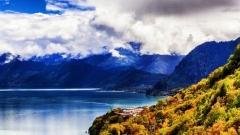
Namtso Lake, resting at 4,718 meters, is another premier destination among the best spots in Tibet for Milky Way stargazing photography. Known as the “Heavenly Lake” Namtso is one of the largest and highest saltwater lakes in the world. Its vast, unobstructed surface acts as a giant mirror, offering astrophotographers the rare opportunity to capture perfect reflections of the Milky Way. The lake stretches toward the horizon, bordered by the snow-capped Nyainqentanglha mountain range, providing diverse foreground options depending on where you set up along the shore.
The Tashi Dor peninsula, which juts into the lake, is a favorite staging area for photographers. Here, unique rock formations and ancient meditation caves add compelling terrestrial elements to wide-angle night compositions. Because Namtso is located far from major urban centers like Lhasa, the skies remain completely untouched by artificial light. On moonless nights, the density of stars reflected in the still water creates a disorienting, beautiful illusion of floating in space.
Timing your visit to Namtso is critical. The lake freezes entirely during the harsh winter months, making access difficult and eliminating the reflective water surface. The optimal season for stargazing photography here runs from late May through September. However, July and August bring the Asian monsoon, which can introduce heavy cloud cover. Therefore, June and early September generally offer the best balance of liquid water, accessible roads, and clear skies. Wind is a constant factor at Namtso; waiting for the breeze to die down after midnight is often necessary to achieve glass-like reflections required for symmetrical astrophotography.
Ngari Region and Mount Kailash: The Remote Frontier of Astrophotography
For those seeking absolute isolation and pristine darkness, the Ngari Prefecture in western Tibet represents the pinnacle of the best spots in Tibet for Milky Way stargazing photography. Ngari is often referred to as the “roof of the roof of the world”, with average elevations exceeding 4,500 meters and a population density that approaches zero in many areas. This extreme remoteness guarantees skies of absolute purity, free from even the faintest glow of distant cities.
Mount Kailash, standing at 6,638 meters, is the spiritual center of four religions and a visually stunning subject for astrophotography. Its distinct, symmetrical pyramidal shape stands isolated from surrounding ranges, making it an unmistakable foreground anchor. Photographers typically set up near Darchen, the small settlement at the mountain’s base, or venture slightly further along the kora (pilgrimage route) to find unobstructed views. The Milky Way rising behind the northern face of Kailash is considered one of the most sought-after images in landscape astrophotography.
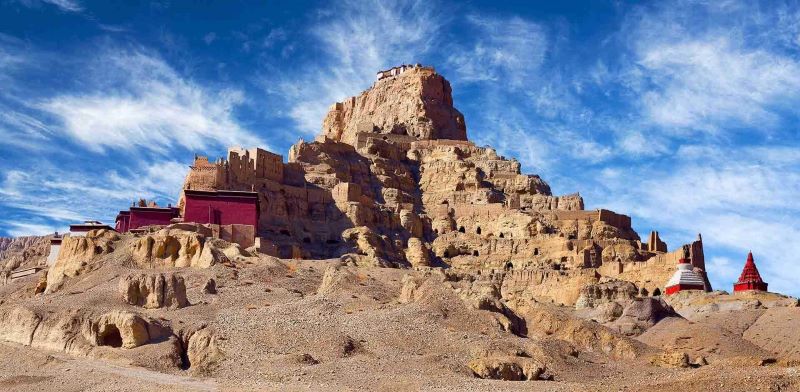
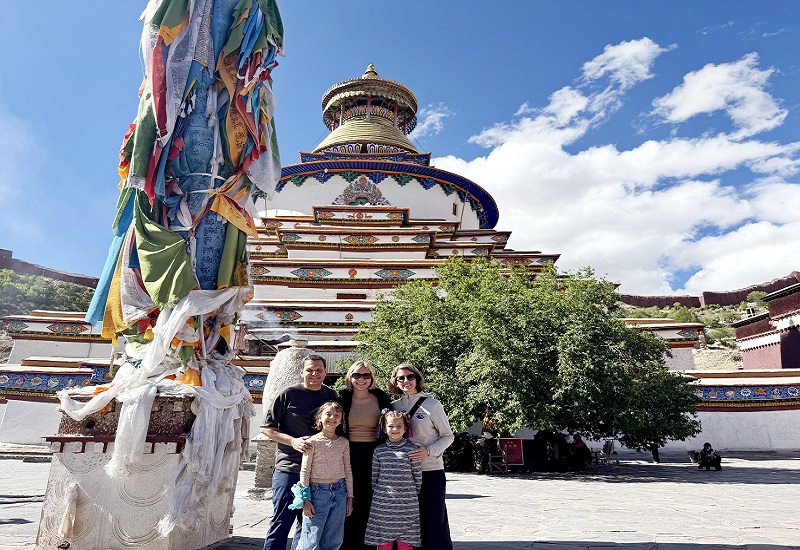
Guge Kingdom
Beyond Kailash, the Ngari region is home to Pangong Tso (partially in Tibet) and the ruins of the ancient Guge Kingdom. The Guge Kingdom ruins, carved into a massive clay canyon, offer surreal, otherworldly foregrounds. Illuminating these ancient mud-brick structures with low-level LED panels while exposing for the galactic core overhead yields images rich in historical narrative and cosmic scale. Reaching Ngari requires a significant overland journey, usually taking several days of driving from Lhasa or flying into Ali Kunsha Airport. The logistical challenges are steep, but the photographic rewards are unmatched anywhere else on the plateau.
Yamdrok Lake: Accessible Beauty Near Lhasa for Stargazing Enthusiasts
While remote locations dominate the conversation about the best spots in Tibet for Milky Way stargazing photography, Yamdrok Lake offers a more accessible alternative without sacrificing too much sky quality. Located just a few hours’ drive southwest of Lhasa, Yamdrok sits at 4,441 meters. Its serpentine shape winds through rugged mountains, creating countless secluded bays and peninsulas where photographers can escape the minor light spill from nearby towns.
Yamdrok is famous for its mesmerizing turquoise color during the day, but at night, its calm waters become a dark canvas reflecting the starry sky. The drive over the Kamba La pass (4,790 meters) provides elevated vantage points where the entire lake sprawls below, offering sweeping panoramic opportunities. For photographers based in Lhasa who cannot commit to the multi-week expeditions required for Ngari or Everest, Yamdrok serves as an excellent weekend destination for night sky shooting.
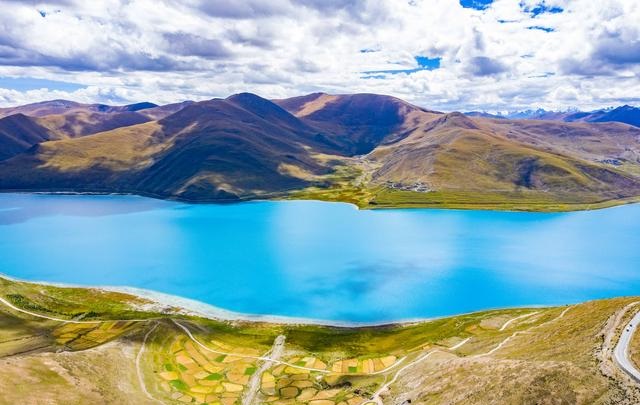
Yamdrok Lake
To maximize darkness at Yamdrok, it is advisable to move away from the main tourist viewpoints at Gangbala Pass and travel further along the lakeside road toward the town of Nagarze or the smaller fishing villages. These areas have virtually no street lighting. The best months for shooting here mirror those of Namtso—late spring and early autumn provide the clearest atmospheric conditions. Because Yamdrok is closer to the moisture channels of the southern Himalayas, weather monitoring is essential, as clouds can build rapidly in the afternoon and linger into the night.
Essential Camera Gear and Equipment for High-Altitude Night Photography
Identifying the best spots in Tibet for Milky Way stargazing photography is only half the battle; possessing the right equipment is equally vital. The extreme environment of the Tibetan Plateau tests gear to its absolute limits. A sturdy, heavy-duty tripod is non-negotiable. High-altitude winds can be fierce and unpredictable, and any vibration will ruin a long exposure. Carbon fiber tripods are preferred for their strength-to-weight ratio, especially since you may need to hike considerable distances from your vehicle to find a clean foreground.
Camera bodies should ideally be full-frame sensors, which perform significantly better in low-light conditions due to larger photosites that produce less noise at high ISO settings. While APS-C or Micro Four Thirds cameras can certainly capture the Milky Way, full-frame systems provide the dynamic range necessary to pull details out of the dark foregrounds while managing the bright galactic core. Lenses are arguably the most critical component. Fast, wide-angle primes are the standard choice. Lenses such as a 14mm f/1.8, 20mm f/1.4, or 24mm f/1.4 allow you to gather maximum light, keeping exposure times short enough to prevent star trailing while maintaining a low ISO.
Power management becomes a severe challenge in Tibet’s freezing nighttime temperatures. Lithium-ion batteries lose their capacity rapidly in the cold. You must carry multiple spare batteries and keep them insulated inside your jacket, close to your body heat, rotating them into the camera as they drain. Some photographers utilize external battery packs with dummy batteries, storing the power bank in a heated pocket. Additionally, lens heaters or simple chemical hand warmers secured around the lens barrel with rubber bands are essential to prevent dew and frost from forming on the front element, which can happen quickly when temperatures plummet after midnight.
Techniques for Capturing the Milky Way on the Tibetan Plateau
Mastering specific photographic techniques is necessary to fully leverage the best spots in Tibet for Milky Way stargazing photography. The fundamental approach involves balancing aperture, shutter speed, and ISO to capture sufficient light without introducing excessive noise or motion blur. Shoot with your lens wide open (e.g., f/1.4 or f/1.8) to maximize light intake. To determine your maximum shutter speed before stars begin to streak due to the Earth’s rotation, use the “500 Rule” (dividing 500 by your lens’s focal length) or the more accurate “NPF Rule.” For a 14mm lens on a full-frame camera, exposures between 15 and 25 seconds are typical.
ISO settings will generally range from 3200 to 6400, depending on your camera’s sensor capabilities. Modern cameras handle these sensitivities remarkably well, especially when paired with noise reduction software in post-processing. Always shoot in RAW format to retain the maximum amount of data for adjusting white balance, recovering shadows, and reducing noise later. Manual focus is mandatory; autofocus systems fail entirely in the dark. Use your camera’s live view mode, magnify a bright star on the LCD screen, and adjust the focus ring until the star appears as a sharp, pinpoint dot. Tape the focus ring in place once achieved to prevent accidental adjustments.
Composition separates a snapshot from a masterpiece. The Milky Way alone, while spectacular, lacks context. Actively scout your foreground during daylight hours. Look for interesting rocks, prayer flags, chortens (Buddhist shrines), or water reflections. If the foreground is pitch black, use light painting techniques sparingly. A dim flashlight bounced off a piece of white cardboard, or a very brief flash of a headlamp, can illuminate the foreground evenly without looking artificial. Alternatively, take separate exposures for the sky and the foreground at different settings, blending them seamlessly during editing.
Optimal Seasons and Weather Patterns for Stargazing in Tibet
Even the best spots in Tibet for Milky Way stargazing photography are useless if obscured by clouds. Understanding the seasonal weather patterns is paramount. The visibility of the Milky Way’s galactic core—the brightest and most photogenic part—dictates the timing of your trip. In the Northern Hemisphere, the core is best seen from March through October. However, Tibet’s unique climate narrows this window significantly.
Winter (November to February) offers incredibly crisp, transparent skies due to the dry, cold air, but the galactic core remains below the horizon during the dark hours of the night. Furthermore, extreme sub-zero temperatures and closed mountain passes make winter travel dangerous and logistically impractical for most. Summer (July and August) coincides with the Asian monsoon. Moisture pushed northward by the Indian Ocean brings frequent cloud cover, rain, and thick haze to the southern and central plateau, severely limiting clear nights.
Therefore, the prime windows are late spring (April to mid-June) and early autumn (September to October). During these transitional months, the monsoon has either not yet arrived or has already retreated, leaving behind stable, dry, and clear atmospheric conditions. April and May are particularly favored because the nights are still long enough for comfortable shooting hours, and the galactic core rises to a favorable position in the sky shortly after astronomical twilight ends. Monitoring satellite weather imagery and utilizing specialized apps designed for astrophotographers to track cloud cover, seeing conditions, and transparency will greatly increase your success rate.
Acclimatization and Health Precautions for Nighttime Shoots
Exploring the best spots in Tibet for Milky Way stargazing photography requires venturing into environments that are inherently hostile to human biology. Altitude sickness, or Acute Mountain Sickness (AMS), is a serious risk that can derail a photography expedition or lead to life-threatening complications like High Altitude Pulmonary Edema (HAPE). Astrophytography adds a layer of complexity because the work happens at night, when the body’s core temperature drops, and fatigue exacerbates AMS symptoms.
A strict acclimatization protocol is essential. Upon arriving in Lhasa (3,650 meters), spend at least two to three days resting, hydrating aggressively, and avoiding alcohol or strenuous exertion before traveling to higher elevations like Namtso or Everest Base Camp. Ascend gradually; do not sleep at an altitude more than 500 meters higher than your previous night’s sleeping elevation whenever possible. Carry supplemental oxygen cylinders or portable hyperbaric bags, especially when camping in remote areas like Ngari where medical facilities are nonexistent.
Nighttime temperatures on the plateau can plunge to -20°C or colder, even in summer. Hypothermia is a genuine threat when standing still for hours operating a camera. Layering is critical: merino wool base layers, heavy down mid-layers, and windproof outer shells. Insulated mountaineering boots, thick gloves that allow finger dexterity for camera dials, and balaclavas are standard requirements. Working with a partner is highly recommended for safety. If you feel headaches, nausea, or breathlessness worsening during a night shoot, abandon the session immediately and descend to a lower altitude.
Navigating Permits and Logistics for Traveling Across Tibet
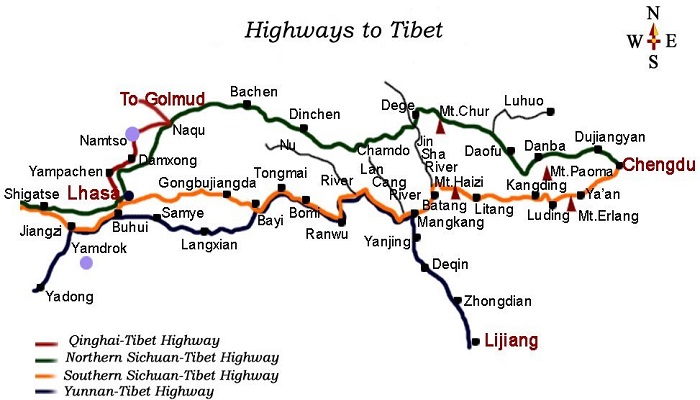
Accessing the best spots in Tibet for Milky Way stargazing photography involves navigating a complex web of regulations. Foreign travelers cannot visit Tibet independently. You must obtain a Tibet Travel Permit (TTP), which is arranged through a registered local travel agency as part of an organized tour. Additionally, visiting border regions like Mount Everest, Mount Kailash, and parts of the Ngari prefecture requires an Alien’s Travel Permit (ATP) and sometimes a Military Border Permit, as these areas are sensitive due to their proximity to international borders.
Transportation relies heavily on rugged 4×4 vehicles driven by experienced local drivers who understand the unpaved, often treacherous mountain roads. Driving at night is extremely hazardous due to roaming livestock, lack of guardrails, and sudden weather changes. Therefore, photographers typically arrive at their chosen location before sunset, scout compositions, rest, and then wake up in the middle of the night to shoot, returning to their guesthouse or tent before dawn.
Accommodations in remote areas range from basic guesthouses with communal heating to wild camping. If you plan to camp, ensure your tent is rated for extreme alpine conditions and that you have a sleeping bag rated for at least -20°C. Leave No Trace principles are vital. The fragile alpine ecosystem of the Tibetan Plateau recovers incredibly slowly from damage. Pack out all waste, including batteries and food wrappers, and avoid disturbing wildlife or sacred religious sites when scouting for foregrounds.
Planning Your Journey with Tibet Yulong Travel
Executing a successful astrophotography expedition to the best spots in Tibet for Milky Way stargazing photography demands meticulous planning, local expertise, and reliable logistical support. Navigating permit applications, securing appropriate high-altitude transportation, and identifying the exact coordinates with the darkest skies require intimate knowledge of the region. This is where partnering with experienced professionals becomes invaluable.
Tibet Yulong Travel specializes in crafting customized itineraries tailored specifically for photographers and adventure seekers. Their deep understanding of the Tibetan Plateau’s geography, weather micro-climates, and regulatory requirements ensures that your expedition focuses entirely on capturing the night sky rather than struggling with administrative hurdles. From arranging the necessary travel permits to providing seasoned drivers who know the safest routes to remote locations like Ngari and Everest Base Camp, Tibet Yulong Travel handles the complex groundwork. They understand the unique schedules of astrophotographers, accommodating late-night excursions and flexible routing based on real-time weather forecasts. By leveraging their local expertise, you gain safe, efficient access to the most pristine dark sky locations Tibet has to offer, transforming a challenging logistical endeavor into a seamless and profoundly rewarding photographic journey.