Standing at 6,638 meters in the remote southwestern corner of Tibet, Mount Kailash is one of the most recognizable peaks on Earth. Yet, unlike Everest or K2, it has never been summited by human feet. The absence of climbing records is not due to a lack of interest from the mountaineering community. Over the decades, numerous expeditions have proposed routes to the top. However, every attempt has been halted long before climbers could strap on their crampons. The reasons behind this prohibition are deeply rooted in ancient faith, modern legal frameworks, and the unforgiving nature of the mountain itself.
To understand why Mount Kailash cannot be climbed, one must look beyond the physical dimensions of rock and ice. It requires examining the spiritual weight the peak carries for over a billion people worldwide, alongside the practical realities of governing a fragile high-altitude ecosystem.
Key Takeaways
A Sacred Spiritual Center: Mount Kailash is deeply revered across four major religions—Hinduism, Buddhism, Jainism, and the Bon tradition—as a cosmic axis and divine dwelling place, making any attempt to climb it a profound desecration.
Strict Legal Prohibitions: Following a massive global backlash against a proposed 2001 climbing expedition, the Chinese government instituted a permanent, blanket ban on all mountaineering activities on the peak to respect religious sensitivities and preserve regional harmony.
Formidable Geographical & Environmental Challenges: The mountain features near-vertical, symmetrical pyramid walls composed of crumbling rock and hard blue ice. Combined with volatile weather, extreme remoteness, and a fragile high-altitude ecosystem, conventional climbing is both exceptionally dangerous and ecologically destructive.
The Kora Pilgrimage Tradition: Rather than conquering the summit, devotees and travelers engage with the mountain through the 52-kilometer Kora circumambulation (reaching the Dolma La pass at 5,630 meters), transforming physical exertion into an act of reverence, meditation, and introspection.
Protected Mystique & Cultural Taboos: A rich tapestry of myths, legends, and unverified tales reinforces the psychological and cultural boundaries against climbing, ensuring that Mount Kailash remains an untouched anomaly—a testament to preserving the sacred over human ambition.
A Spiritual Center for Four Major Religions
The primary reason no one climbs Mount Kailash is its unparalleled status as a holy site. It is uniquely revered across four distinct religions: Hinduism, Buddhism, Jainism, and the indigenous Bon tradition. For adherents of these faiths, the mountain is not a geological formation to be conquered; it is the literal axis of the universe.
In Hinduism, Mount Kailash is believed to be the earthly abode of Lord Shiva, the destroyer and transformer within the Hindu trinity. It is said that Shiva sits in eternal meditation at the summit alongside his consort, Parvati. To step foot on the peak would be considered an act of profound desecration, a direct insult to the divine presence residing there. The mountain represents the center of the cosmos, the point where heaven and earth meet.
Buddhists also hold the mountain in supreme regard. In Tibetan Buddhism, it is known as Kang Rinpoche, meaning “Precious Jewel of Snow.” It is associated with Demchok, a deity representing supreme bliss. Legends state that the great Buddhist master Milarepa engaged in a magical duel atop the mountain against Naro Bonchung, a priest of the Bon religion. Milarepa’s victory established Buddhism’s prominence in the region, further cementing the peak’s sacred narrative. Buddhists believe that circumambulating the mountain washes away the sins of a lifetime.
For Jains, the peak is known as Ashtapada. It is the site where their first Tirthankara, Rishabhadeva, attained spiritual liberation, or moksha. This event makes the location one of the most critical pilgrimage sites in the Jain faith. Similarly, followers of the Bon religion, which predates Buddhism in Tibet, consider Mount Kailash the dwelling place of the sky goddess Sipaimen and the spiritual center of their ancient cosmology.
Given that billions of people view the summit as the ultimate sacred space, any attempt to climb it would trigger immense international outrage. The cultural consensus is absolute: the mountain must be respected from afar, never trodden upon.
Strict Government Regulations and Legal Prohibitions
While religious sentiment provides the moral foundation for leaving the peak untouched, formal legislation enforces it. The Chinese government, which administers the Tibet Autonomous Region where the mountain is located, has implemented strict regulations prohibiting any climbing activities on Mount Kailash.
This ban was not always explicitly codified in modern law, but it became absolute following a highly publicized controversy. In 2001, a Spanish climbing team received preliminary permission to attempt the summit. When news of this authorization reached the global community, it sparked immediate and massive protests. Hindu, Buddhist, Jain, and Bon organizations worldwide condemned the decision. Petitions gathered millions of signatures, and diplomatic pressures mounted rapidly.
Responding to the intense backlash and recognizing the deep sensitivity of the issue, authorities swiftly revoked the climbing permit. Shortly thereafter, the Chinese government issued a formal, blanket ban on all mountaineering activities on Mount Kailash. This policy remains firmly in place today. Permits are only granted for the Kora—the traditional pilgrimage route that circles the base of the mountain—and strictly for religious or carefully regulated tourist purposes. Attempting to ascend above the designated trekking paths is illegal and will result in immediate intervention by local authorities.
Furthermore, the local administrative bodies in Ngari Prefecture work closely with religious leaders to monitor the area. The enforcement of the climbing ban is seen not just as a legal obligation, but as a commitment to preserving ethnic and religious harmony in a diverse region.
Geographical and Environmental Challenges
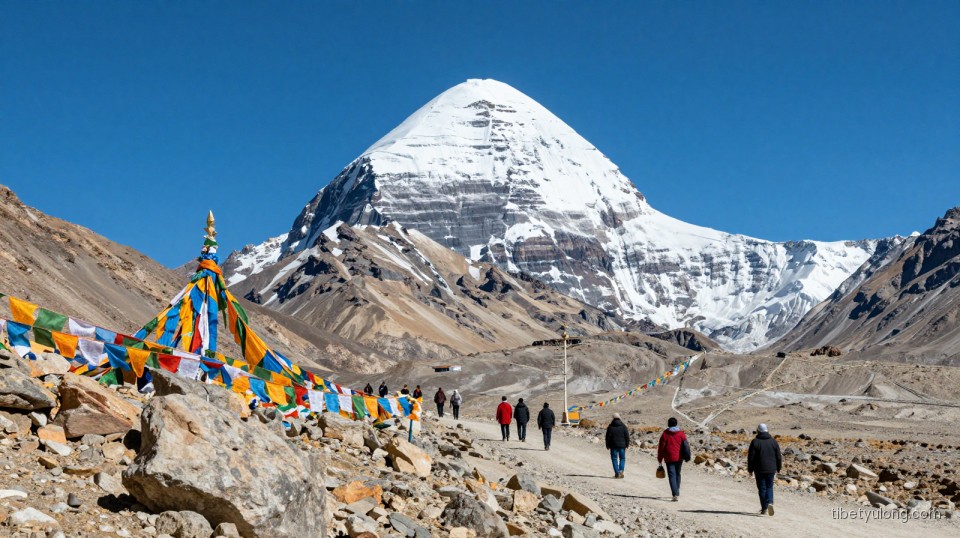
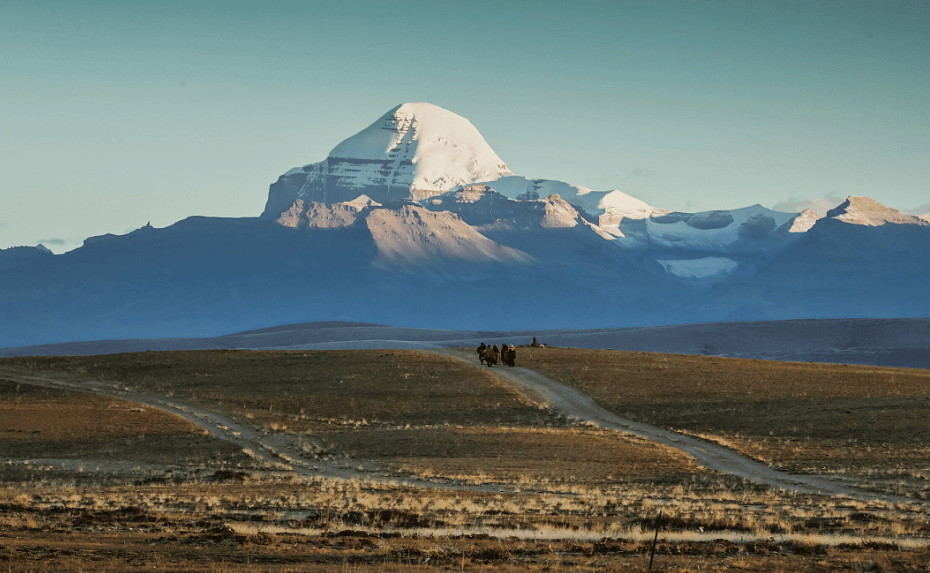
Even if the spiritual and legal barriers were hypothetically removed, Mount Kailash presents formidable physical obstacles that deter conventional mountaineering. Standing at 6,638 meters, it is significantly lower than many climbed Himalayan peaks, yet its geometry and location make it exceptionally difficult.
The mountain features a remarkably symmetrical, almost pyramidal shape, with four sheer faces aligning closely with the cardinal directions. These faces are composed of steep, crumbling rock and hard blue ice. Unlike mountains with gradual slopes or accessible ridges, Mount Kailash offers very few viable technical routes. The near-vertical walls require advanced mixed climbing techniques in an environment where placing reliable protection is incredibly challenging.
The weather patterns around the peak are notoriously volatile. Situated far from the moderating influences of the ocean, the mountain experiences extreme temperature fluctuations. High-altitude jet stream winds frequently batter the upper reaches, creating hurricane-force gusts that can strip climbers off exposed rock faces. Sudden, severe snowstorms can roll in without warning, drastically reducing visibility and increasing avalanche risks on the steep flanks.
Additionally, the remote location of Mount Kailash complicates any potential expedition logistics. Reaching the base camp requires days of overland travel through the sparsely populated Changtang plateau. There is no infrastructure to support heavy mountaineering operations, such as helicopter rescues or established supply chains. In the event of an accident, rescue operations would be delayed by days, making any climbing attempt inherently life-threatening.
From an environmental perspective, the ecosystem surrounding the mountain is incredibly fragile. The high-altitude desert supports unique flora and fauna adapted to harsh conditions. Heavy mountaineering traffic, with its associated waste, fixed ropes, and campsites, would cause irreversible damage to this pristine landscape. Authorities recognize that preserving the ecological integrity of the region is paramount, adding another layer of justification for keeping climbers away.
The Tradition of the Kora Pilgrimage
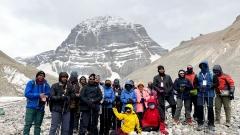
Instead of climbing upward, visitors and devotees engage with Mount Kailash by walking around it. This practice, known as the Kora, is a 52-kilometer circumambulation that typically takes three days to complete. It is one of the most demanding and rewarding treks in the world, reaching its highest point at the Dolma La pass, which sits at an elevation of 5,630 meters.
The Kora allows pilgrims to experience the majesty of the mountain while adhering to the fundamental rule of reverence. Walking the path is believed to erase negative karma. Many devout pilgrims perform full-body prostrations along the entire 52-kilometer route, a process that can take several weeks and demonstrates extraordinary physical endurance and spiritual dedication.
For secular travelers, the Kora offers breathtaking views of the mountain’s changing faces, encounters with diverse wildlife like blue sheep and marmots, and visits to ancient monasteries such as Dirapuk and Zutulpuk. The trail fosters a sense of community among walkers from various backgrounds, all united by the shared experience of moving around the sacred peak rather than attempting to dominate it.
This tradition highlights a different philosophy of human interaction with nature. Rather than viewing a mountain as a challenge to be overcome, the Kora frames it as a teacher to be listened to. The physical exertion required to walk the circuit at extreme altitude serves as a form of meditation, shifting the focus from conquest to introspection.
Myths, Legends, and Unverified Claims
The prohibition on climbing has naturally given rise to numerous myths and legends surrounding the summit of Mount Kailash. Stories circulate about rapid aging near the peak, mysterious lights in the sky, and compasses spinning wildly. While these tales add to the mountain’s mystique, they remain scientifically unsubstantiated folklore born from the deep respect locals hold for the terrain.
There is also a persistent legend regarding a Russian climber who allegedly attempted to summit the peak in secret and suffered bizarre consequences. However, historical and mountaineering records do not support claims of any successful or even partially successful ascents in modern history. The only historical figure often mentioned in connection with reaching the top is the Tibetan yogi Milarepa, whose ascent is described in religious texts as a miraculous flight achieved through spiritual power, not physical climbing.
These stories serve a functional purpose. They reinforce the cultural taboo against climbing, acting as cautionary tales that discourage ambitious mountaineers from even considering an illicit attempt. The mythology ensures that the mountain’s untouchable status is maintained not just through law, but through deeply ingrained psychological boundaries.
Respecting the Untouched Summit
The enduring mystery of Mount Kailash lies precisely in its inaccessibility. In an era where humans have walked on the moon and mapped the deepest ocean trenches, the existence of a prominent peak that remains entirely unclimbed is a powerful anomaly. It stands as a testament to the idea that some places on Earth belong to the realm of the sacred, entirely separate from human ambition.
The convergence of deeply held religious beliefs, stringent governmental regulations, and severe geographical challenges creates an impenetrable barrier around the summit. Travelers who visit the region quickly realize that the true value of Mount Kailash is not found in standing on its peak, but in standing before it. The mountain demands humility, offering a profound reminder that our relationship with the natural world does not always need to be defined by exploration and conquest. Sometimes, the greatest act of respect is simply to leave a place exactly as it is.