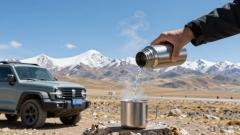

Autumn red shrub photography in Nagqu grassland is less about finding a single famous viewpoint and more about reading a vast, changing landscape. Across northern Tibet, low shrubs can turn russet, copper, and deep red as the growing season ends, while open grassland, distant mountains, and broad skies give each scene a strong sense of scale. Conditions vary sharply with altitude, weather, and location, so a flexible plan matters more than a rigid shot list. These practical points will help you prepare:
- Look for color: Check local conditions; autumn color is not uniform.
- Choose your light: Low-angle sun reveals texture and warm tones.
- Work safely: Allow time to acclimatize and avoid rushed high-altitude travel.
- Compose with scale: Use grassland, sky, and mountains to frame the shrubs.
- Travel respectfully: Stay on suitable roads and leave plants undisturbed.
For photographers, the appeal is the contrast between a modest foreground plant and a landscape that seems to stretch without end. The best results often come from slowing down: observe the wind, wait for a break in the clouds, and make several compositions before moving on. This guide explains how to plan a responsible outing, build a varied set of images, and handle the practical demands of photographing in a remote, high-altitude region.
Understanding the Nagqu Grassland in Autumn
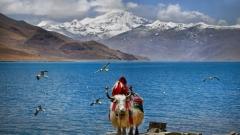
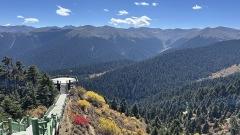
Nagqu lies in northern Tibet, on the Tibetan Plateau. The wider region includes high grasslands, open valleys, lakes, and mountain ranges; local scenery changes considerably from one route and elevation to another. Rather than treating the area as one continuous red landscape, think of it as a broad mosaic. Shrub cover, grass, exposed soil, water, and distant terrain may all appear in the same frame, but their proportions depend on the specific site.
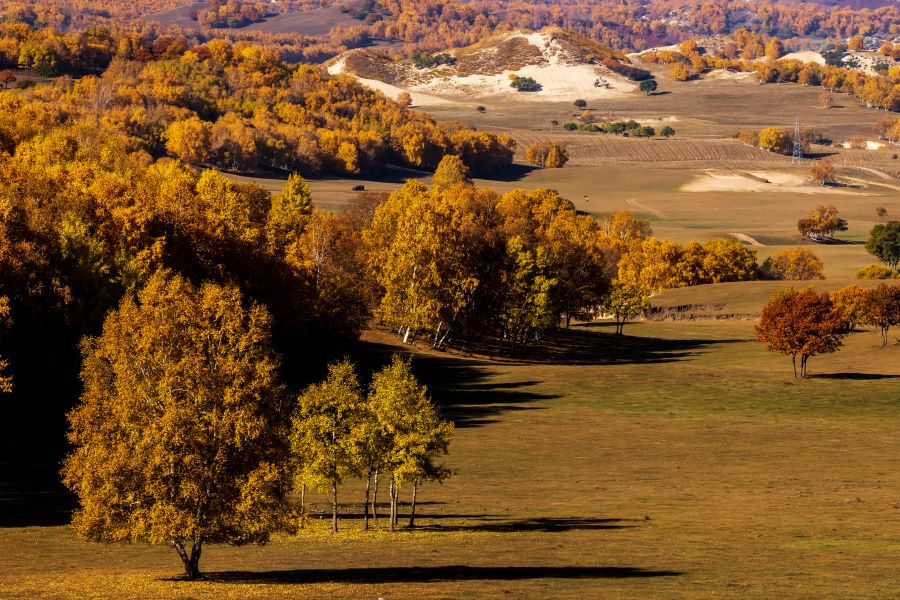
Autumn is a transitional season, not a guaranteed display. Some shrubs may develop warm red or brown tones as temperatures fall and plant growth slows, while other patches remain muted or change color earlier. Rain, wind, cold nights, and local elevation can alter both the timing and intensity. There is no reliable universal date when every hillside reaches peak color, so avoid planning around a fixed calendar promise. If possible, confirm recent conditions with a local guide or accommodation provider before setting out.
The region’s elevation is a defining part of the experience. Many destinations around Nagqu are at high altitude, and road journeys can take longer than they appear on a map. Thin air, changing weather, and distance from services affect how long you can comfortably work outdoors. A productive photography day should include time for rest, warm clothing, food, water, and a conservative return plan—not only time behind the camera.
When to Photograph Autumn Red Shrubs
The most useful timing question is not simply “Which month is best?” but “What are the shrubs doing at this location now?” Autumn color depends on species and local conditions, and a region-wide label can conceal major differences between sites. Build a flexible itinerary, keep alternative stops in mind, and be prepared to photograph other seasonal details if the shrubs are not at their brightest.
Morning light
Early light can bring clarity to ridgelines and create long shadows across uneven grassland. When the sun is low, shrubs may show more texture and separation than they do under overhead light. Morning can also bring cold temperatures, frost, or mist, depending on the conditions. Protect camera batteries from the cold and keep spare batteries accessible inside a warm layer. If visibility is limited, wait for the scene to open rather than driving quickly in search of a better view.
Late-afternoon light
The hours before sunset often suit warm-toned vegetation. Low sunlight can emphasize the red-brown hues of shrubs and produce a more dimensional landscape, especially when the foreground is uneven. At high elevation, however, sunlight can be intense even when the air feels cold. Use a lens hood when appropriate, check highlights on the camera display, and avoid assuming that every sunset will be clear. Clouds can block direct light, but their shifting shadows may still create strong compositions.
Changing weather
Weather is part of the subject. Moving cloud can alternate bright and subdued light within minutes, while wind may bend grasses and make small plants difficult to photograph sharply. A short exposure helps freeze movement; a slower exposure may suggest the wind, but only if the camera is stable and the effect suits the scene. Keep rain and dust protection close at hand. Do not wait in an exposed area during unsafe weather, and do not let a desired photograph override sensible road or walking decisions.
Planning a Photography Route
Nagqu is a large prefecture-level area, not a single compact attraction. A route that looks short on a map may involve slow roads, stops for changing conditions, and long distances between services. Confirm the intended route, road access, and overnight arrangements before departure. If you are unfamiliar with the region, a qualified local driver or guide can help with navigation, local conditions, and communication, especially when traveling beyond established visitor areas.
Plan fewer stops than you would on a low-altitude city trip. A realistic day might include one main landscape area, a nearby alternative, and time for rest. Build in extra hours for road conditions and photography pauses. Avoid setting a tight schedule that requires driving after dark on unfamiliar roads. Carry drinking water, warm layers, sun protection, necessary medication, a charged phone, and offline navigation. Mobile coverage can be inconsistent in remote areas, so tell someone your plan and expected return time.
Before leaving, ask whether the chosen location is accessible and appropriate to visit. Land access, road conditions, and local rules can differ. A visible track is not automatically a public road, and an open-looking grassland is not necessarily suitable for off-road driving. Stay on established routes and follow instructions from local authorities, land users, and your guide. If a site is closed or access is unclear, choose another location rather than trying to force entry.
Gear for High-Altitude Landscape Photography
A camera system does not need to be elaborate. A reliable camera or phone, clean lenses, spare power, and a stable way to support the camera are more valuable than carrying a large kit you cannot comfortably manage. For interchangeable-lens cameras, a versatile zoom can cover wide landscape views and tighter shrub details. A telephoto lens can compress distant layers, while a wide-angle lens can include foreground plants and expansive sky. Choose equipment you already know how to use.
A lightweight tripod is helpful in low light and for carefully aligned compositions, but it is not essential for every image. Wind can make a tripod less stable, so keep it low and avoid extending the center column unnecessarily. A polarizing filter may deepen the appearance of blue sky or reduce glare from some surfaces, but its effect can be uneven across a very wide-angle frame. Check the viewfinder rather than relying on a fixed setting.
Cold weather drains batteries faster. Carry at least one spare, keep it warm in an inside pocket, and rotate it as needed. A power bank can help recharge devices, but check its condition and follow transport rules when flying. Dust and dry air can also make lens changes risky. Change lenses only when necessary, shield the camera from wind, and use a blower or suitable cleaning cloth rather than wiping grit across the glass.
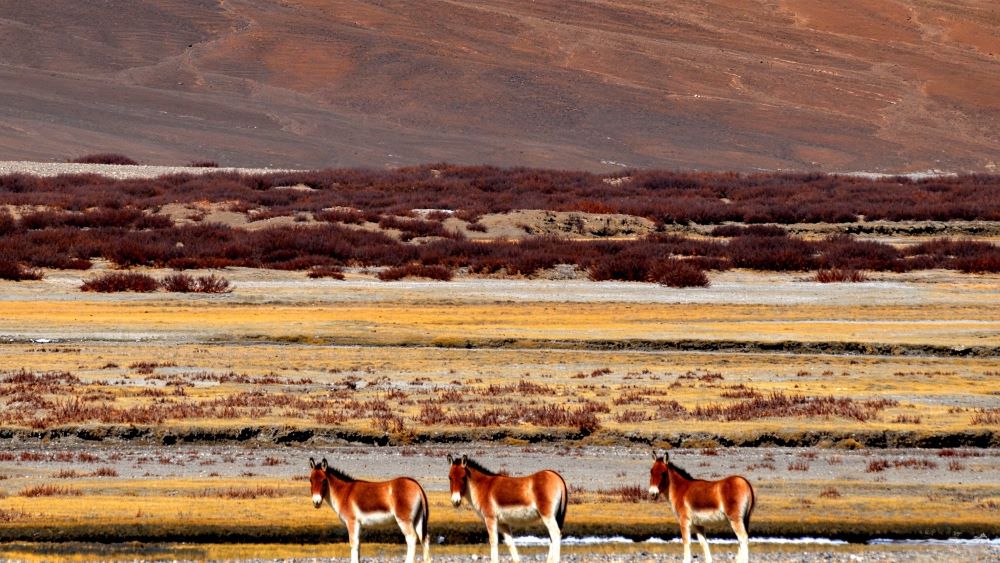
For outdoor comfort, bring layered clothing, gloves that allow camera operation, sturdy footwear, sunglasses, sunscreen, and a hat. The plateau can feel cold in shade and bright in direct sun. Practical layers make it easier to stay still long enough to compose carefully without becoming chilled or overheated during a walk.
Composition: Making Red Shrubs Part of a Larger Story
A close-up of colorful vegetation can be attractive, but the distinctive strength of Nagqu grassland photography lies in context. A shrub can act as a foreground anchor, a line of color, or a small detail that emphasizes the size of the surrounding land. Before taking the frame, decide what the photograph should communicate: seasonal change, distance, texture, isolation, or the relationship between vegetation and sky.
Use foreground with intention
A single shrub near the edge of the frame may lead the eye toward a distant ridge. A group of plants can create a natural pattern, while a low camera position can make them feel more prominent. Check the background before settling on a composition. A shrub that looks distinct to the eye can merge with a dark hill or be crossed by an unwanted horizon in the photograph. Move a few steps to separate the shapes, but stay on durable ground and avoid trampling nearby plants.
Balance land and sky
An expansive sky can communicate openness, especially when cloud formations have clear shape. If the sky is blank and bright, give more space to the grassland and shrub textures. If clouds provide structure, a higher horizon may let them contribute to the image. There is no single correct ratio; the scene should guide the decision. Watch the edges of the frame for cut-off branches, distracting tracks, or small bright objects that draw attention away from the main subject.
Create depth with layers
Many plateau landscapes offer overlapping bands of foreground vegetation, open grassland, hills, and distant mountains. A longer focal length can compress these layers, while a wider view can show how small the shrubs are within the landscape. Try both approaches when time allows. Avoid forcing every element into one frame: a sequence of a wide scene, a medium view, and a close detail often tells the story more clearly than a single crowded composition.
Use people and vehicles carefully
A person can provide scale, but the figure should belong naturally in the scene and should not be included without consent. Do not ask anyone to stand in a risky location or interrupt local activity for a photograph. Vehicles may add a sense of travel, but parked cars can also dominate a quiet landscape. If including one, keep it safely off the road and ensure it does not damage vegetation or block access.
Camera Settings and Focus in Changing Light
Start with a simple exposure approach and adjust as the light changes. In aperture-priority mode, a middle aperture such as f/8 can be a useful starting point for a landscape, though the best setting depends on lens performance, depth of field, and shutter speed. If wind is moving the plants, use a faster shutter speed or raise the ISO rather than accepting unwanted blur. Review the image at a magnified view to check focus and movement.
For a close foreground shrub with distant scenery, depth of field deserves special attention. Focus a little beyond the nearest plant, select an aperture appropriate for the scene, and take a test image. The closest leaves and the far mountains may not both appear sharp if the foreground is extremely near. Step back, use a smaller aperture if conditions permit, or create a deliberate shallow-focus detail instead of expecting every plane to be crisp.
A histogram can help assess exposure, particularly when bright sky and dark vegetation appear together. Protect important highlights while retaining enough detail in the shrubs. Red and orange tones can look oversaturated if white balance or picture style is pushed too far. Photographing in RAW format gives more room for careful editing, but accurate color still begins with a sensible exposure and a realistic view of the light.
Responsible Photography and Local Respect
The grassland is a lived-in environment, not an empty backdrop. Local communities use the land in ways that may not be visible to visitors, and grazing animals may be present near roads or settlements. Keep a respectful distance from people and livestock. Ask before photographing identifiable individuals, homes, work, or culturally significant places. A small gesture of courtesy can prevent a photograph from becoming an intrusion.
Do not pull, break, or rearrange shrubs to improve a composition. Avoid walking through dense vegetation when a nearby durable surface offers a view. Never leave food, packaging, tissues, or other waste behind. If you see litter, remove it only if doing so is safe and practical. Do not feed wildlife or approach animals for a closer shot. Telephoto framing is a better choice than disturbing them.
Drones require particular care. Rules can vary by location, and flight may be restricted near sensitive sites, settlements, roads, airports, or other protected areas. Do not assume that a quiet landscape is automatically a permitted place to fly. Check the applicable rules in advance and follow local instructions. If you cannot confirm that a flight is allowed, keep the drone packed away.
High-Altitude Health and Road Safety
High altitude can affect visitors differently, and fitness does not guarantee protection from altitude illness. Allow time to acclimatize, take physical activity slowly, and pay attention to how you feel. Headache, nausea, dizziness, unusual fatigue, or shortness of breath can be warning signs. Symptoms that worsen or feel severe need prompt attention; do not treat them as something to push through for a photograph. Discuss personal medical concerns with a qualified health professional before travel, and know how to seek local medical assistance.
Drink regularly, eat enough, and avoid strenuous hikes immediately after arriving at altitude. Alcohol and sedative medicines may complicate adjustment, so follow professional medical advice. If someone in your group becomes unwell, stop the photography plan and prioritize their safety. A responsible itinerary includes the option to descend or seek medical care rather than continuing to a remote viewpoint.
Road journeys also demand caution. Wear seat belts, follow the driver’s instructions, and avoid stopping on blind corners or narrow shoulders. Do not walk along a road while watching the camera screen. In low light, cold, or poor visibility, a roadside composition may not be worth the risk. Keep equipment organized so that a quick stop does not leave the group distracted or block traffic.
A Practical Photo Workflow in the Field
When you reach a suitable location, take a moment to assess the scene before unpacking everything. Check the wind, cloud movement, ground underfoot, nearby traffic, and safe parking. Decide where you can stand without damaging plants or obstructing others. If conditions are unpleasant or the site is unsafe, move on; a photograph is not worth a preventable accident.
Begin with a wide establishing frame that shows the setting. Then make a medium composition featuring the most distinct shrubs, followed by close details of leaves, branches, seed heads, or frost if present. Look for repeating forms and contrasting textures rather than relying only on color. A sequence like this gives an image collection variety and makes the location easier to understand.
Check the screen for horizon alignment, motion blur, and unwanted distractions. If the light changes, revisit the first composition rather than automatically changing locations. Take a few deliberate variations: shift the camera height, alter the focal length, or change the amount of sky. Then pack up carefully and leave the site as you found it. Back up images when practical, especially before a long return drive or the next leg of a remote trip.
Editing Without Losing the Natural Look
A restrained edit generally suits the subtle colors of an autumn grassland. Correct exposure and white balance first, then adjust contrast and saturation gradually. If red shrubs begin to look neon or the grassland takes on an implausible tint, reduce the adjustment. Differences in light, soil, and camera sensors can make color appear unlike what you remember, so use the scene’s overall relationships as a guide rather than chasing a dramatic preset.
Recover bright clouds only as far as the file allows, and lift shadows without flattening all depth. Local adjustments can help separate a foreground plant from its background, but avoid making the shrub unnaturally bright. Sharpen for the intended display size and check for halos along mountain ridges. If publishing online, preserve the original files and export a separate, appropriately sized version.
Working With a Local Guide or Travel Operator
A local guide can help turn a broad regional plan into a realistic day, particularly when route knowledge, language, road conditions, and altitude management matter. Ask specific questions before confirming arrangements: how long the drive is expected to take, what facilities are available, whether the planned stops are accessible, and what happens if weather or health changes the itinerary. A responsible operator should be clear about logistics and should not promise a guaranteed color peak or a fixed photographic result.
Tibet Yulong Travel can be included as a travel-planning contact when arranging a trip, but verify current services, permissions, route details, and booking terms directly before relying on them. No operator can control seasonal color, cloud cover, road conditions, or an individual traveler’s response to altitude. Keep your own expectations flexible and make safety decisions with qualified local guidance.
Common Mistakes to Avoid
The first mistake is treating a color forecast as a guarantee. Autumn change is local and weather-dependent, so build a broader landscape plan. The second is trying to cover too many places in one day. Long drives and high elevation make an overloaded schedule tiring and can reduce both safety and image quality.
Another common error is photographing only at midday because it is convenient. Harsh light may flatten shrub texture and create bright, distracting areas. If midday is your available window, look for cloud-filtered light, graphic patterns, or close details rather than expecting a golden-hour landscape. Conversely, do not remain outside after conditions become unsafe simply because sunset light appears promising.
Finally, avoid overprocessing and careless access. Heavy saturation can misrepresent the plants, while off-road driving or trampling can damage the very landscape you came to photograph. A thoughtful image made from a safe, respectful position is more valuable than a dramatic frame that comes at the expense of people, land, or health.