
Planning a trip to Tibet’s border regions involves more than booking transport and choosing an itinerary. Some destinations require a Border Area Travel Permit, also called a border pass or frontier pass, in addition to the permits and arrangements required for travel in Tibet. The Border Area Travel Permit application process Tibet visitors need to follow depends on the places they plan to visit, their nationality, and the rules in force when they travel. In practice, travelers should confirm requirements before paying for non-refundable bookings, prepare identity documents carefully, and allow time for the application to be handled through the appropriate authorities. This guide explains how to check whether a permit is needed, what information to provide, how applications are commonly arranged, and what to verify before departure. Rules and procedures can change, so treat the guidance as a planning framework and confirm details with your tour operator or the relevant authority.
Highlights:
- Check whether your route enters a restricted border area.
- Confirm the current process before booking non-refundable travel.
- Prepare passport and itinerary details accurately.
- Allow time for processing; do not assume same-day approval.
- Carry the approved permit and keep your route consistent.
What is a Border Area Travel Permit?
A Border Area Travel Permit is an authorization for travel into designated frontier or border-control areas. It is separate from a standard travel document such as a passport, and it should not be confused with the Tibet Travel Permit required for many foreign visitors to travel in Tibet. Depending on the destination and the traveler’s circumstances, other permissions or arrangements may also apply.
The term “border area” does not mean every place near Tibet’s international boundaries is automatically restricted in the same way. Requirements are tied to specific locations and routes. A town, scenic area, road, or county may be subject to controls even if it is not directly beside a border crossing. Conversely, a broad regional label on a map does not, by itself, establish that a separate border permit is required for every stop in that region.
This is why a route-level check matters. Instead of asking only whether you are visiting Tibet, list every county, town, pass, lake, monastery, and road on your proposed itinerary. Your tour operator can then check which permissions apply to each location and whether a border-area permit is among them.
Who may need a border permit in Tibet?
Travelers may need a Border Area Travel Permit when their itinerary includes designated frontier areas. Places often discussed in connection with border-region travel include parts of Ngari Prefecture, including routes toward Mount Kailash and Lake Manasarovar, as well as locations in other prefectures near international borders. The exact requirement depends on the specific destination and route, and the list of controlled areas should be verified before travel rather than treated as a permanent, exhaustive checklist.
Foreign visitors generally face additional planning requirements for Tibet. Travel arrangements commonly need to be made through an authorized travel agency, and foreign visitors are typically required to travel with an organized itinerary and the applicable Tibet permits. A border permit, when needed, is one part of that broader process—not a substitute for other required documents or approvals.
Chinese citizens and foreign nationals may have different application channels and document requirements. If you are a foreign visitor, do not assume that you can apply in person using the same procedure as a Chinese resident. Ask your agency to confirm which permissions it will arrange, what information it needs from you, and whether your itinerary is eligible under the current rules.
Check the route, not just the destination name
A destination can be described using different administrative names in tour materials, maps, and booking platforms. Confirm the exact county or township and the route used to reach it. This is especially important for overland journeys where the road passes through controlled areas even if the overnight stop is elsewhere.
Provide your operator with a complete itinerary, including planned side trips. A permit prepared for one set of destinations may not cover an added detour. If you later change the route, ask whether the existing approval remains valid or whether the paperwork must be revised.
Border Area Travel Permit application process Tibet: the main steps
The Border Area Travel Permit application process Tibet travelers encounter is best handled as a sequence of checks rather than a last-minute document request. Procedures can vary by location and applicant category, so confirm each step with the agency or authority responsible for your case.
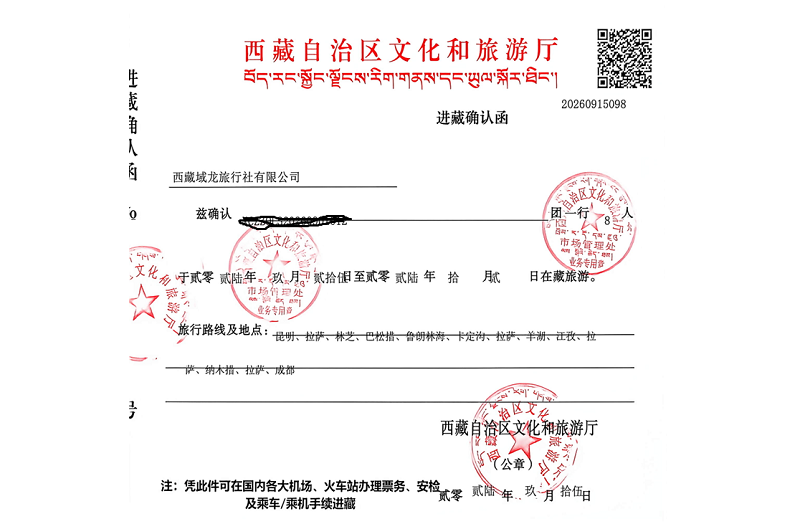
Tibet Travel Permit
1. Confirm the permit requirement
Start by identifying every location on your itinerary and asking whether it is a controlled border area. Request confirmation in writing from your tour operator when possible, especially if your route includes remote counties, frontier roads, or destinations for which local rules may be applied differently.
Do this before committing to fixed transport or accommodation. If the permit is not required for a particular route, you avoid unnecessary paperwork. If it is required, you can plan around the processing time and any restrictions on itinerary changes.
2. Check which application channel applies to you
The appropriate application channel depends on your nationality, residence, destination, and the local procedures in force. Foreign visitors to Tibet usually coordinate travel permissions through an authorized travel agency as part of a planned trip. The agency can advise whether it can arrange the border-area document or whether additional handling is required.
Do not rely on an old online account, a traveler’s report from a different region, or a process used by someone with a different nationality. Ask who submits the application, which office or authority handles it, and whether you need to appear in person. If you are traveling independently as a Chinese citizen, confirm the current local application route with the relevant public security or border-management authority; do not assume that the process is identical across counties.
3. Prepare the requested documents and details
The documents requested can vary. Travelers are commonly asked for identity and itinerary information, but the agency or local authority should give you the exact checklist for your case. Foreign visitors should be ready to provide passport details and relevant Tibet travel-permit information through their operator. Chinese applicants may be asked for their resident identity card and other supporting details, depending on local requirements.
Prepare clear, consistent information, including:
- Full name as shown on the travel document.
- Passport or identity-card number and nationality, where applicable.
- Planned travel dates and the duration of the visit.
- The names of intended counties, towns, and other controlled locations.
- A complete route and the name of the tour operator or accompanying group, if applicable.
- Copies of any related travel authorization requested by the agency.
Avoid sending sensitive documents through unofficial channels. Use the secure method recommended by your tour operator, and ask how the information will be used and stored. If a document image is unclear or a name is entered differently from the passport, the application may need correction.
4. Submit the application and allow time for review
Once the itinerary and documents are ready, the responsible agency or applicant submits them through the applicable channel. Review times are not guaranteed to be the same in every place or season. Local workload, public holidays, changes to travel plans, and document corrections can all affect timing.
There is no reliable universal processing promise that applies to every traveler and destination. Ask for a realistic estimate for your specific itinerary and build in a buffer. Avoid scheduling a tight connection that depends on an unconfirmed permit arriving at a particular hour. If your trip is approaching and you have not received a clear update, contact the party handling the application instead of assuming it has been approved.
5. Check the issued permit before setting out
When the document is issued, check that names, identification numbers, dates, and destinations match your travel documents and itinerary. Ask whether the permit is an original, an electronic document, or a copy that must be carried in a particular way. Follow the instructions provided by the issuing authority or your operator.
Keep the permit accessible during the relevant journey. Checkpoints may require travelers to present documents, and remote routes can have limited opportunities to retrieve a missing file. Carrying a printed copy where advised, while also keeping a secure digital copy, is a sensible backup—but follow the specific instructions for your permit.
Documents to prepare before you apply
The exact checklist should come from the party handling your application. In general, prepare your travel documents early and make sure the details are consistent across forms, bookings, and permits.
For foreign visitors
Foreign visitors should first confirm the entry and Tibet travel documents required for their particular trip. A valid passport is essential for international travel, while a Tibet Travel Permit is commonly required for foreign visitors traveling in Tibet. The border-area permit, if applicable, is an additional authorization for designated areas. Your agency should explain which documents it needs to arrange the full itinerary and when it needs them.
Do not assume that a visa, Tibet Travel Permit, or border-area permit automatically replaces another requirement. Each document serves a different purpose. If your itinerary includes a border region, ask the agency to confirm the full set of approvals required for your nationality and planned route.
For Chinese citizens
Chinese citizens should verify the local process for their intended destinations. Requirements may include a resident identity card and itinerary information, but the exact list and submission method can differ by location. Confirm whether the application is handled at a local public security office, through a border-management office, or by another designated channel. Use the current instructions for the destination rather than a checklist copied from another province or county.
Keep your itinerary consistent
The most frequent avoidable issue is a mismatch between the route stated on an application and the route actually booked. Confirm the spelling and administrative names of destinations with your operator. If you plan to add a stop, ask whether the permit needs to be updated before changing your booking.
How long does the application take?
Processing time depends on the destination, application channel, applicant category, document completeness, and local workload. Some applications may be handled relatively quickly, while others require additional review. Because there is no single time frame that applies across Tibet’s border areas, avoid planning around an informal estimate from a traveler who visited a different destination.
Ask your tour operator three practical questions: when it needs your documents, when it expects to submit the application, and when you should follow up if there is no decision. Submit the requested information as early as the operator advises, and allow a margin for corrections. If your itinerary is fixed around a festival, holiday, or limited transport schedule, discuss the risk of delay before making non-refundable arrangements.
An application being submitted is not the same as an application being approved. Wait for confirmation and inspect the issued details before assuming you can enter a controlled area.
Common mistakes that can delay or disrupt an application
Applying without confirming the route
A permit may depend on the precise locations you intend to visit. Submitting an incomplete route can lead to extra questions or a need to revise the paperwork. Share the full itinerary, including planned excursions and overnight stops.
Using outdated instructions
Travel rules and administrative procedures can change. A blog post, forum thread, or friend’s experience may describe a process that applied to a different period, applicant category, or destination. Treat informal reports as background only and confirm the current requirements with the responsible agency or authority.
Assuming one permit covers everything
Tibet travel permissions, border-area authorizations, and other travel documents are not interchangeable. Ask for a complete list of what applies to your journey, rather than relying on the name of a single permit.
Booking before checking feasibility
Remote transport and accommodation can be difficult to change. Confirm that your route is eligible and clarify the application timeline before locking in arrangements that depend on entry to a controlled area.
Changing the itinerary after approval
An approved document may be linked to specified places or dates. If you add a county, change travel dates, or alter the route, ask your operator whether the permit remains valid. Do not assume a small change is automatically acceptable.
Carrying only an inaccessible digital copy
Connectivity can be unreliable in remote areas, and devices can run out of power. Follow instructions on the required format and keep the document accessible. Where permitted and advised, a paper copy can be useful as a backup.
Planning a border-region itinerary
Border-region journeys in Tibet often involve long distances, high elevation, changing road conditions, and limited services. A permit is only one part of the preparation. Discuss driving times, acclimatization, overnight stops, fuel access, communication limitations, and contingency plans with your operator before departure.
Do not build an itinerary around optimistic driving estimates. Weather, road conditions, checkpoints, and altitude can affect travel time. Allow rest days where appropriate and follow medical advice about high-altitude travel. If you have a health condition, consult a qualified medical professional before traveling to remote high-elevation areas.
The route should also respect local instructions and restricted-area boundaries. Follow checkpoint directions, stay with the approved itinerary where required, and do not photograph or enter places where restrictions are posted. These practices support both your safety and the orderly handling of travel controls.
Mount Kailash and Lake Manasarovar routes
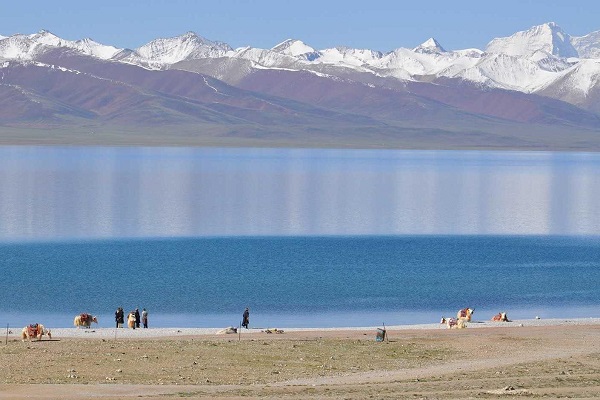
Routes toward Mount Kailash and Lake Manasarovar are among the best-known journeys in western Tibet. Because the itinerary may involve remote areas and specific travel controls, confirm every required document with your agency before departure. Ask whether the planned route and dates are covered, what documents must be carried, and how changes will be handled if road or weather conditions alter the schedule.
The region’s high altitude and long overland distances require careful pacing. Build in time for acclimatization and avoid treating a permit approval as confirmation that every part of a demanding itinerary will be physically suitable.
Other border-area destinations
Travelers considering other frontier locations should verify the exact administrative area and route, not just the attraction’s popular name. Requirements can differ between nearby destinations. A local operator familiar with the intended route can help identify the relevant checks, but travelers should still request clear confirmation of the documents and itinerary being arranged.
Working with Tibet Yulong Travel
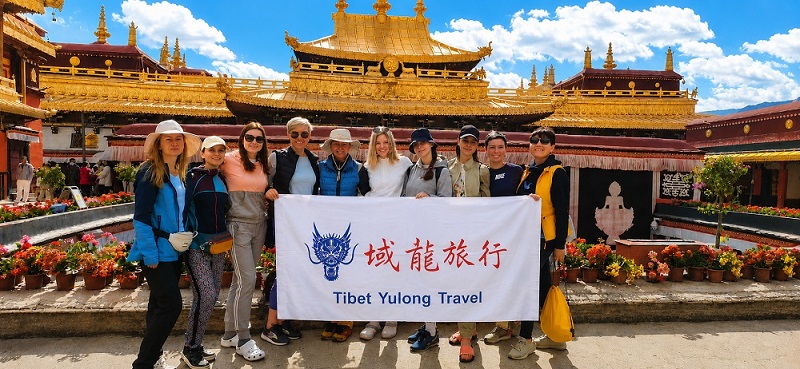
If you are considering Tibet Yulong Travel, ask the agency to explain how it handles the Border Area Travel Permit application process Tibet requires for your specific route. Before paying a deposit, confirm whether the proposed itinerary enters a controlled border area, which permits and supporting documents are included in the service, and what information you need to provide.
Ask for a written itinerary with the administrative names of the places you will visit. Clarify the expected application timeline, whether the agency will submit the paperwork on your behalf, and how it will notify you of approval or a request for corrections. You should also ask what happens if a destination is unavailable or the route has to change after the permit is issued.
A responsible operator should distinguish between confirmed requirements and details that still need verification. It should not promise approval or guarantee a processing time that depends on an authority. Keep copies of your communications and compare the final permit details with your passport and itinerary before traveling.
Frequently asked questions
Can I apply for the permit after arriving in Tibet?
Whether an application can be made after arrival depends on your nationality, destination, and the current local procedure. Foreign visitors should coordinate requirements through their authorized Tibet travel arrangements and confirm the process before departure. Do not plan to enter a controlled area first and sort out permissions later.
Is a Tibet Travel Permit the same as a Border Area Travel Permit?
No. They are different permissions with different purposes. Foreign visitors commonly need a Tibet Travel Permit for travel in Tibet, while a Border Area Travel Permit may be required for certain designated frontier areas. Confirm all documents that apply to your exact itinerary.
Can the permit be used for any border region in Tibet?
Do not assume that one permit covers every border destination. Permissions may be tied to particular dates, routes, or locations. Check the printed or issued details and ask the agency before making any change.
What if my name or passport number is incorrect?
Contact the party handling the application immediately. Do not assume that a minor spelling or number discrepancy will be accepted at a checkpoint. Ask whether the document must be corrected or reissued before travel.
Should I carry a printed copy?
Follow the instructions provided with your permit. In places with limited connectivity, carrying a printed copy as well as a secure digital backup can be practical when allowed, but the required format may vary. Confirm this before departure.
Can a tour operator guarantee approval?
An agency can explain the process and submit or coordinate documents where appropriate, but approval rests with the relevant authority. Be cautious of guarantees about approval or exact processing times. Ask for clear, realistic guidance tied to your specific route.
Practical checklist before departure
Before leaving for Tibet, confirm that you have:
- Checked the permit requirements for every destination on the route.
- Confirmed the current application channel for your nationality.
- Sent complete, legible identity and itinerary information through the appropriate channel.
- Received confirmation that the required permissions have been issued.
- Checked names, document numbers, dates, and destinations for accuracy.
- Asked how the permit must be carried and presented.
- Shared any planned itinerary changes with your operator before traveling.
- Left enough flexibility for document review, altitude acclimatization, and remote-road delays.
The safest way to approach the Border Area Travel Permit application process Tibet visitors may face is to verify requirements early, keep the route and documents consistent, and follow the instructions attached to the specific approval. Because border controls and local procedures are destination-specific, use this guide to prepare questions—not as a substitute for current confirmation from your tour operator or the responsible authority.