Traveling across the high-altitude landscapes of the Tibetan Plateau is an experience unlike any other, but navigating daily expenses requires careful preparation. Understanding how money works outside Lhasa or Shigatse can mean the difference between a smooth journey and unexpected logistical headaches. This cash vs card payment in remote Tibet towns guide breaks down exactly what you need to know before heading into smaller settlements where infrastructure differs vastly from urban centers. Whether you are buying yak butter tea in a village teahouse or paying for fuel at a distant station, knowing which payment method to rely on is essential for every traveler.
Before diving deep into the details, here are the key takeaways from this cash vs card payment in remote Tibet towns guide:
- Physical cash remains the most reliable payment method in remote areas.
- International credit cards are rarely accepted outside major hotels in large cities.
- Chinese mobile payment apps work well if linked to supported accounts.
- ATMs are scarce in small towns, so withdraw funds in advance.
- Small denominations are crucial for everyday purchases and temple donations.
The Reality of Cash vs Card Payment in Remote Tibet Towns Guide
When planning your finances for a journey across the plateau, it is important to set aside assumptions based on travel experiences in other parts of the world. In many global destinations, a single credit card or a smartphone tap is enough to cover everything from meals to transport. However, when exploring the topic of cash vs card payment in remote Tibet towns guide, travelers quickly realize that the financial ecosystem here operates differently due to geography, connectivity, and local habits.
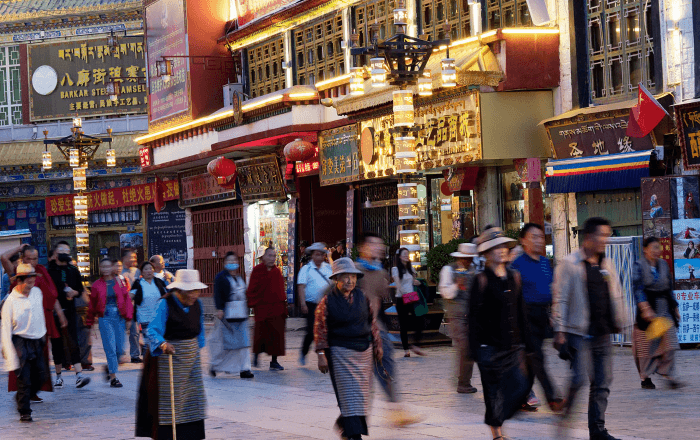
Barkhor shopping street
In larger hubs like Lhasa, Nyingchi, or Shigatse, modern payment infrastructure exists. You will find international hotel chains, upscale restaurants, and larger supermarkets equipped with point-of-sale terminals that accept Visa or Mastercard. Yet, as soon as you leave these primary cities and venture into counties and villages—places like Tingri, Saga, or the towns along the route to Mount Kailash—the digital financial grid thins out significantly. Power outages, unstable internet connections, and a lack of banking hardware mean that traditional commerce still dominates daily life. Recognizing this reality early in your planning phase ensures you never find yourself stranded without purchasing power.
The transition from urban convenience to rural necessity happens fast. A town just a few hours’ drive from a regional capital might only have one small grocery store and a couple of family-run guesthouses. In these environments, merchants do not maintain the expensive equipment required to process foreign bank cards. They rely entirely on physical currency or domestic digital wallets. Therefore, anyone using this cash vs card payment in remote Tibet towns guide must prioritize carrying sufficient physical money while understanding how local digital systems function.
Why Physical Cash Remains King on the Plateau
Despite rapid technological advancements across China, physical cash holds a uniquely strong position in remote Tibetan communities. For older generations of shopkeepers, nomads selling dairy products by the roadside, and drivers operating local transport, paper bills and coins represent immediate, undeniable value. There are no transaction fees, no waiting for network approvals, and no reliance on smartphone batteries.
Carrying the right type of cash is just as important as carrying cash itself. While the Chinese Yuan (Renminbi) is the official currency, the denomination matters immensely. Large bills, such as 100 RMB notes, can be difficult to break in small villages. If you try to buy a bottle of water or a simple bowl of noodle soup costing 15 RMB with a 100 RMB note, the vendor may simply not have enough change. It is highly recommended to visit a bank in Lhasa or your departure city in mainland China to exchange larger notes for 10, 20, and 50 RMB bills. Having a thick stack of smaller denominations makes transactions smoother and is greatly appreciated by local merchants.
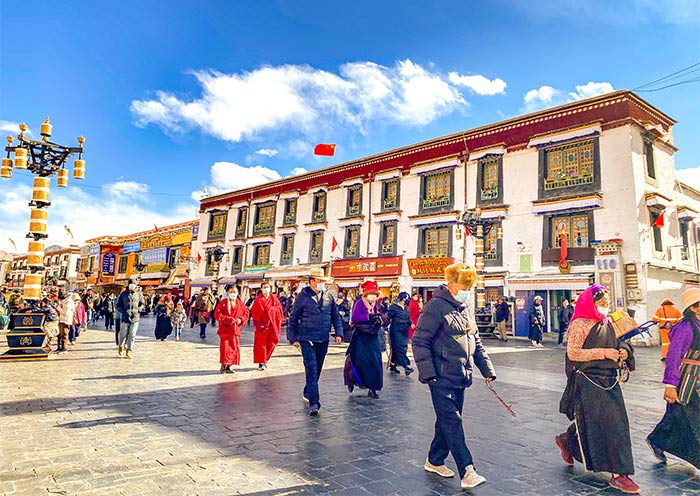
The Busy Barkhor Street
Furthermore, cash is deeply intertwined with the cultural and spiritual practices of the region. When visiting monasteries such as Tashilhunpo, Sakya, or smaller hermitages tucked into mountain cliffs, leaving a monetary offering is a standard practice. Pilgrims and visitors alike place small bills on altars or drop them into donation boxes. Digital payments are not used for these religious offerings. Preparing a specific envelope of small-denomination cash solely for monastery visits is a practical tip frequently highlighted in any thorough cash vs card payment in remote Tibet towns guide.
Another scenario where cash is absolutely mandatory involves transportation and emergencies. If you are hitchhiking, hiring a local tractor to cross a washed-out road, or needing to buy fuel from a private reserve in an area where the official gas station has run dry, locals will expect physical money. Negotiations for these ad-hoc services happen face-to-face, and cash is the only medium that facilitates them instantly.
Credit and Debit Cards: Where They Work and Where They Fail
Understanding the limitations of plastic money is a core component of managing your travel budget. International credit and debit cards—including Visa, Mastercard, American Express, and JCB—have very limited utility once you step outside the main tourist corridors. Even within Lhasa, only top-tier hotels, certain airlines offices, and a handful of large retail stores possess the merchant accounts necessary to swipe foreign cards.
Domestic Chinese bank cards (UnionPay) fare much better. Because UnionPay is the national standard, ATMs and point-of-sale terminals across China are built around it. If you hold a Chinese bank account, your UnionPay debit card will work in most county-level towns where an Agricultural Bank of China or Postal Savings Bank of China branch exists. However, foreign-issued UnionPay cards sometimes face routing issues or daily withdrawal limits that differ from domestic cards.
ATM availability is another critical factor. In remote towns, there might be only one or two ATMs available, often located inside or immediately outside a state-owned bank branch. These machines can occasionally be out of service, out of cash, or unable to read foreign chip-and-pin cards. Relying on finding a working ATM to fund your daily expenses as you travel through places like Ali (Shiquanhe) or Gyirong is a risky strategy. The golden rule derived from this cash vs card payment in remote Tibet towns guide is to treat your credit card as a backup emergency tool rather than a primary spending method. Withdraw enough cash in a major city to last you through your entire remote itinerary before setting out.
If you do attempt to use a card in a larger town guesthouse, be prepared for potential surcharges. Some smaller establishments that do accept cards might pass the processing fee onto the consumer, adding a percentage to your final bill. Always ask about payment methods and associated fees before committing to a purchase or booking a room upon arrival.
Mobile Payments: WeChat Pay and Alipay Explained
No discussion about modern Chinese commerce is complete without addressing mobile wallets. Alipay and WeChat Pay have revolutionized how money moves across the country, and their presence extends surprisingly far into the Tibetan Plateau. You will see QR codes printed on paper taped to walls in tiny teahouses, hanging from the rearview mirrors of taxi cabs, and displayed on the counters of remote grocery shops. For domestic travelers, mobile payment is practically ubiquitous.
For international travelers, utilizing these platforms has become easier in recent times, though it still requires setup before you arrive in remote areas. Both Alipay and WeChat Pay now allow users to link certain international credit cards (Visa and Mastercard) to their digital wallets. Once verified, you can scan merchant QR codes to pay for goods and services directly from your phone.
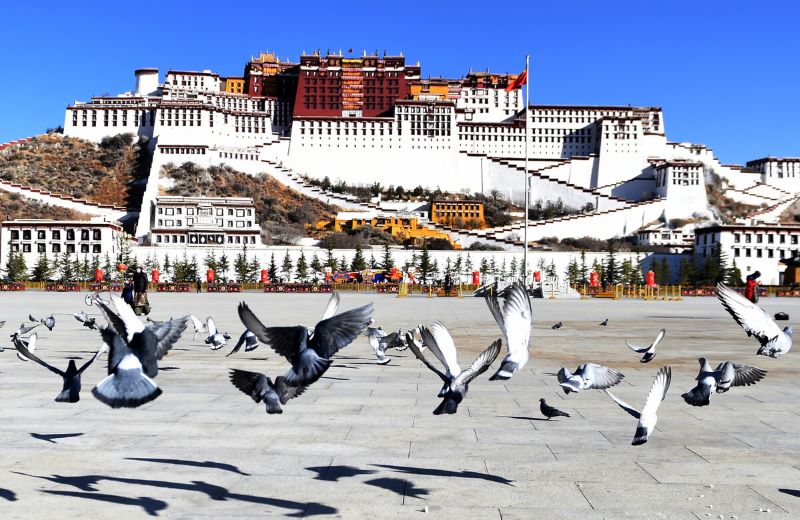
Potala Palace
However, relying on mobile payments in remote Tibet introduces several vulnerabilities that you must consider. First, these apps require an active internet connection to generate payment codes or scan merchant codes. In deep valleys or high mountain passes, cellular data signals can vanish completely. If you have no signal, you cannot complete a mobile transaction, regardless of how much money is in your digital wallet.
Second, battery life is a constant battle at high altitudes. Cold temperatures drain lithium-ion batteries rapidly. If your phone dies because you were photographing snow-capped peaks in sub-zero weather, your wallet dies with it. Carrying a high-capacity power bank is non-negotiable if you plan to use mobile payments.
Third, not all merchants in remote areas have upgraded their accounts to accept payments funded by international cards. Sometimes, scanning a QR code linked to a foreign credit card will result in a transaction failure, even if the same code works perfectly for a user paying via a domestic Chinese bank account. Because of these technical nuances, mobile payments should be viewed as a highly convenient supplement to cash, rather than a total replacement. Integrating mobile wallets into your strategy makes this cash vs card payment in remote Tibet towns guide truly comprehensive for the modern traveler.
Practical Tips for Managing Money in High-Altitude Villages
Successfully navigating the financial landscape of remote Tibet requires more than just choosing between cash and cards; it demands behavioral adjustments and logistical foresight. How you carry, hide, and spend your money impacts both your security and your interactions with locals.
Distributing your cash is the first line of defense against loss or theft. Never keep all your money in a single wallet or bag. Divide your funds into three categories: daily spending money, emergency reserves, and large-denomination backups. Keep your daily spending cash in an easily accessible pocket or small pouch. Store your emergency reserve in a hidden money belt worn under your clothing, and leave your backup funds secured in your main luggage at your guesthouse, provided you trust the accommodation’s security.
When making purchases, observe how locals handle transactions. In many small shops, there is a designated tray or bowl on the counter for exchanging money. Handing cash directly into someone’s hand is sometimes avoided in favor of placing it in this tray. Adopting local etiquette shows respect and smooths the interaction. Additionally, always count your change carefully. In dimly lit shops or during fast-paced transactions at busy market stalls, mistakes can happen. A polite recount prevents misunderstandings.
Language barriers can complicate financial transactions. While younger merchants might speak some Mandarin, older residents in isolated villages primarily speak Tibetan. Knowing basic numbers in Tibetan or having a translation app downloaded for offline use can help clarify prices. Pointing at items and holding up fingers to confirm costs is a universal fallback method. Writing down the agreed price on a piece of paper before handing over cash is another excellent way to avoid disputes.
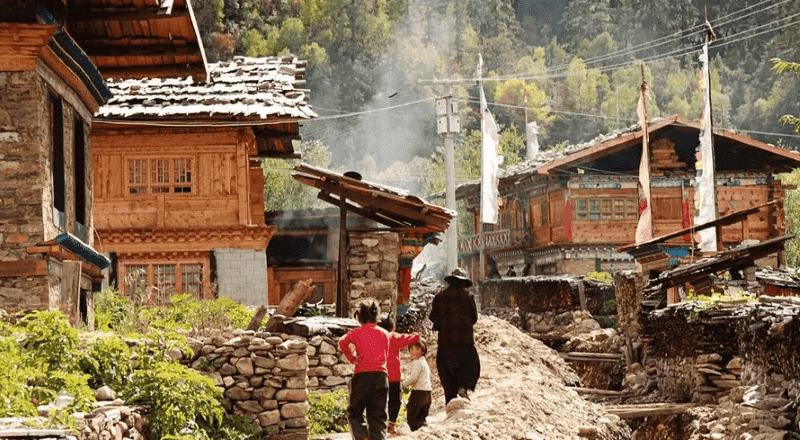
Tibet Village
Tipping culture in Tibet differs from Western norms. In restaurants and guesthouses, tipping is generally not expected and can sometimes cause confusion. However, if you hire a private driver or a local guide for a multi-day trek, offering a gratuity at the end of the journey in cash is a generous and appreciated gesture. Ensure this tip is factored into your cash calculations before departing the nearest city.
Planning Your Route and Financial Logistics with Local Experts
Navigating the complexities of travel on the plateau is significantly easier when you have knowledgeable support. Figuring out exactly how much cash to carry, where the functioning ATMs are located, and which guesthouses actually accept mobile payments requires up-to-date, localized information. This is where partnering with experienced operators becomes invaluable.
Agencies like Tibet Yulong Travel specialize in crafting itineraries that account for the practical realities of high-altitude journeys. Rather than leaving you to guess which remote stretches lack banking facilities, professional guides ensure you are briefed on exactly when and where to withdraw funds. They know the operational status of ATMs in specific counties and can advise you on the current acceptance rates of various payment methods in newly developing tourist villages. By integrating their logistical expertise with the principles outlined in this cash vs card payment in remote Tibet towns guide, you eliminate unnecessary stress. Their drivers and guides also assist with language barriers during transactions, ensuring fair pricing and smooth exchanges whether you are buying supplies for a trek or settling a hotel bill in a distant town.
Handling Emergencies When Funds Run Low
Even with meticulous planning, unexpected situations arise. A delayed flight, a vehicle breakdown requiring an extended stay, or an unforeseen medical expense can deplete your cash reserves faster than anticipated. Knowing how to respond when funds run low in a remote area is critical.
If you find yourself short on cash in a town without a working ATM, your first option is to seek out the local post office or agricultural bank branch during business hours. Speak to the staff; occasionally, manual cash advances on certain cards can be processed over the counter, though this takes time and paperwork. Another avenue is asking your hotel or guesthouse owner if they can provide a cash advance against a mobile payment transfer. Many guesthouse owners have robust Alipay or WeChat balances and may be willing to give you physical cash if you transfer the equivalent digitally to their account, plus a small courtesy fee.
If you are traveling with a group or a tour operator, leaning on your guide for temporary assistance is standard practice. Reputable agencies ensure their staff carries emergency funds specifically for these scenarios. You can settle the debt later once you return to a major city with functional banking infrastructure. The key takeaway regarding emergencies reinforces the central theme of this cash vs card payment in remote Tibet towns guide: redundancy is your best protection. Multiple payment methods, distributed cash reserves, and reliable local contacts ensure that a financial hiccup never ruins your Tibetan adventure.