
If Tibet is considered a holy grail for travelers worldwide, then Ngari (Western Tibet) is the most remote, sublime, and spiritually profound destination within it. Known as the “Ancestor of Tens of Mountains and the Source of Hundreds of Rivers,” it is home to the sacred Mount Kailash and Lake Manasarovar—making it the ultimate pilgrimage destination for adventurers and spiritual seekers alike.
However, with an average altitude of over 4,500 meters (14,700 feet), Ngari is vast, isolated, and challenging to reach. How exactly do you travel to Ngari? And what breathtaking sights await you along the way? This comprehensive guide reveals everything you need to know.
How to Reach Ngari: Three Main Ways to Travel
To journey into Ngari, travelers generally choose one of three major transportation methods, depending on their physical fitness, budget, and time:
-
Overland from Lhasa (Self-drive, Chartered Car, or Tour Group) — The Classic Choice: This is the path chosen by 90% of travelers. Starting from Lhasa, you drive westward along the iconic G219 National Highway. This method allows your body to gradually acclimate to the increasing altitude while offering the most diverse scenery.
-
Flying Direct (Lhasa/Chengdu to Ngari Gunsa Airport) — The Fastest Way: Ngari Gunsa Airport sits at a dizzying elevation of 4,274 meters (14,022 feet), making it a high-plateau airport. While it cuts travel time to a few hours, it carries an extremely high risk of severe acute altitude sickness (AMS). It is usually only recommended for travelers with extensive plateau experience.
-
Overland from Xinjiang (The Xinjiang-Tibet Highway) — The Wildest Route: Starting from Kashgar, Xinjiang, you drive along the legendary G219 highway, crossing numerous mountain passes above 5,000 meters to enter Ngari. This is an epic route that demands exceptional vehicle performance and expert driving skills.
The Ultimate Itinerary: The Ngari Overland Loop
For most travelers starting from Lhasa, the absolute best way to experience Western Tibet is by completing the “Ngari Big Loop” (incorporating both the Southern and Northern routes), which typically takes 13 to 15 days:
-
The Southern Route (The Pilgrimage & Cultural Path): Lhasa → Shigatse → Saga → Zhongba → Purang → Darchen (Mount Kailash). The Southern Route is now fully paved with excellent asphalt roads, making it the primary artery into Ngari.
-
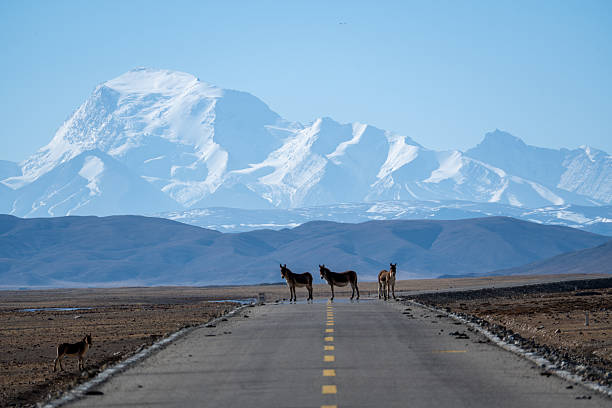
The Northern Route (The Wild Frontiers & Endless Lakes): Gaize → Nima → Baingoin → Nagqu → Lhasa. The Northern Route cuts deep into the fringes of the Changtang wilderness, offering rugged landscapes, abundant wildlife, and a spectacular chain of brilliant alpine lakes.
Iconic Attractions Along the Ngari Pilgrimage Route
As you head west along this sacred corridor, nature and ancient history combine to present some of the most jaw-dropping landscapes on Earth:
1. Mount Kailash — The Undisputed “King of Sacred Mountains”
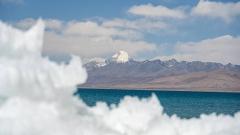
Located in Darchen, Mount Kailash (6,638m / 21,778ft) is recognized as the center of the world by four major religions: Buddhism, Bon, Hinduism, and Jainism. Its symmetry resembles a massive pyramid of rock and pristine white snow. Every year, thousands of pilgrims come here to complete the “Kora” (holy trek around the mountain). Even if you don’t trek, simply gazing at its majestic peak from the valley floor delivers an unforgettable spiritual resonance.
2. Lake Manasarovar & Lake Rakshastal — The Twin Lakes of Light and Darkness
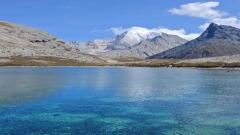
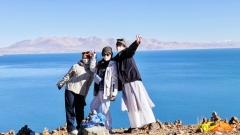
Separated by only a narrow strip of land, these two lakes possess completely opposite reputations. Lake Manasarovar is one of Tibet’s three great sacred lakes, featuring crystal-clear, sweet water that glows with a gentle, holy blue. Right next to it lies Lake Rakshastal, dark and hauntingly beautiful, known as the “Demon Lake.” Because of its high salinity, no plants or fish live in it, resulting in an intensely deep, dramatic navy color. The contrast between them under the shadow of the sacred peak is striking.
3. Zada Clay Forest & The Guge Kingdom Ruins — A Golden Fortress in the Badlands
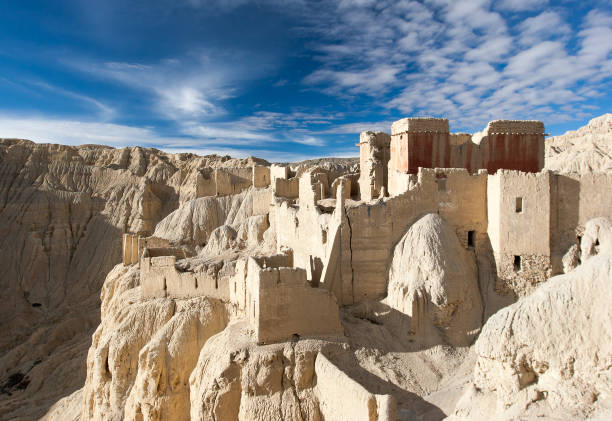
As you drive into Zada County, the landscape dramatically shifts into a vast, awe-inspiring canyon of sandy-brown clay structures that look like a fortress built on Mars. Tucked deep within this badland lies the Ruins of the Guge Kingdom. This massive palace complex, built entirely into a steep clay hill, thrived for 700 years after the collapse of the Tubo Empire, only to mysteriously vanish overnight, leaving behind magnificent murals and crumbling walls to tell its tragic history.
4. Pangong Tso — The Magical Two-Toned International Lake
Situated in Rutog County, Pangong Tso is a long, narrow lake that crosses international borders. Remarkably, the portion of the lake within China consists of clear, fresh water teeming with lush vegetation, birds, and fish. However, as it flows westward into the Kashmir region, it transitions into sterile, salty water. Driving along the lakeshore presents a dazzling display of peacock green, emerald, and bright azure waters.
Essential Tips for Your Journey to Ngari
Ngari is incredibly beautiful, but it is also a harsh alpine environment. Proper preparation is non-negotiable:
-
Arrange Your Border Travel Permits Early: Ngari is a sensitive border region. Both domestic and international travelers must obtain a Border Travel Permit before departure (specifically covering Ngari, Zada, Purang, and Rutog). Without it, you will be turned back at the checkpoints along the way.
-
Acclimatize Gradually: The average altitude of Ngari is roughly 1,000 meters higher than Lhasa. It is highly recommended to spend 2-3 days adapting to the altitude in Lhasa or Shigatse first, and to carry portable oxygen cylinders and AMS medication with you.
-
Prepare for Extreme Weather: The temperature difference between day and night in Ngari is massive. Even in the peak of summer (July and August), nighttime temperatures can plummet below freezing. Pack heavy down jackets, windproof outerwear, high-quality sunglasses, and heavy-duty sunblock.
A journey to Ngari is never a casual vacation; it is a true expedition where your body endures the rugged environment while your soul experiences paradise. When you finally overcome the altitude, the long drives, and the fatigue to stand at the foot of Mount Kailash, watching the sunrise ignite its golden summit, you will realize that some places on Earth are worth every challenge. Ngari stands at the top of the world, waiting for true adventurers.