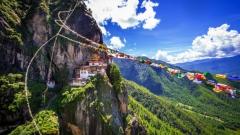

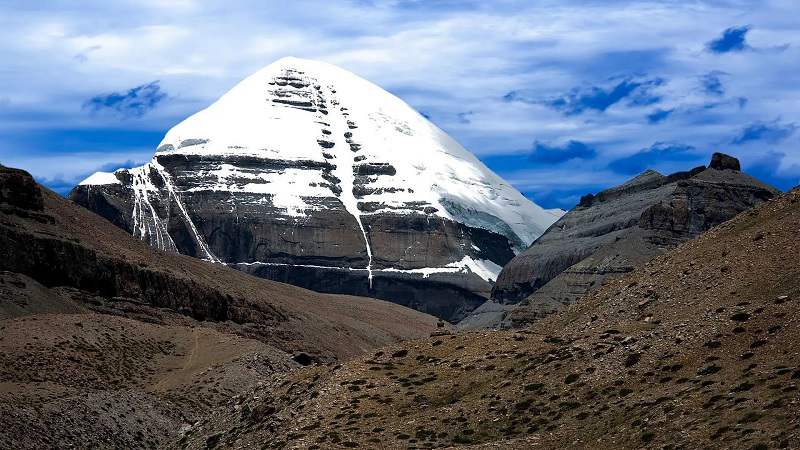
Mount Kailash is one of the most mysterious and sacred mountains in Asia. Rising to 6,638 meters (21,778 feet) in western Tibet, this distinctive pyramid-shaped peak is revered by Hindus, Buddhists, Jains, and followers of the Bon tradition. Although often associated with the Himalayas, Mount Kailash is geographically part of the Gangdise Range in the Trans-Himalaya, north of the main Himalayan range. Unlike Mount Everest, Kailash has never been summited, as climbing the sacred mountain is considered inappropriate. Instead, pilgrims and travelers undertake the challenging Kailash Kora, a 52-kilometer circuit around the mountain. Surrounded by Lake Manasarovar, high-altitude landscapes, glaciers, and the headwaters of major Asian rivers, Mount Kailash offers international travelers a rare combination of spirituality, culture, dramatic scenery, and high-altitude adventure.
Key Points:
- Location: Mount Kailash is in Purang County, Ngari Prefecture, western Tibet, within the Gangdise Range of the Trans-Himalaya.
- Spiritual significance: It is sacred to Hinduism, Buddhism, Jainism, and the Bon tradition and is traditionally regarded as a place of profound spiritual power.
- Kailash Kora: The classic pilgrimage circuit covers about 52 kilometers, with the highest point reaching approximately 5,650 meters at Dolma La Pass.
- Travel planning: International visitors need proper Tibet travel arrangements and should allow sufficient time for high-altitude acclimatization before attempting the Kora.
Where Is Mount Kailash And Is It Part Of The Himalayas?
Mount Kailash is one of the most recognizable mountains on the Tibetan Plateau, but its geographical classification is slightly more complicated than its reputation as a Himalayan mountain suggests. The mountain is located in Purang County, Ngari Prefecture, in the far west of the Tibet Autonomous Region of China, relatively close to the borders of Nepal and India. Rising to approximately 6,638 meters (21,778 feet), its distinctive pyramid-shaped summit dominates the surrounding high-altitude landscape.
Although Mount Kailash is located within the broader Himalayan region, it is not technically part of the main Great Himalayan range. Instead, it is the principal peak of the Gangdise Range, also known as the Gangdêzê Range, which belongs to the Trans-Himalayan system. The Great Himalayas lie farther south, while Kailash stands to their north on the vast Tibetan Plateau.
This distinction explains why Mount Kailash can simultaneously be described as a Himalayan-region mountain and as a peak outside the main Himalayan range. For travelers, however, the geographical classification is only one part of the story. Kailash is closely connected with the mountains, rivers, glaciers, religious traditions, and pilgrimage routes that define the wider Himalayan world.
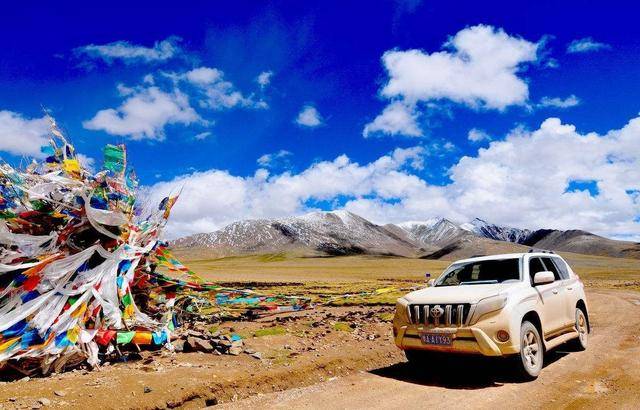
The journey to Mount Kailash is itself a major part of the experience. From Lhasa, the overland distance is roughly 1,200 kilometers, and reaching western Tibet involves traveling through some of the highest and most remote landscapes in Asia. The route can take travelers past monasteries, turquoise lakes, grasslands, high mountain passes, and settlements scattered across the Tibetan Plateau.
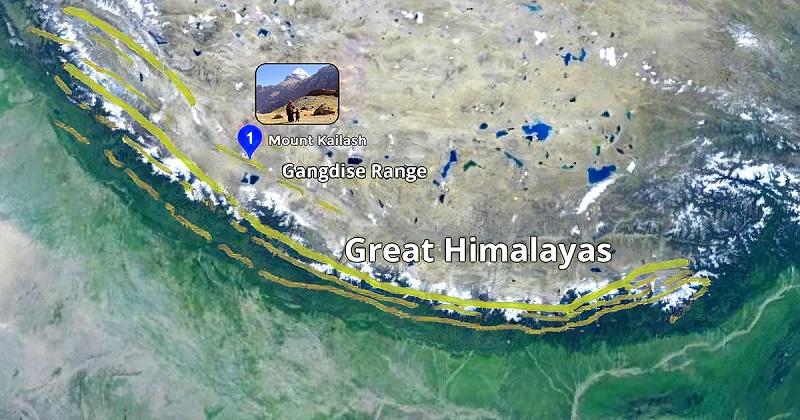
Location of Mount Kailash and the Himalayas
Why Is Mount Kailash So Sacred?
The extraordinary importance of Mount Kailash does not come from its height alone. Unlike Mount Everest, which is famous primarily as the world’s highest mountain and one of the ultimate goals of mountaineering, Kailash is revered as a sacred mountain by several major religious traditions.
For Hindus, Mount Kailash is traditionally regarded as the abode of Lord Shiva and Goddess Parvati. The mountain occupies a central place in Hindu pilgrimage traditions, and devotees travel great distances to circumambulate it, pray, meditate, and seek spiritual blessings. Nearby Lake Manasarovar is also an important sacred destination, and many pilgrims incorporate the lake into their journey.
In Tibetan Buddhism, Mount Kailash is associated with Mount Meru, the sacred cosmic mountain traditionally understood as the center of the universe. Kailash is also connected with important Buddhist figures and stories and is considered one of the most spiritually powerful places in the Tibetan Buddhist world.
Mount Kailash is equally important in the Bon tradition, Tibet’s indigenous spiritual tradition. Jainism also considers the Kailash region sacred, associating it with the spiritual history of the first Tirthankara, Rishabhanatha.
The coexistence of these traditions makes Kailash unusual among the world’s sacred landscapes. Different religions understand the mountain in different ways, but the shared reverence for it has helped preserve the idea that Kailash should be approached with humility rather than conquered.
For international travelers, this cultural dimension is essential to understanding the destination. Mount Kailash is not simply another spectacular mountain on a Tibet itinerary. It is a living pilgrimage site where religion, landscape, and centuries-old traditions remain deeply intertwined.
The Four Great Rivers Associated With Mount Kailash
The importance of the Kailash region extends beyond religion. The high mountains and glaciers around Kailash form part of an important water system that influences communities across South and Central Asia.
The region is traditionally associated with the headwaters of four major rivers: the Indus, Sutlej, Brahmaputra, and Karnali. Their waters eventually flow through several countries and support millions of people.
The Indus begins on the Tibetan Plateau and flows westward through the Himalayan region before continuing into Pakistan. The Sutlej also originates in southwestern Tibet and eventually passes through India and Pakistan. To the southeast, the Brahmaputra, known in Tibet as the Yarlung Tsangpo, crosses the Tibetan Plateau before entering India and Bangladesh. The Karnali, one of the major river systems of Nepal, also has its origins in the highlands of southwestern Tibet.
The connection between Mount Kailash and these great rivers gives the region an importance that goes far beyond its religious symbolism. Snow, glaciers, lakes, and high-altitude watersheds form part of a natural system that supports ecosystems and human communities across a huge area of Asia.
For visitors, this also adds another dimension to the Kailash journey. The mountain is not an isolated landmark rising from an otherwise empty landscape. It sits within a vast geographical system that has shaped the environment and civilizations of the region for thousands of years.
Mount Kailash And Lake Manasarovar
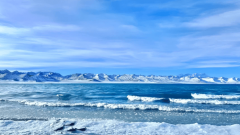
Mount Kailash and Lake Manasarovar are closely connected in both geography and religious tradition. Located near the mountain, Manasarovar is one of the highest freshwater lakes in the world and one of the most revered lakes in Asia.
The landscape around the lake is extraordinary. Against the immense blue sky of the Tibetan Plateau, the calm waters of Manasarovar reflect the surrounding mountains, creating a scene that can appear almost otherworldly. The stark combination of snow-covered peaks, open plateau, deep blue water, and minimal vegetation gives the region a character very different from the lush valleys found in parts of the lower Himalayas.
For Hindu pilgrims, Lake Manasarovar has profound spiritual significance and is traditionally associated with purification and sacred pilgrimage. Buddhist pilgrims also regard the lake as an important holy place.
Nearby Lake Rakshastal provides an interesting contrast. The two lakes lie close to one another but have very different appearances and religious associations. Visiting both lakes is therefore an important part of many Mount Kailash itineraries.
For international tourists, the lakes also provide valuable time to appreciate the landscape before undertaking the physically demanding Kailash Kora.
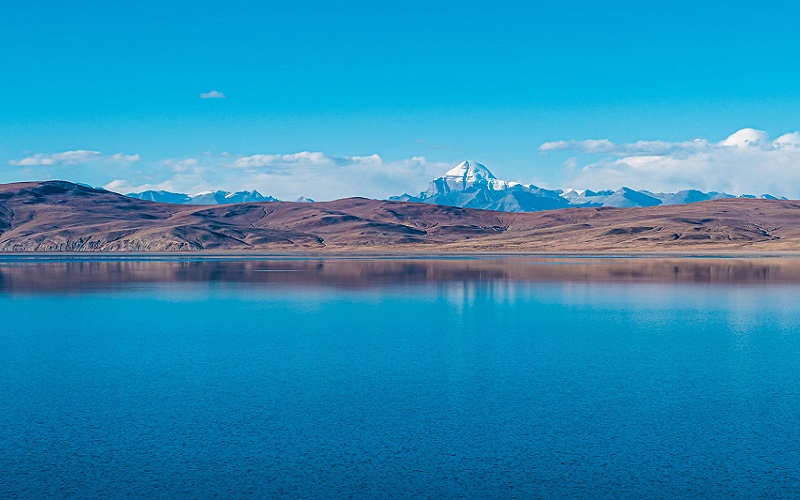
Mount Kailash And Lake Manasarovar
Why Has Mount Kailash Never Been Summited?
One of the most remarkable facts about Mount Kailash is that no one has successfully climbed to its summit.
This is fundamentally different from Mount Everest. Everest has become one of the world’s most famous mountaineering objectives, with climbers from many countries attempting to reach its summit. Mount Kailash, by contrast, is traditionally considered inappropriate to climb because of its sacred status.
For Hindus, Buddhists, Jains, and Bon practitioners, climbing the mountain would conflict with the spiritual respect traditionally given to Kailash. The appropriate form of pilgrimage is not to stand on its summit but to walk around it.
The physical environment would also make an ascent extremely demanding. Kailash is remote, extremely high, and exposed to severe weather. Its surrounding terrain includes steep slopes, rugged trails, snow, ice, and rapidly changing conditions. Even without religious restrictions, reaching the summit would be a serious mountaineering undertaking.
The fact that Kailash remains unclimbed contributes to its unique identity. It represents an entirely different relationship between humans and mountains. Everest has become a symbol of reaching the highest possible point, while Kailash represents the idea that some places are respected precisely because humans choose not to conquer them.
What Is The Kailash Kora?
Instead of climbing Mount Kailash, pilgrims traditionally circumambulate the mountain. This pilgrimage is known as the Kailash Kora, or Kailash Parikrama.
The classic Kora covers approximately 52 kilometers and is usually completed in three days by travelers who are reasonably acclimatized and physically prepared. The route begins and ends near Darchen, the main settlement and gateway for the Kailash pilgrimage.
The first section of the journey gradually leads travelers toward the northern side of the mountain. The second day is normally the most difficult because the trail rises toward Dolma La Pass, the highest point of the Kora at approximately 5,650 meters (18,537 feet). After crossing the pass, the trail descends through a rugged landscape before continuing toward the final section of the circuit.
The third day generally completes the remaining distance back to Darchen.
For religious pilgrims, however, the Kora can be much more demanding. Some Tibetan pilgrims complete the entire circuit through repeated full-body prostrations, moving only a short distance at a time. Their journeys demonstrate the profound devotion associated with Mount Kailash and are an important part of the cultural experience for visitors.
International travelers generally complete the circuit on foot while following the traditional clockwise direction and allowing pilgrims to pass safely.
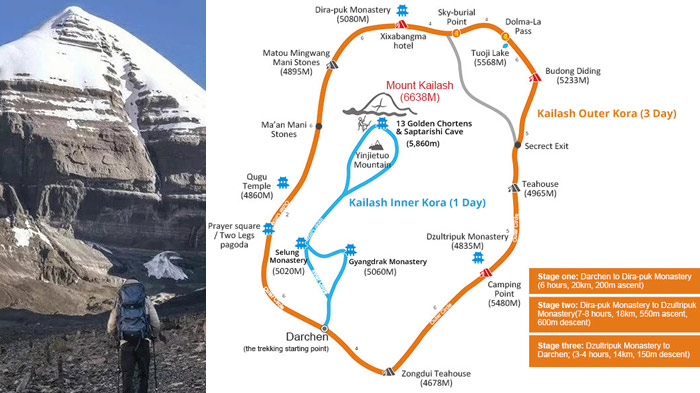
Map of Mount Kailash Kora
Why Is The Kailash Kora So Challenging?
The Kailash Kora is not a technical mountaineering expedition, but it is still one of the most demanding trekking experiences in Tibet. The main challenge is extreme altitude.
Much of the route remains above 5,000 meters, where the amount of available oxygen is considerably lower than at sea level. Even fit travelers may experience headaches, fatigue, shortness of breath, reduced appetite, or difficulty sleeping.
Dolma La Pass is the highest and most strenuous section of the route. The combination of altitude, steep terrain, cold temperatures, strong winds, and potentially difficult trail conditions can make the ascent physically exhausting. The descent after the pass can also place considerable strain on the legs.
Weather is another important factor. Conditions can change quickly in the mountains, and snow, ice, wind, or rain may affect the route.
This is why proper acclimatization is more important than simply being physically fit. Travelers should spend several days gradually adjusting to high altitude before attempting the Kora and should never underestimate symptoms of altitude sickness.
When Is The Best Time To Visit Mount Kailash?
The practical travel season for Mount Kailash generally falls during the warmer months, when roads are more accessible and conditions on the pilgrimage route are comparatively favorable. For many international travelers, May through October is the most suitable period to consider, although weather and local conditions vary from year to year.
One particularly meaningful time to visit is during Saga Dawa, an important Tibetan Buddhist festival that generally falls in May or June according to the Tibetan lunar calendar. During this period, large numbers of Tibetan pilgrims travel to sacred places, and the atmosphere around Mount Kailash can be especially vibrant.
However, traveling during a major religious festival can also mean greater demand for transportation and accommodation. Travelers who prefer a quieter experience may want to consider dates outside the busiest pilgrimage periods.
Whatever month you choose, conditions should be checked close to departure because western Tibet is a remote high-altitude environment where weather and road conditions can change quickly.
How Can International Tourists Travel To Mount Kailash?
For international visitors, reaching Mount Kailash requires considerably more planning than visiting Lhasa or other major Tibetan destinations. Overseas travelers must follow the current Tibet entry and tourism regulations and generally need to arrange their journey through an authorized local travel agency.
Most travelers begin their journey in Lhasa, where they spend several days acclimatizing before traveling west. This gradual approach is important because the elevation rises dramatically as the journey continues toward Ngari.
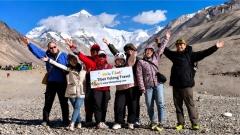
A classic overland itinerary can combine Lhasa with Shigatse, Mount Everest Base Camp, Saga, Lake Manasarovar, and Darchen before beginning the Kailash Kora. This route allows travelers to experience several of Tibet’s most famous landscapes rather than treating Kailash as an isolated destination.
Another possibility is to approach western Tibet from Nepal through the Gyirong border, depending on current border operations and travel regulations.
Although the actual Kora takes approximately three days, travelers should not plan the entire trip around those three days alone. Because of the distance, altitude, acclimatization requirements, and remote location, a Kailash journey usually requires at least 10 to 15 days, depending on the itinerary and point of entry.
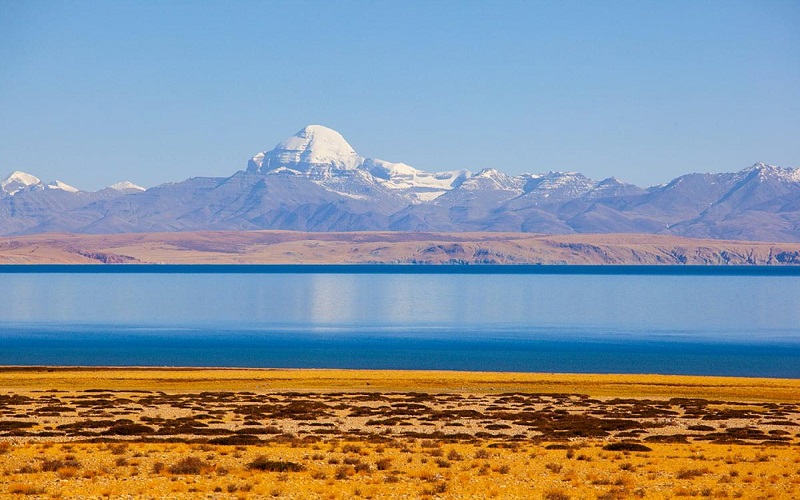
Mount Kailash
How Should You Prepare For A Mount Kailash Trip?
Good preparation can make a major difference to the experience. The most important consideration is altitude. Travelers should build enough acclimatization time into their itinerary and avoid attempting the Kora immediately after arriving in western Tibet.
Clothing should be suitable for rapidly changing mountain weather. A warm down jacket, fleece layer, windproof outer shell, gloves, hat, thermal layers, sunglasses, sunscreen, and sturdy trekking shoes are all useful. High-altitude sunlight can be intense, even when temperatures feel cold, so effective sun protection is essential.
A small daypack is usually sufficient for the Kora, while larger luggage can often be left or transported separately depending on the itinerary and local arrangements. Travelers should also bring personal medication and discuss high-altitude travel with a medical professional before departure if they have concerns about altitude.
Financial preparation is equally important. Western Tibet is remote, and banking facilities are limited outside larger towns. Carrying sufficient Chinese yuan for personal expenses is advisable.
Most importantly, travelers should approach the Kailash region with cultural sensitivity. Follow the established pilgrimage route, respect religious rituals, avoid disturbing pilgrims, and ask permission before photographing people. Mount Kailash is a sacred place first and a tourist destination second.
What Are Accommodation And Food Like Around Mount Kailash?
Travelers should adjust their expectations before heading into western Tibet. Accommodation around Mount Kailash is considerably more basic than what visitors will find in Lhasa.
Darchen has developed into the principal tourism and pilgrimage base for Mount Kailash, with a range of hotels and guesthouses. During the Kora itself, however, accommodation is generally simple. Facilities can be limited, and travelers may stay in basic guesthouses with shared facilities.
Food choices are similarly modest. Visitors may encounter Tibetan staples such as butter tea, noodles, rice, simple vegetable dishes, and basic Chinese meals. As the region is remote, travelers should not expect the variety available in major cities.
For many people, this simplicity becomes part of the adventure. The Kailash journey is about experiencing a remote landscape and traditional pilgrimage environment rather than pursuing luxury travel.
Is Mount Kailash Suitable For International Tourists?
Mount Kailash can be an extraordinary destination for international travelers, provided they understand what the journey involves.
It is not necessary to be an experienced mountaineer, because the traditional pilgrimage route does not require technical climbing skills. However, travelers should be comfortable with long-distance walking and prepared for very high altitude.
The most important qualities are patience, physical preparation, adaptability, and respect. The journey involves long hours on the road, basic accommodation, unpredictable weather, limited services, and a demanding trek.
In return, travelers experience something that few destinations can offer: a sacred mountain shared by several major religious traditions, an extraordinary high-altitude environment, ancient pilgrimage routes, enormous open landscapes, and some of the most spectacular scenery in Tibet.
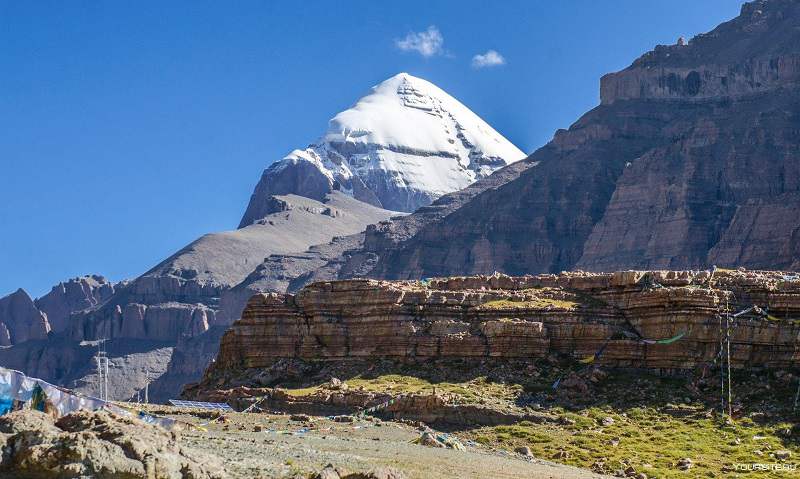
Mount Kailash
Experience Mount Kailash With Tibet Yulong Travel
For international travelers planning to explore Mount Kailash, Tibet Yulong Travel can assist with the practical arrangements required for a journey through western Tibet, including Tibet travel permits, transportation, accommodation, local guides, and Kailash Kora arrangements.
A thoughtfully planned itinerary should allow sufficient time for acclimatization and should treat the journey to Kailash as part of the experience rather than simply a transfer between destinations. Combining Lhasa, central Tibet, Mount Everest, Lake Manasarovar, and Mount Kailash can create a more complete introduction to the landscapes and cultures of the Tibetan Plateau.
Ultimately, the attraction of Mount Kailash lies in what makes it different from other famous mountains. Everest invites people to climb toward its summit; Kailash invites people to walk around it. One represents the pursuit of physical achievement, while the other encourages reflection, devotion, and respect. For international travelers seeking a deeper understanding of Tibet, that distinction may be the most meaningful part of the entire journey.