
✨ Highlights:
- 🏯 Discover the spiritual home of Panchen Lamas in central Shigatse at 3847 m altitude
- 🗿 Visit the world‑famous 26.2‑meter‑tall Jampa Maitreya Buddha statue
- 🚶♂️ Walk the 3‑km outer kora path with local pilgrims for panoramic hillside views
- ⛰️ Learn essential altitude sickness tips, monastery etiquette and travel season advice
- 🗺️ Fit your Tashilhunpo Monastery visit into a classic Lhasa‑Shigatse‑Everest overland route
Why a Shigatse Tashilhunpo Monastery Visit Matters? A Shigatse Tashilhunpo Monastery visit is one of the most culturally rich experiences you can add to your Tibet travel itinerary. As the leading spiritual landmark in Shigatse, the second‑largest city in Tibet, Tashilhunpo Monastery sits gracefully on the slope of Nyiseri Mountain, overlooking the whole urban valley. At an altitude of 3847 meters, this huge monastic complex serves as the long‑established official seat of Panchen Lama, one of the two most respected spiritual leaders within the Gelug school of Tibetan Buddhism.
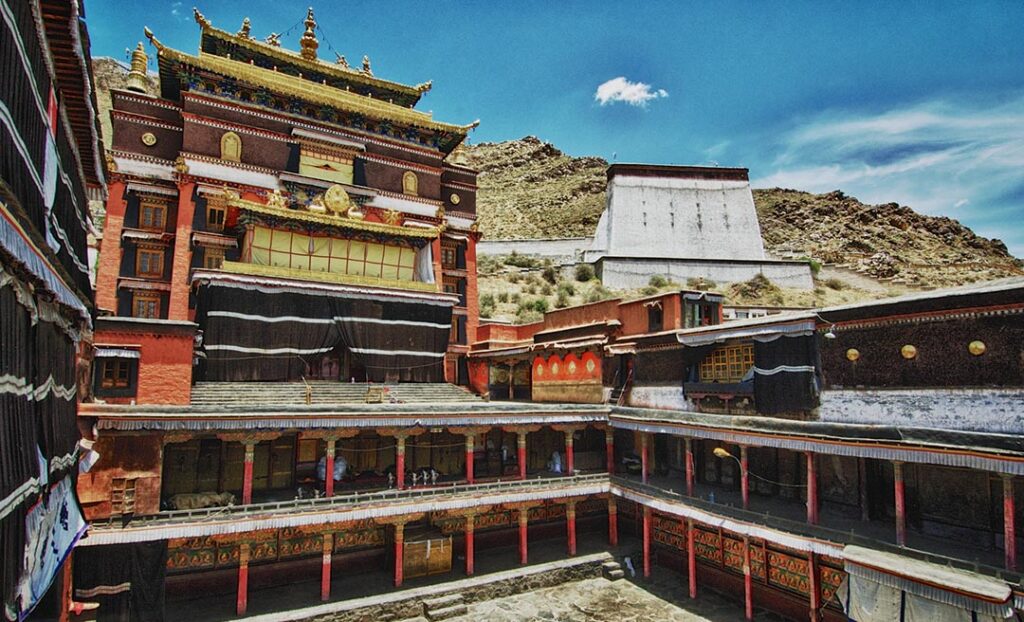
Many international travellers build their whole western‑Tibet trip around this sacred destination. Unlike short sightseeing stops at scenic viewpoints, exploring this active monastery allows visitors to connect with living Tibetan Buddhism, ancient Himalayan architecture and deep‑rooted local pilgrim traditions. Whether you travel for culture, photography, religion or slow adventure, no journey to Shigatse would feel complete without spending quality time wandering through its golden‑roofed halls, winding stone alleys and peaceful courtyards. This Shigatse Tashilhunpo Monastery visit guide covers everything you need to prepare a smooth and rewarding cultural adventure.
Brief History of Tashilhunpo Monastery
To fully appreciate your Shigatse Tashilhunpo Monastery visit, it helps to understand its remarkable 600‑year‑long history. The monastery was founded in 1447 by Gendun Drup, who later became recognised as the First Dalai Lama. In its earliest years, the site was a relatively small teaching centre. Gradually, with generous donations and continuous construction projects, it expanded into a powerful religious institution across the Tsang region.
The most important turning point in its history arrived in 1645, when the Fourth Panchen Lama officially made Tashilhunpo his permanent residence. From that moment onward, the monastery became the primary spiritual base for all successive Panchen Lamas. Up to today, it still holds deep religious significance for Tibetan Buddhist believers all over the plateau. Its name “Tashi Lhunpo” translates to “Auspicious Sumeru Mountain”, a symbolic reference to the sacred cosmic mountain in Buddhist cosmology, representing peace, good fortune and spiritual awakening.
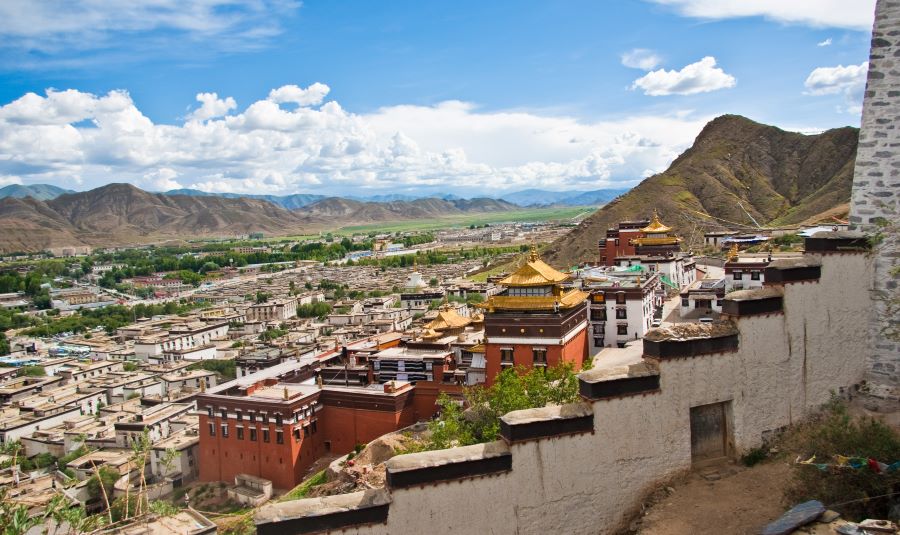
Over the centuries, the monastery survived wars, natural disasters and multiple reconstruction phases. Most of the grand buildings you will walk past during your Shigatse Tashilhunpo Monastery visit date back to major expansions in the 18th and 19th centuries. Every wall, mural and chapel carries stories of generations of monks, pilgrims and spiritual leaders.
Top Must‑See Sights During Your Shigatse Tashilhunpo Monastery Visit
The Giant Jampa (Maitreya) Buddha Hall
Without any doubt, the Jampa Buddha Hall is the star attraction for every visitor on a Shigatse Tashilhunpo Monastery visit. Inside this enormous hall stands the world‑famous sitting Maitreya Buddha, also known as the Future Buddha. This incredible bronze statue reaches 26.2 meters from its base to the top of its crown. Construction began in 1914 and took more than four years to finish. Craftsmen used over 115,000 kilograms of copper, plus hundreds of kilograms of gold leaf, precious pearls, turquoise and coral to decorate the statue.
When you step inside the hall and lift your eyes upward, the huge gentle face of Jampa Buddha creates an overwhelming sense of peace and grandeur. Pilgrims often spend long moments here offering prayers and khatag white scarves. Please note that photography is completely forbidden inside this sacred hall.
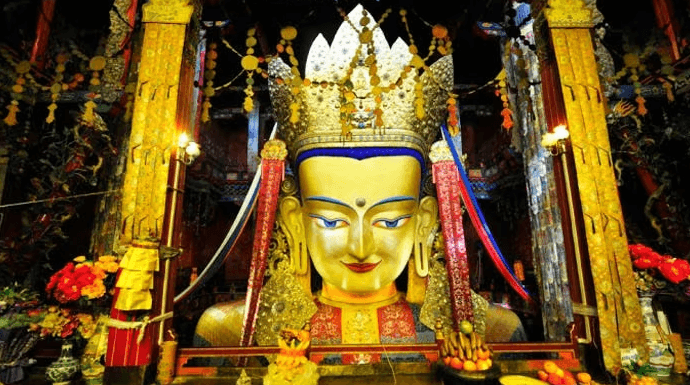
Tashilhunpo’s Jampa (Future Buddha) statue is the world’s largest gilded statue
The Panchen Lama Tombs (Stupa Halls)
Another highlight you cannot skip during your Tashilhunpo Monastery visit is the series of tomb chapels dedicated to previous Panchen Lamas. These magnificent memorial chambers contain gold‑covered stupas, where the remains of several high‑ranking Panchen Lamas rest. Each stupa is lavishly decorated with silver, jewels and fine carvings.
The atmosphere inside these tomb halls is extremely quiet and devotional. Local pilgrims light butter lamps, make offerings and walk slowly around the stupas clockwise. Visitors are expected to keep their voices low and avoid disturbing worshippers. These buildings beautifully show the high spiritual status of the Panchen Lama and the deep respect local communities hold for their past leaders.
Outer Kora Pilgrimage Circuit
One of the most rewarding free activities for your Shigatse Tashilhunpo Monastery visit is completing part or all of the outer kora. This 3‑kilometre‑long paved path circles the entire monastery base. Hundreds of mani prayer wheels line the route, together with colourful prayer flags and stone walls covered in carved mantras.
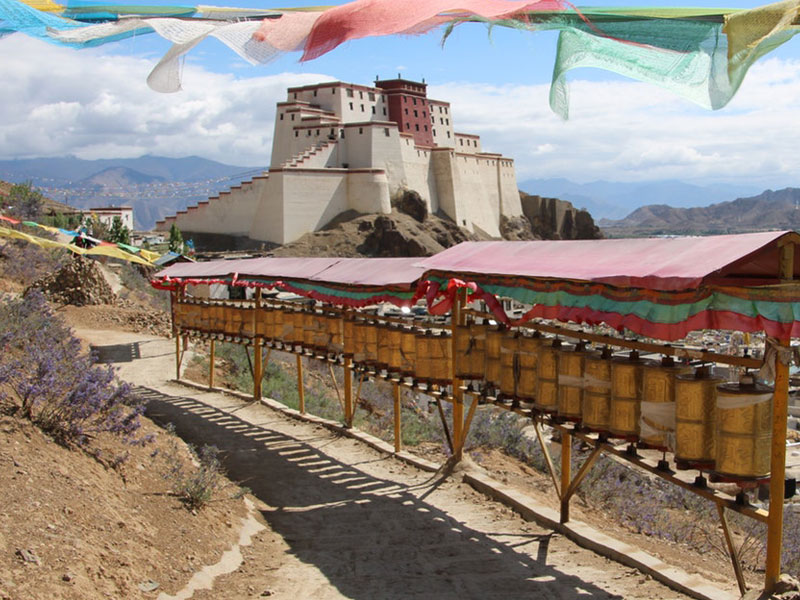
Walking clockwise along the kora with local Tibetans gives you an authentic taste of everyday pilgrim life. This route also offers the best panoramic photo viewpoints over Tashilhunpo’s golden roofs and the whole city of Shigatse. Most travellers start their monastery trip on this outer walk before entering the paid inner compound.
Thangka Display Wall
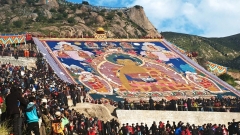
On the far‑eastern hillside of the monastery, you will spot a very tall, sloped stone wall: the famous Thangka wall. This huge structure was built specially to unveil giant silk Buddha paintings during important annual religious festivals. The most well‑known event is the Shigatse Thangka Festival, usually held in summer. If you can schedule your Shigatse Tashilhunpo Monastery visit during festival time, you will witness thousands of pilgrims gathering to see these giant thangkas. Even outside festival dates, the wall itself makes an impressive photography landmark.
Monk Debating Courtyard & Residential Quarters
Deep inside the monastery complex, hidden away from the main tourist paths, sit monk housing blocks and the debating courtyard. In the late‑afternoon hours, you may be lucky enough to watch lively Buddhist debate sessions. Monks stand, gesture, clap their hands and discuss complex philosophical teachings. It is a wonderful living tradition to observe during your Tashilhunpo Monastery visit.
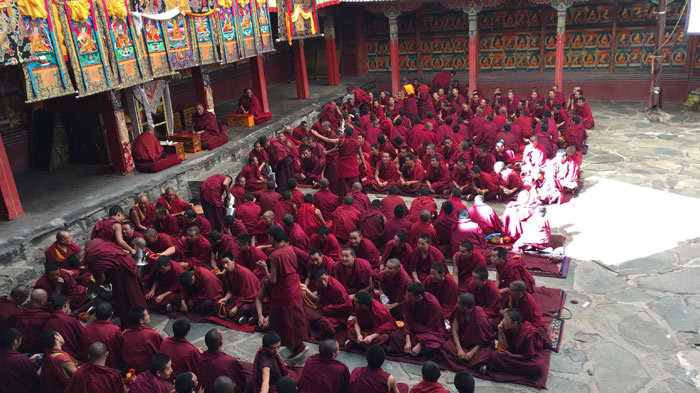
Narrow cobblestone lanes wind between white‑washed monk houses. Wandering these quiet backstreets lets you escape tourist crowds and see the everyday life of resident monks who still study, cook and live on‑site.
Practical Tips to Plan Your Shigatse Tashilhunpo Monastery Visit
Altitude Sickness Preparation
Altitude preparation is absolutely critical before your Shigatse Tashilhunpo Monastery visit. At 3847 meters above sea level, Shigatse sits noticeably higher than many low‑altitude cities. Many tourists travel directly from Lhasa (3650 m). Even though the elevation difference seems small, walking uphill around the monastery can easily trigger shortness of breath, headaches or fatigue.
Our top advice: rest for at least one full day after arriving in Shigatse before starting your monastery tour. Drink 3‑4 litres of water every day, avoid alcohol and heavy meals, and walk slowly without rushing up hills. Pack high‑factor sunscreen, lip balm, warm layers, sunglasses and a sun hat, because UV radiation on the Tibetan plateau is extremely strong. Wear comfortable non‑slip walking shoes, as many monastery paths are steep stone stairways. You can find more useful guidance in these Tashilhunpo Monastery visit tips Shigatse, which cover common concerns for first‑time visitors.
Opening Hours, Tickets & Guided Tours
Tashilhunpo Monastery opening hours for visitor are generally from 9:00 AM to 5:00 PM every day. Some inner chapels close around 3:30‑4:00 PM, so try to arrive before mid‑afternoon to avoid missing key halls.
We highly recommend booking an experienced English‑speaking local guide for your Shigatse Tashilhunpo Monastery visit. Without professional explanation, many visitors walk past murals, stupas and statues without understanding their rich historical and spiritual background. Your guide can explain the connection between Dalai Lama and Panchen Lama, point out hidden art details, teach you local customs and help you follow monastery rules.
Monastery Etiquette & Cultural Rules
Respectful behaviour is essential during your Tashilhunpo Monastery visit. Follow these simple rules to show proper respect for local faith:
– Wear modest clothing that covers your shoulders and knees; avoid shorts, sleeveless tops or revealing outfits
– Keep your voice quiet inside all prayer halls
– Never touch Buddha statues, butter‑lamp offerings, thangkas or mani wheels
– Always walk clockwise around shrines, stupas and the kora path
– Do not take photos in areas marked “no photography” — this rule applies inside nearly all inner chapels
– Step aside to let pilgrims pass when they are completing their devotional circuits
Best Time for Your Shigatse Tashilhunpo Monastery Visit
You can technically visit Shigatse all year round, yet some seasons deliver far better travel conditions than others.
– May‑October (Peak Season): This is the most popular window for a Shigatse Tashilhunpo Monastery visit. Daytime temperatures are mild, major overland roads are open, and rainfall is limited. June‑August brings large tourist crowds; you will need to book permits, guides and hotel rooms well in advance.
– Late September‑October (Hidden Best Season): Autumn offers crisp, clear sunny weather, thinner crowds and excellent visibility for mountain photography. Many experienced Tibet travellers pick October for their Tashilhunpo Monastery visit.
– November‑April (Winter): Winter visits are quiet and budget‑friendly, but daytime temperatures drop sharply and mountain highways to Everest Base Camp or western Tibet may close due to heavy snow.
How to Fit a Tashilhunpo Monastery Visit Into Your Tibet Itinerary
Most international tourists arrange their sightseeing as part of a classic overland journey from Lhasa to west Tibet. A Lhasa to Shigatse Tashilhunpo Monastery day trip works perfectly for travellers with limited schedule, before continuing onward towards Sakya and Everest Base Camp. The most common extended route is: Lhasa → Gyantse → Shigatse → Sakya → Everest Base Camp.
Day 1: Arrival in Lhasa (3,650m)
Day 2: Lhasa Monastery Day: Drepung Monastery and Sera Monastery
Day 3: Lhasa Tour: Potala Palace, Jokhang Temple and Barkhor Street
Day 4: Lhasa – Gyantse- Shigatse (360 km): Yamdrok Lake, Korola Glacier
Day 5: Shigatse – Tingri – EBC (5,000m)
Day 6: EBC – Sakya – Shigatse
Day 7: Shigatse – Lhasa: Tashilhunpo Monastery
Day 8: Departure from Lhasa
If you have limited time in Shigatse, you can finish sightseeing inside the main monastery compound in 2‑3 hours. Slow‑paced cultural travellers usually spend half a day, combining the outer kora walk, inner hall tour and hillside rest stops with views over the city. After your monastery visit, you can explore Shigatse old town, visit local markets and sample traditional Tibetan dishes such as tsampa, butter tea and yak meat.
Final Thoughts
A Shigatse Tashilhunpo Monastery visit is so much more than checking off a tourist landmark. It is a chance to step inside a living spiritual community that has shaped Tibetan history for six centuries. From the breathtaking giant Maitreya Buddha to quiet stupa halls and the lively outer pilgrim circuit, every corner of Tashilhunpo tells a unique Himalayan story.
Whether you are building a short Lhasa‑Shigatse trip or a long adventure toward Mount Everest, adding a well‑planned Tashilhunpo Monastery visit will deepen your cultural connection to Tibet and leave you with precious, lifelong travel memories.