
Time moves differently on the high plateau. For centuries, the Tibetan Calendar has served as the heartbeat of life in the Himalayas, dictating everything from agricultural cycles to spiritual observances. Unlike the Gregorian system most of the world relies upon today, this ancient timekeeping method weaves together astronomy, mathematics, and deep-rooted Buddhist philosophy. It is not merely a way to track days; it is a living cultural artifact that continues to shape daily routines, religious ceremonies, and grand celebrations across Tibet and the broader Himalayan region. Understanding the Tibetan Calendar offers travelers a profound window into a culture where the cosmos and human existence are intimately connected.
Key Takeaways:
- The Tibetan Calendar is a lunisolar system combining lunar months with solar years.
- It operates on a 60-year cycle known as Rabjung.
- Leap months are added periodically to align lunar and solar cycles.
- Major festivals like Losar are determined entirely by this calendar.
- Travelers can use its dates to plan culturally immersive journeys.
Origins and History of the Tibetan Calendar
The roots of the Tibetan Calendar stretch back over a millennium, deeply intertwined with the spread of Buddhism into the Himalayas. While early Tibetan societies likely relied on rudimentary seasonal observations to manage nomadic herding and farming, the formalized system began taking shape around the seventh century. During this period, cultural and intellectual exchanges between Tibet, China, and India brought advanced astronomical knowledge to the plateau.
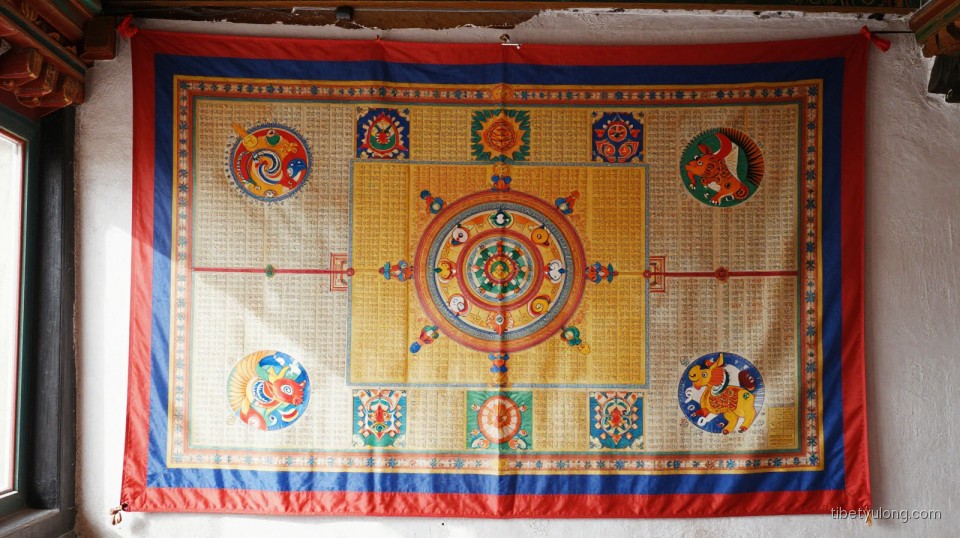
Indian astrological texts, particularly those related to the Kalachakra Tantra, profoundly influenced the mathematical foundations of the Tibetan Calendar. The Kalachakra system introduced complex calculations for planetary movements, eclipses, and the precise length of a year. Simultaneously, elements of the Chinese calendrical system, such as the integration of animal zodiac signs and elemental associations, were absorbed and adapted to fit local cosmological views. By the eleventh century, Tibetan scholars had synthesized these diverse influences into a distinct, highly sophisticated framework. Monasteries became the centers of astronomical study, with dedicated monks tasked with calculating dates, predicting celestial events, and publishing annual almanacs that guided both secular and religious life.
How the Tibetan Calendar Works: Lunisolar Mechanics
To truly appreciate the Tibetan Calendar, one must understand its lunisolar nature. A purely lunar calendar tracks the phases of the moon, resulting in a year of about 354 days. A purely solar calendar, like the Gregorian one, tracks the earth’s orbit around the sun, totaling roughly 365.25 days. The Tibetan system bridges this gap. Each month begins with the new moon, making the lunar cycle the primary building block of the year. However, because twelve lunar months fall short of a solar year by about eleven days, relying solely on the moon would cause seasons to drift out of alignment with the months over time.
To prevent this seasonal drift, the Tibetan Calendar employs an intercalary system, inserting an extra “leap month” approximately every three years. This adjustment ensures that spring always arrives in the expected lunar month, keeping agricultural activities and seasonal festivals perfectly synchronized with the natural environment. Furthermore, the calculation of individual days is highly nuanced. Because the exact mathematical length of a lunar day does not perfectly match a standard 24-hour period, the Tibetan Calendar sometimes omits a specific date (a skipped day) or duplicates a date (a doubled day) within a given month. To outsiders, seeing the 5th of a month followed immediately by the 7th can be confusing, but it is a mathematically necessary feature of this intricate system.
The 60-Year Cycle and Zodiac Elements in the Tibetan Calendar
One of the most fascinating aspects of the Tibetan Calendar is its method of naming and tracking years. Rather than counting sequentially upward indefinitely, it utilizes a repeating 60-year cycle known as the Rabjung. This grand cycle is constructed by combining two smaller sets of symbols: twelve animals and five elements.
The twelve animals mirror those found in other Asian zodiac systems: Mouse, Ox, Tiger, Rabbit, Dragon, Snake, Horse, Sheep, Monkey, Bird, Dog, and Pig. The five elements are Wood, Fire, Earth, Iron, and Water. In this system, each element governs two consecutive years—one male and one female—before transitioning to the next element. For example, you might have a Male Wood Mouse year followed by a Female Wood Ox year, then moving into the Fire element. When all combinations of elements and animals are exhausted, exactly sixty years have passed, and the cycle begins anew. This structure means that a person’s sixtieth birthday is considered a monumental milestone, marking the completion of a full life cycle and often celebrated with special religious rituals and family gatherings.
Sacred Days and Monthly Rhythms
Within any given month of the Tibetan Calendar, certain days hold elevated spiritual significance. These dates dictate when practitioners intensify their meditation, perform good deeds, or engage in specific rituals. The eighth day of the lunar month is traditionally associated with the Medicine Buddha, making it an auspicious time for healing practices. The fifteenth day, which coincides with the full moon, is widely regarded as the most powerful day for accumulating merit. It was on a full moon day that the historical Buddha achieved enlightenment and later passed into parinirvana.
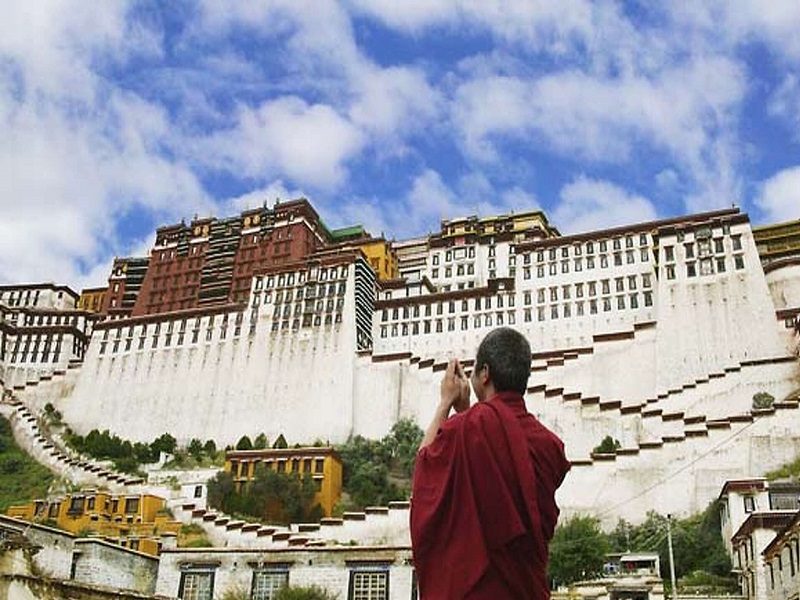
Conversely, the thirtieth day, or the new moon, is often dedicated to purification practices. During these sacred windows, many Tibetans will visit monasteries, light butter lamps, circumambulate sacred sites, and abstain from eating meat. Understanding these monthly rhythms allows visitors to witness the organic flow of devotion that pulses through Tibetan communities, driven entirely by the turning pages of the Tibetan Calendar.
Major Festivals Dictated by the Tibetan Calendar
The most vibrant expressions of this timekeeping system are the grand festivals it schedules. Because the Tibetan Calendar is lunisolar, these events do not fall on fixed Gregorian dates, shifting slightly from year to year on Western calendars.
Losar: The Tibetan New Year
Losar is the most important holiday, typically falling in February or March. It marks the first day of the first month in the Tibetan Calendar. Preparations begin weeks in advance, with families thoroughly cleaning their homes to sweep away bad luck. On New Year’s Eve, a traditional noodle soup called Guthuk is consumed, featuring dough balls containing hidden items that playfully predict one’s character or fortune for the coming year. The following days are filled with monastery visits, hanging new prayer flags, feasting, and performing cham dances designed to subdue negative forces.
Saga Dawa Festival
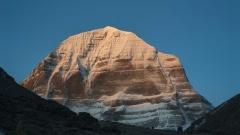
Occurring on the fifteenth day of the fourth lunar month, Saga Dawa commemorates the birth, enlightenment, and death of the Buddha. It is a time of intense spiritual focus. Pilgrims travel vast distances to circumambulate Mount Kailash or walk the Barkhor circuit in Lhasa. Acts of charity multiply, and many people adopt strict vegetarianism during this holy period.
Shoton Festival
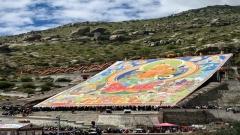
Held in the late sixth or early seventh lunar month, the Shoton Festival originally began as a feast where laypeople offered yogurt to monks emerging from their summer retreats. Today, it is famous for the unveiling of massive Thangka paintings at Drepung Monastery and spectacular performances of traditional Tibetan opera.
Experiencing the Tibetan Calendar Through Travel
For travelers, aligning a journey with the Tibetan Calendar transforms a standard sightseeing trip into a deeply immersive cultural experience. Timing a visit to coincide with Losar or Saga Dawa means witnessing the plateau at its most vibrant, colorful, and spiritually charged. However, traveling during major festivals requires careful preparation. Accommodations fill up rapidly, transportation networks become busy, and certain monastic areas may restrict tourist access to preserve the sanctity of religious observances.
This is where expert guidance becomes invaluable. Navigating the logistics of high-altitude travel while respecting local customs demands local expertise. Agencies like Tibet Yulong Travel specialize in crafting itineraries that harmonize with the rhythms of the Tibetan Calendar. Whether you wish to participate in the joyous chaos of a New Year celebration, observe the quiet devotion of a full moon ritual, or simply trek through landscapes untouched by modern timekeeping, professional operators ensure your journey is both seamless and respectful. They understand the nuances of regional festival variations—since different parts of Tibet sometimes celebrate specific holidays on slightly different lunar dates—and can tailor your route accordingly.
Beyond festivals, everyday travel is enriched by understanding this system. Knowing why a particular date is missing from the calendar, or recognizing the elemental zodiac sign of the current year, provides endless opportunities for meaningful conversations with local guides and residents. It shifts the traveler’s perspective from passive observation to active cultural participation.
The enduring legacy of the Tibetan Calendar is a testament to the ingenuity and spiritual depth of Himalayan civilization. It remains far more than a relic of the past; it is the living architecture of time in Tibet. For those willing to step outside the rigid grid of Western timekeeping, engaging with this ancient system offers a rare opportunity to experience the world at a different, more deliberate pace. Planning your expedition with an awareness of these lunar cycles, perhaps alongside experienced teams like Tibet Yulong Travel, guarantees that your time spent on the roof of the world will be measured not just in hours and days, but in moments of genuine cultural connection.