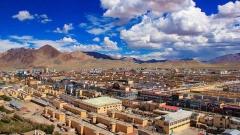
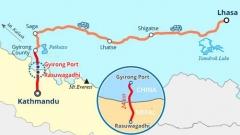
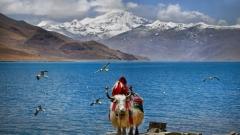
Deep in the arid landscapes of western Tibet, perched on a towering clay hill overlooking the Sutlej River valley, lie the haunting remains of the Guge Kingdom. Once a thriving center of Tibetan Buddhism and a vital hub on the ancient trade routes connecting Tibet, Kashmir, and Central Asia, this civilization vanished almost overnight, leaving behind crumbling palaces, hidden tunnels, and exquisite murals that continue to captivate historians and travelers alike. Today, visiting the Guge Kingdom is one of the most profound experiences for those venturing into the remote Ngari Prefecture. The sheer scale of the ruins, combined with the desolate beauty of the surrounding terrain, creates an atmosphere unlike anywhere else on earth. For adventurers willing to make the long journey across the Tibetan plateau, these ancient walls whisper stories of royal intrigue, religious devotion, and sudden collapse.
Key Highlights of the Guge Kingdom:
- Founded in the 10th century after the fall of the Tibetan Empire.
- Served as a crucial center for the revival of Tibetan Buddhism.
- Features over 300 rooms, temples, and caves built into a steep clay mountain.
- Mysteriously collapsed in the 17th century following a brutal siege.
- Located in Zanda County, Ngari Prefecture, offering breathtaking desert-like scenery.
The Historical Rise of the Guge Kingdom
To understand the significance of the Guge Kingdom, one must look back to the fragmentation of the Tibetan Empire. Following the assassination of King Langdarma in the 9th century, the unified Tibetan state fractured into warring factions. One of Langdarma’s descendants fled westward, eventually establishing a new dynasty in the rugged terrain of what is now Ngari Prefecture. This marked the birth of the Guge Kingdom, which rapidly grew from a small refuge into a powerful regional empire.
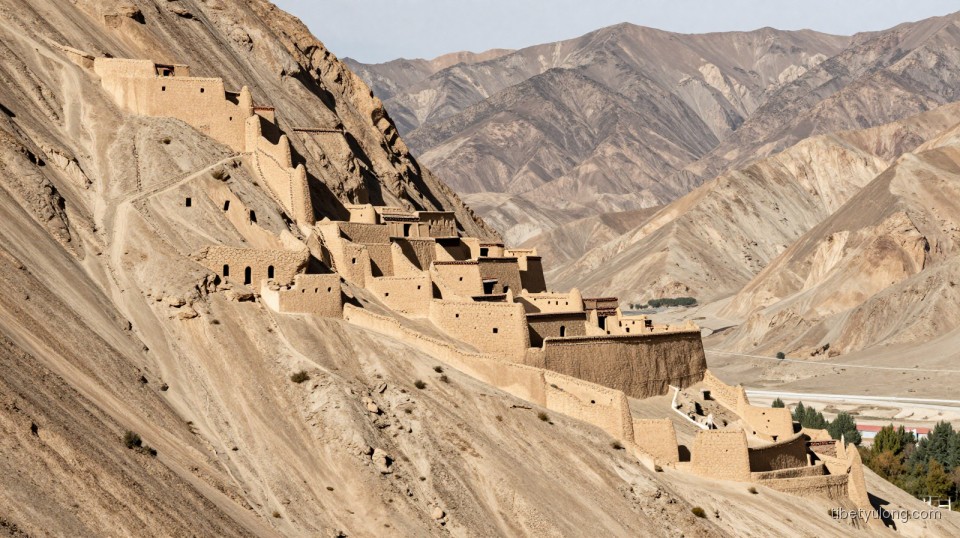
The rulers of the Guge Kingdom were not merely warlords; they were devout patrons of religion and culture. Realizing that Buddhism had severely declined in central Tibet during the years of political chaos, the kings of Guge actively invited scholars, monks, and translators from India and Kashmir. They sponsored the translation of Sanskrit texts into Tibetan, effectively laying the groundwork for what historians call the “Later Diffusion” of Buddhism. This religious renaissance transformed the kingdom into a spiritual beacon. Monasteries were constructed, monastic universities were funded, and the region became a sanctuary for Buddhist teachings that might otherwise have been lost to history. The wealth generated by controlling lucrative trade routes—particularly the exchange of salt, wool, and precious metals—funded this massive cultural and architectural expansion.
Architectural Marvels Hidden in the Guge Kingdom Ruins
The physical remains of the Guge Kingdom are a testament to extraordinary engineering adapted to a harsh environment. The entire complex is carved directly into a massive, eroded clay peak that rises sharply from the valley floor. From a distance, the ruins blend so seamlessly with the natural geology that they are almost invisible until you are standing right beneath them. This natural camouflage served as a brilliant defensive strategy against invaders.
The site is organized hierarchically, reflecting the strict social structure of the ancient society. At the very base of the hill, commoners and servants lived in simple cave dwellings. As you ascend the winding paths, you pass through the quarters of the nobility and the military garrisons. Higher still are the magnificent temples, adorned with intricate wood carvings and vibrant frescoes. At the absolute summit sits the royal palace, offering panoramic views of the surrounding canyons and ensuring the king could spot approaching threats from miles away.
A network of secret tunnels connects different levels of the fortress. These narrow, dark passages were used for quick movement during attacks, as well as for storing water and grain during prolonged sieges. Exploring these tunnels today requires a good flashlight and a sense of adventure, as some sections remain partially collapsed or blocked by centuries of dust. The integration of natural topography with human construction makes the architecture of the Guge Kingdom a fascinating study for archaeologists and architects worldwide.
The Artistic Legacy and Murals of the Guge Kingdom
Perhaps the most breathtaking aspect of the Guge Kingdom is its surviving artwork. Inside the Red Temple (Dukhang) and the White Temple, the walls are covered in elaborate murals that have miraculously survived the elements and the passage of time. These paintings represent a unique fusion of artistic styles, blending traditional Tibetan motifs with influences from Kashmiri, Nepalese, and Indian art traditions.
The colors used in these murals were derived from precious minerals—lapis lazuli for deep blues, malachite for greens, and cinnabar for reds. Even after hundreds of years exposed to the dry, high-altitude air, many of these pigments retain a startling vibrancy. The subjects depicted range from serene Buddhas and fierce protective deities to detailed scenes of daily life, royal courts, and celestial dancers. The stylistic fluidity and anatomical precision found in the figures demonstrate a highly sophisticated understanding of art that rivaled anything being produced in contemporary Asia.
Beyond the murals, the site has yielded numerous artifacts, including intricately crafted metal statues, ritual objects, and fragments of ancient manuscripts. However, the kingdom also holds darker secrets. In nearby caves, explorers discovered the infamous “Corpse Cave,” where hundreds of headless bodies were found stacked together. The exact reason for this mass burial remains a subject of intense debate among scholars, adding a layer of macabre mystery to the already enigmatic legacy of the Guge Kingdom.
The Mysterious Fall of the Guge Kingdom
The prosperity of the Guge Kingdom lasted for nearly seven centuries before coming to a violent and abrupt end in the 1630s. The downfall was precipitated by a complex mix of internal religious conflict and external military aggression. During its later years, the ruling king began favoring Catholic missionaries who had arrived from Europe, hoping to use them as a counterbalance to the growing political power of the local Buddhist lamas. This move deeply alienated the monastic establishment and the general populace.
Sensing vulnerability, the neighboring Ladakhi army launched a devastating invasion. The royal family and loyalists retreated into the upper fortresses of the Guge Kingdom, relying on their impregnable defenses and secret water channels to withstand the siege. According to historical accounts, the fortress could have held out indefinitely. However, the king was ultimately deceived. Lured out of the safety of the citadel under the false promise of peace negotiations, he was captured by the Ladakhi forces. With their leader taken, the defenders surrendered, and the city was sacked.
Following this catastrophic defeat, the Guge Kingdom was never rebuilt. The survivors dispersed, the trade routes shifted, and the once-great capital was left to the mercy of the wind and sand. For centuries, it remained largely forgotten by the outside world, known only to local nomads, until modern archaeological expeditions brought its story back to light.
Practical Travel Tips for Visiting the Guge Kingdom
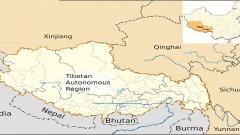
Reaching the Guge Kingdom is an expedition in itself, requiring careful planning, physical endurance, and proper documentation. The ruins are located near Tsaparang village in Zanda County, Ngari Prefecture. Most travelers approach from Lhasa, embarking on a multi-day overland journey across the vast Tibetan plateau, passing through Shigatse and Saga before reaching the dramatic Zanda Earth Forest.
Altitude is a primary concern. Zanda County sits at roughly 3,800 meters, while much of the drive involves crossing passes exceeding 5,000 meters. Proper acclimatization is absolutely essential to avoid acute mountain sickness. Visitors should spend several days adjusting to the elevation in lower cities like Lhasa or Shigatse before pushing further west. Staying hydrated, avoiding strenuous exercise upon arrival, and carrying appropriate medication are standard practices for this route.
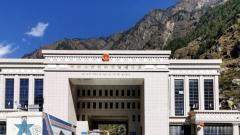
Because of the region’s remoteness and proximity to international borders, foreign travelers must secure a Tibet Travel Permit, an Alien Travel Permit, and sometimes a Military Border Pass. Navigating these bureaucratic requirements independently is incredibly difficult. Engaging a reputable agency like Tibet Yulong Travel ensures that all permits are arranged smoothly and legally. Tibet Yulong Travel specializes in organizing logistics for western Tibet, providing experienced drivers, reliable vehicles suited for rough terrain, and knowledgeable guides who can explain the complex history of the Guge Kingdom on-site.
The best time to visit is generally between May and October, when the weather is relatively mild and the roads are clear of heavy snow. Winter travel is possible but extremely challenging due to freezing temperatures and road closures. When exploring the ruins, wear sturdy hiking boots, as the clay paths are uneven and slippery. Sun protection is critical; the high-altitude UV rays are intense, and there is virtually no shade among the ruins. Bring plenty of water and snacks, as facilities in Zanda County are basic and options near the site itself are non-existent.
Standing atop the ruins as the sun sets over the Sutlej River valley, casting long shadows across the ancient mud-brick walls, is a humbling experience. The Guge Kingdom is not just a historical site; it is a monument to human ambition, spiritual devotion, and the inevitable passage of time. Whether you are drawn by its architectural mysteries, its artistic treasures, or its tragic history, a journey here offers a rare glimpse into a lost world that continues to echo across the Tibetan plateau.