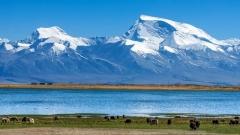
High in the mountains east of Lhasa, the Ganden Thangka Festival stands as one of the most visually striking and spiritually significant events in Tibetan Buddhism. Held annually at Ganden Monastery, the first and principal monastery of the Gelug school, this extraordinary gathering draws thousands of pilgrims, monks, and travelers from across the plateau. During the festival, a massive, intricately embroidered appliqué thangka is unfurled on the hillside above the monastery for all to witness. The sheer scale of the artwork, combined with the chanting of monks and the devotion of the crowd, creates an atmosphere that transcends ordinary travel experiences. For anyone seeking to understand the depth of Tibetan religious culture, attending the Ganden Thangka Festival offers an unparalleled window into centuries-old traditions that continue to thrive today.
Key Highlights of the Ganden Thangka Festival:
- Celebrated on the 15th day of the 6th Tibetan lunar month.
- Features the unveiling of a giant silk appliqué thangka.
- Honors Je Tsongkhapa, founder of the Gelug tradition.
- Takes place at Ganden Monastery, roughly 45 km from Lhasa.
- Combines deep spiritual rituals with vibrant local culture.
Understanding the Ganden Thangka Festival
The Ganden Thangka Festival is not merely a cultural exhibition; it is a deeply rooted religious observance tied to the Tibetan lunar calendar. It takes place on the 15th day of the sixth lunar month, a date chosen specifically to commemorate the anniversary of Je Tsongkhapa’s entry into nirvana. Tsongkhapa was the revered scholar and yogi who founded the Gelug school of Tibetan Buddhism in the late 14th century, and Ganden Monastery serves as his primary seat. Because of this direct connection, the festival holds a unique status among Tibetan religious events, carrying a weight of historical and theological importance that few other gatherings can match.
Unlike smaller monastic ceremonies restricted to ordained monks, this event is inherently public. The entire purpose of displaying the thangka outdoors is to allow every sentient being present—whether a lifelong practitioner or a curious traveler—to receive blessings simply by looking upon the sacred image. This concept of liberation through seeing is central to Tibetan Buddhist philosophy, making the festival a profoundly inclusive spiritual occasion.
Historical Roots of the Ganden Thangka Festival
To fully appreciate the magnitude of the event, one must look back at the origins of both the monastery and the tradition itself. Ganden Monastery was established in 1409 by Je Tsongkhapa himself, perched on Wangbur Mountain at an altitude exceeding 4,300 meters. For centuries, it served as the administrative and spiritual heart of the Gelug order. The tradition of displaying large thangkas during important religious dates evolved over time as a way to project the teachings of the Buddha outward into the landscape, blessing the earth and the sky simultaneously.
The specific practice observed during the Ganden Thangka Festival involves the creation and preservation of monumental textile art. Historically, these giant thangkas were crafted over many years by highly skilled artisans using precious materials like gold thread, silk, and yak hair. While the original ancient textiles have faced the ravages of time and historical upheaval, the tradition has been meticulously revived and maintained. Today, the thangkas used in the ceremony are faithful continuations of those historical techniques, ensuring that the lineage of sacred art remains unbroken.
The Sacred Thangka: Artistry and Meaning
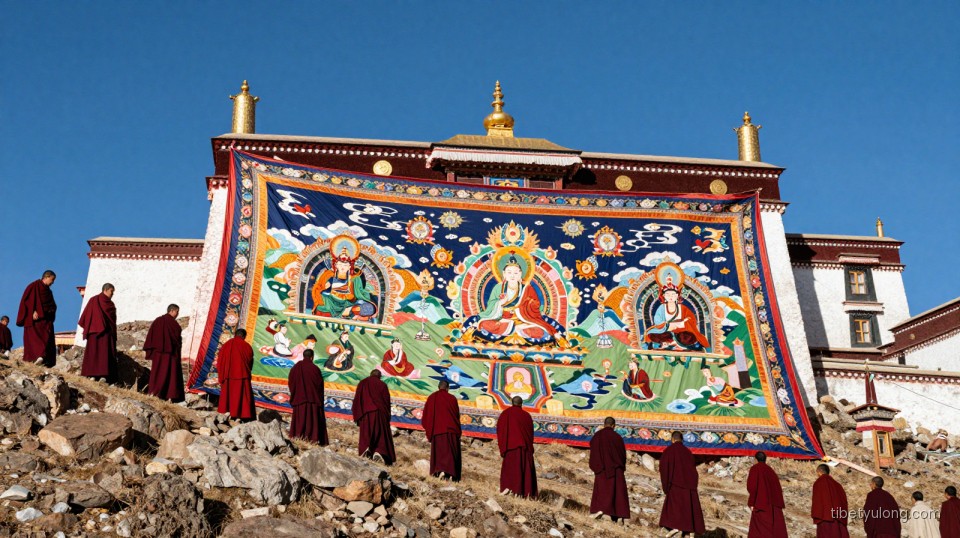
A thangka is a traditional Tibetan scroll painting or appliqué depicting deities, mandalas, or significant historical figures. However, the thangka unveiled during the Ganden Thangka Festival is far from ordinary. It is a colossal piece of appliqué art, often measuring dozens of meters in length and width. Rather than being painted directly onto canvas, the imagery is constructed by stitching together thousands of pieces of colored silk, brocade, and satin.
The central figure depicted is usually Je Tsongkhapa, often flanked by his two chief disciples or surrounded by scenes from his life and teachings. The colors are intentionally vivid—deep reds, bright yellows, rich blues, and shimmering golds—designed to stand out against the rugged, sun-baked hillsides of the Tibetan plateau. Creating such a masterpiece requires not only artistic brilliance but also strict adherence to iconometric rules laid down in Buddhist scriptures. Every proportion, hand gesture (mudra), and symbolic object must be exact, as the thangka serves as a physical support for meditation and a vessel for divine presence.
Rituals and Ceremonies During the Ganden Thangka Festival
The day begins long before sunrise. As the first light threatens to break over the peaks surrounding Wangbur Mountain, the air fills with the low, resonant sound of long copper horns (dungchen) and the rhythmic beating of drums. Monks from Ganden Monastery gather in the main assembly hall for early morning prayers, reciting sutras dedicated to Je Tsongkhapa. The energy within the monastery shifts from quiet contemplation to focused anticipation.
The climax of the Ganden Thangka Festival occurs when hundreds of monks, dressed in their traditional maroon robes, form a long procession. They carefully carry the rolled-up giant thangka out of the monastery and up the steep, winding path to the designated display wall built into the mountainside. Pilgrims line the path, bowing, chanting mantras, and offering white khata scarves as the sacred bundle passes by.
Once positioned at the top of the hill, the monks slowly unfurl the massive fabric downward. As the image of Tsongkhapa is revealed to the sunlight, a collective murmur rises from the crowd. Devotees press their foreheads to the ground in prostration. For the duration of the display, which typically lasts several hours while the sun illuminates the hillside, continuous prayers, chanting, and ritual music fill the valley. It is believed that the merit generated during this time is exponentially multiplied, benefiting all beings who witness the unveiling.
Experiencing the Ganden Thangka Festival as a Traveler
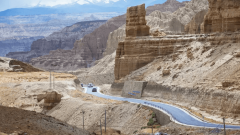
Attending the festival requires careful planning due to its remote location and high altitude. Ganden Monastery is situated approximately 45 kilometers east of Lhasa. Most visitors choose to hire a vehicle or join a guided tour from the capital city. The drive takes about an hour and a half, winding through scenic river valleys before climbing sharply up the mountain roads. Because the main ceremonies start very early in the morning, many travelers opt to stay overnight in basic guesthouses near the monastery or camp nearby, ensuring they do not miss the dawn procession.
Altitude is a serious consideration. At over 4,300 meters, the air is thin, and the physical exertion of walking up the hill alongside the monks can be taxing. It is highly recommended to spend at least three to four days acclimatizing in Lhasa before attempting the journey to Ganden. Staying hydrated, moving slowly, and avoiding alcohol are essential practices for any visitor heading to the Ganden Thangka Festival.
When packing for the day, preparation for extreme weather changes is vital. The morning will be freezing, requiring heavy down jackets, thermal layers, hats, and gloves. However, once the sun clears the horizon and strikes the hillside, temperatures can rise rapidly, and the UV radiation at this altitude is intense. Sunscreen, sunglasses, and easily removable clothing layers are mandatory.
Navigating the logistics of travel permits, transportation, and cultural etiquette in Tibet can be complex for independent travelers. Working with experienced local operators ensures a smooth and respectful journey. Agencies specializing in the region, such as Tibet Yulong Travel, provide invaluable assistance in arranging transport, securing necessary documentation, and offering knowledgeable guides who can explain the intricate symbolism of the rituals unfolding before your eyes. Having professional support allows you to focus entirely on the profound experience rather than logistical stress.
Etiquette and Respectful Observation
While the Ganden Thangka Festival welcomes observers, it remains fundamentally a religious ceremony. Visitors must approach the event with deep respect for local customs and beliefs. When the monks carry the thangka up the hill, it is crucial not to block their path or step over any sacred items placed on the ground. Photography is generally permitted during the outdoor display, but visitors should always ask for permission before taking close-up portraits of individual monks or pilgrims engaged in private prayer.
Dress modestly, covering shoulders and knees, even if the midday sun becomes warm. Avoid loud conversations, playing music, or engaging in disruptive behavior near the assembly areas. Walking clockwise around the monastery buildings and stupas—the traditional kora direction—is a simple yet meaningful way to show respect for the local culture. By observing these guidelines, travelers contribute to the preservation of the sanctity that makes the Ganden Thangka Festival so powerful.
The Spiritual Legacy of the Event
Beyond the visual spectacle, the true essence of the festival lies in its ability to unite a community in shared devotion. In Tibetan culture, seeing a consecrated image of the Buddha or a great master is considered equivalent to meeting them in person. The giant thangka acts as a conduit for blessings, washing over the landscape and everyone gathered upon it. For the monks of Ganden, the annual unveiling is a reaffirmation of their vows and their dedication to Tsongkhapa’s teachings.
For the laypeople who travel for days across the plateau to reach Wangbur Mountain, the Ganden Thangka Festival represents an accumulation of spiritual merit that will benefit them in this life and the next. They bring offerings of butter, incense, and barley, adding to the fragrant smoke that drifts across the hillside. This intersection of monumental art, rigorous theology, and raw human devotion creates an atmosphere that leaves a lasting imprint on anyone fortunate enough to witness it. The tradition continues to serve as a vital anchor for Tibetan Buddhist identity, proving that ancient spiritual practices remain vibrantly alive in the modern world.