Tibetan Buddhism is rich with visual language, and at the heart of this tradition are the Eight Auspicious Symbols, known collectively as the Ashtamangala. These ancient emblems are far more than decorative motifs found on monastery walls or prayer flags. Each symbol represents a specific aspect of the Buddha’s enlightenment and offers practical spiritual guidance for practitioners navigating the complexities of daily life. From the endless knot representing infinite wisdom to the lotus flower signifying purity rising from muddy waters, these icons form a comprehensive map of the Buddhist path. Understanding them provides a deeper appreciation of Tibetan culture and religious philosophy. Whether you encounter them painted on thangkas, carved into wooden doors, or offered during ceremonies, they carry blessings meant to inspire mindfulness and compassion.
Key Takeaways:
- The eight symbols originate from offerings made to the Buddha after his enlightenment.
- Each emblem represents a distinct spiritual quality or teaching.
- They appear widely across Tibetan art, architecture, and daily rituals.
- Together, they form a complete representation of the enlightened mind.
- Understanding them deepens one’s connection to Tibetan Buddhist practices.
The Historical Origins of the Auspicious Symbols
The tradition of the Auspicious Symbols traces back to ancient India, long before Buddhism spread across the Himalayas. According to Buddhist texts, when Siddhartha Gautama achieved enlightenment under the Bodhi tree, various deities and celestial beings presented him with gifts to honor his awakening. These offerings were not material wealth but rather symbolic items representing virtues like wisdom, fearlessness, and boundless compassion. Over centuries, as Buddhism traveled along trade routes into Tibet, these original Indian symbols were adapted and refined by Tibetan masters to fit the unique cultural and spiritual landscape of the plateau.
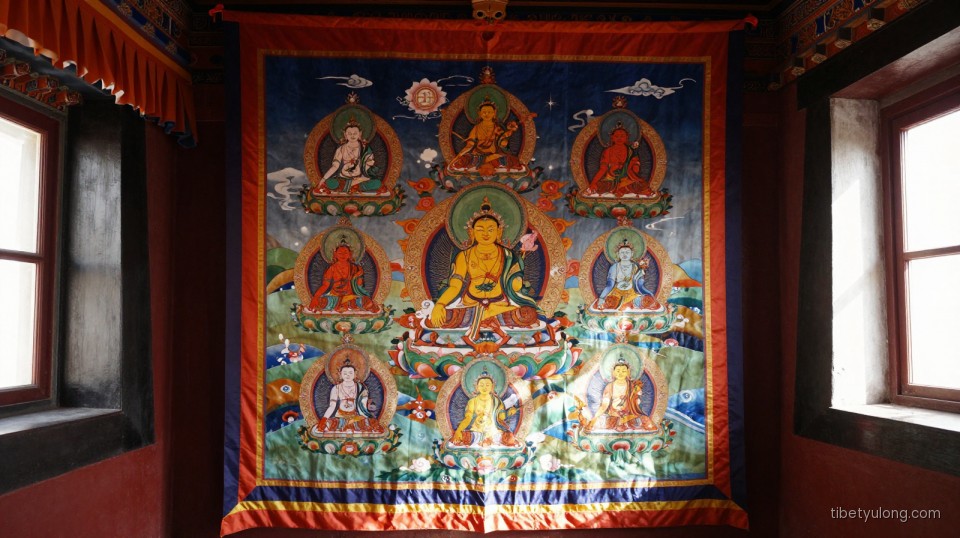
In Tibetan tradition, the number eight holds special significance, representing completeness and the totality of the Dharma. The grouping of these specific items into a set of eight was formalized to make complex philosophical concepts accessible to laypeople. Monks and artisans began incorporating them into every facet of religious life. You will find them woven into carpets, stamped onto ceremonial scarves called khatas, and meticulously painted inside temple halls. They serve as constant visual reminders that the qualities of a Buddha are not distant ideals but attainable states of mind available to anyone willing to practice.
Detailed Meanings of the Eight Auspicious Symbols
To truly appreciate Tibetan Buddhist art and philosophy, one must look beyond the surface beauty of these icons. Each of the eight items carries layers of meaning that address both the internal journey of meditation and the external conduct of an ethical life.
1. The Precious Parasol (Chattra)
The parasol, or umbrella, is traditionally a symbol of royalty and protection in South Asian cultures. In the context of Tibetan Buddhism, it represents the protective power of the Dharma. Just as a physical umbrella shields a person from the scorching sun or heavy rain, the spiritual parasol protects sentient beings from the heat of delusions, negative emotions, and suffering. The dome of the parasol symbolizes wisdom, while the hanging silk valances represent compassionate methods. When you see this symbol atop temples or carried in processions, it signifies that those under its shade are safeguarded by the teachings of the Buddha, allowing them to practice without being overwhelmed by worldly distractions.
2. The Golden Fish (Suvarnamatsya)
Originally representing the sacred rivers Ganges and Yamuna in India, the pair of golden fish took on new meaning in Tibetan Buddhism. Fish swim freely through water without drowning, which makes them a perfect metaphor for beings who navigate the ocean of samsara—the cycle of birth, death, and rebirth—without being overcome by suffering. They symbolize happiness, freedom, and spontaneity. Because fish always keep their eyes open, they also represent the awakened state of awareness that never falls into the darkness of ignorance. Seeing two fish together emphasizes harmony, fertility, and the union of wisdom and method working in tandem to achieve liberation.
3. The Treasure Vase (Kalasha)
The treasure vase is depicted as a rounded, ornate container often topped with a wish-fulfilling jewel. It does not represent material hoarding; rather, it symbolizes the inexhaustible nature of spiritual wealth. No matter how much wisdom, compassion, or merit is drawn from the vase, it never empties. This reflects the Buddhist understanding that true generosity multiplies rather than diminishes one’s resources. In monastic rituals, vases are sometimes filled with precious substances, saffron water, and mantras, then buried in the earth or placed in shrines to attract positive energy and remove obstacles. It reminds practitioners that cultivating inner virtue creates a reservoir of peace that sustains them through all of life’s challenges.
4. The Lotus Flower (Padma)
Perhaps the most universally recognized Buddhist icon, the lotus grows in muddy, stagnant water yet blossoms above the surface completely unstained. This biological reality makes it the ultimate symbol of purity, renunciation, and spiritual unfolding. The mud represents the afflictions of ordinary existence—greed, anger, and confusion—while the pristine flower represents the awakened mind that has transformed those very afflictions into wisdom. Different colors of lotuses carry nuanced meanings in Tibetan traditions: white for mental purity, red for love and compassion, blue for wisdom, and pink for the historical Buddha himself. The lotus teaches that enlightenment is not found by escaping the world, but by engaging with it without becoming tainted by it.
5. The Right-Turning Conch Shell (Dakshinavarta Shankha)
The white conch shell, specifically one whose spiral turns clockwise, is incredibly rare and highly revered. It represents the deep, resonant, and pervasive sound of the Buddha’s teachings spreading in all directions. Just as the blast of a conch historically signaled the beginning of a great event or called warriors to action, the spiritual conch awakens beings from the deep sleep of ignorance. Its rightward spiral mirrors the movement of celestial bodies and aligns with the traditional circumambulation direction around sacred sites. The conch encourages practitioners to share the Dharma boldly and clearly, ensuring that the message of compassion reaches even the most remote corners of the world.
6. The Endless Knot (Shrivatsa)
The endless knot is a closed geometric pattern with no discernible beginning or end. It visually represents the profound interconnectedness of all phenomena, a core tenet of Buddhist philosophy known as dependent origination. Every action, thought, and event is linked to everything else in an infinite web of cause and effect. Furthermore, the knot symbolizes the union of wisdom and compassion, which must be intertwined perfectly to achieve enlightenment. Because it has no gaps, it also represents the infinite knowledge and boundless love of the Buddha. Wearing or displaying the endless knot serves as a reminder to act with mindfulness, knowing that our choices ripple outward endlessly through the fabric of existence.
7. The Victory Banner (Dhvaja)
Historically used in ancient Indian warfare to signal triumph, the victory banner was adopted by Buddhism to represent the conquest over inner enemies rather than external foes. Specifically, it symbolizes the Buddha’s victory over Mara, the personification of temptation, fear, and death. The cylindrical shape of the Tibetan banner, often adorned with ribbons and jewels, signifies the triumph of the Dharma over ignorance and negative forces. Placing banners on the roofs of monasteries or carrying them in festivals declares that the teachings have conquered delusion in that space. For the individual practitioner, the banner is a call to persevere through spiritual hardships, maintaining discipline and focus until personal obstacles are entirely overcome.
8. The Dharma Wheel (Dharmachakra)
The Dharma wheel is arguably the most central symbol of Buddhism worldwide. Its three main parts hold specific meanings: the hub represents moral discipline, which stabilizes the mind; the spokes represent wisdom and the Noble Eightfold Path; and the rim represents meditative concentration, which holds everything together. The turning of the wheel refers to the historical moments when the Buddha delivered his major sermons, setting the teachings into motion. A wheel with eight spokes directly correlates to the eight aspects of the path leading away from suffering. Unlike static symbols, the wheel implies continuous movement, reminding followers that spiritual practice is an active, ongoing journey rather than a fixed destination.
How the Auspicious Symbols Appear in Daily Tibetan Life
These eight emblems are not confined to museum displays or ancient scriptures; they are living elements of everyday Tibetan culture. When travelers visit the Tibetan plateau, they quickly notice how deeply integrated these symbols are into the environment. Woodcarvers etch them into doorframes to bless homes. Silversmiths craft them into jewelry worn close to the skin for personal protection. During Losar, the Tibetan New Year, families draw the symbols using colored powders or arrange them using actual objects on offering tables to invite prosperity and peace for the coming months.
Monks frequently use stencils to stamp the symbols onto butter sculptures or incorporate them into intricate sand mandalas that take days to construct and are ritually destroyed to teach impermanence. Even the traditional greeting scarf, the khata, usually features woven patterns of the eight symbols, transforming a simple gesture of welcome into a profound transmission of blessings. By surrounding themselves with these icons, Tibetan Buddhists create an environment that constantly nudges the mind toward virtuous thoughts and spiritual reflection.
Experiencing the Symbols Through Mindful Travel
For those seeking to understand these sacred emblems beyond textbooks, immersive travel offers unparalleled insight. Walking through the courtyards of ancient monasteries in Lhasa or Shigatse allows visitors to observe master artisans painting thangkas where every brushstroke of the Auspicious Symbols follows strict canonical proportions. Engaging respectfully with local guides helps uncover the subtle variations in how different monastic lineages interpret and display these icons. Organizations like Tibet Yulong Travel specialize in crafting itineraries that go beyond superficial sightseeing, connecting travelers with authentic cultural experiences. By facilitating visits to active workshops and private temple viewings, Tibet Yulong Travel ensures that visitors witness the living application of these symbols, fostering a genuine respect for the depth of Tibetan spiritual heritage.
Understanding the Eight Auspicious Symbols transforms how one perceives Tibetan Buddhist art and architecture. What might initially appear as repetitive decoration reveals itself as a sophisticated visual language designed to guide the human mind toward awakening. Each symbol addresses a different obstacle on the spiritual path, offering specific remedies through its inherent meaning. The parasol protects, the fish liberate, the vase nourishes, the lotus purifies, the conch proclaims, the knot connects, the banner conquers, and the wheel directs. Together, they form a holistic framework for living a life rooted in awareness and compassion. Recognizing them in the wild—whether carved into a mountain shrine or embroidered on a monk’s robe—creates a quiet moment of connection with a tradition that has preserved these profound truths across centuries.