High above the clouds, where the air grows thin and the mountains pierce the sky, live a community that has fascinated the world for generations. The Sherpa People of The Himalayas are not merely inhabitants of the high-altitude regions of Nepal; they are the guardians of some of the most unforgiving terrain on Earth. Known globally for their extraordinary physical endurance and deep-rooted spiritual beliefs, the Sherpas have shaped the narrative of high-altitude exploration. Yet, beyond their reputation as elite mountaineers lies a complex, vibrant culture steeped in ancient Tibetan Buddhism, agricultural resilience, and tight-knit community bonds. Understanding the Sherpa People of The Himalayas requires looking past the climbing ropes and oxygen tanks to see a society that has harmonized with nature for centuries.
Key Highlights:
- Ancient roots tracing back to eastern Tibet.
- Deeply intertwined with Tibetan Buddhist practices.
- Unmatched physiological adaptation to extreme altitudes.
- A modern economy balancing traditional farming and global tourism.
- Ongoing efforts to preserve their unique cultural identity.

Origins and History of the Sherpa People of The Himalayas
The word “Sherpa” is often mistakenly used by outsiders simply to describe a mountain guide or a porter. In reality, it denotes a distinct ethnic group. The term originates from the Tibetan words “Shar” (east) and “Pa” (people), literally translating to “people of the east.” This etymology points directly to their ancestral migration. Centuries ago, the ancestors of the Sherpa People of The Himalayas migrated from the Kham region of eastern Tibet, crossing the formidable Nangpa La pass into the Solu-Khumbu region of present-day Nepal.
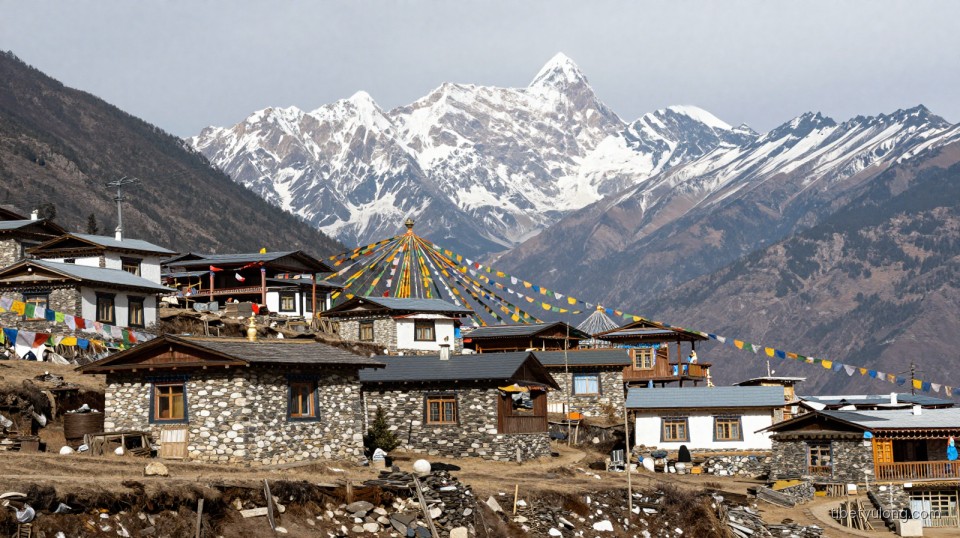
This migration was not a single event but likely occurred in waves over several hundred years, driven by political upheaval, religious conflicts, and the search for arable land. Upon settling in the shadow of Mount Everest—known locally as Sagarmatha or Chomolungma—they established villages in deep valleys and along high ridges. Unlike nomadic herders who constantly move, the early settlers built permanent stone houses, terraced the steep hillsides, and cultivated crops suited to the harsh climate. Their historical isolation allowed them to develop a highly specialized way of life, preserving archaic Tibetan dialects and customs that have largely faded in their ancestral homeland. Today, the historical journey of the Sherpa People of The Himalayas remains a source of immense pride, connecting them to a broader trans-Himalayan heritage while grounding them firmly in their Nepalese home.
Spiritual Life and Religious Traditions
To truly understand the Sherpa People of The Himalayas, one must look at their spiritual foundation. They are devout practitioners of the Nyingma school of Tibetan Buddhism, the oldest of the four major schools. Religion is not confined to monasteries; it permeates every aspect of daily existence. Prayer flags fluttering in the fierce mountain winds, intricately carved mani stones bearing the mantra “Om Mani Padme Hum,” and the ever-present scent of burning juniper incense define the sensory landscape of any Sherpa village.
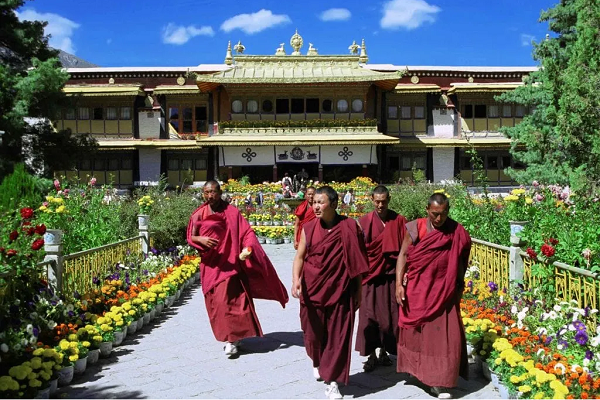
Monasteries such as Tengboche, Thame, and Pangboche serve as the spiritual and social epicenters of the community. Monks play a crucial role, conducting ceremonies for births, marriages, harvests, and deaths. The relationship between the laypeople and the monastic community is deeply symbiotic. Families often dedicate at least one son to the monastery, viewing it as a profound act of merit. Festivals like Dumji and Mani Rimdu are spectacular events where masked dances depict the triumph of Buddhism over ancient animistic spirits. These rituals reinforce social cohesion and remind the Sherpa People of The Himalayas of their moral obligations to all sentient beings. Their belief system dictates a profound respect for the mountains, which are viewed not as obstacles to be conquered, but as sacred abodes of deities. Before any major expedition, climbers are traditionally asked to participate in a Puja ceremony led by a local Lama to seek the mountain’s permission and blessing.
Physiological Adaptation and the Mountaineering Legacy
The global fame of the Sherpa People of The Himalayas is inextricably linked to mountaineering. When Western explorers began attempting to scale the great peaks in the early twentieth century, they quickly realized that surviving at extreme altitudes required local expertise. The Sherpas possessed an innate understanding of the mountains, but more importantly, scientific studies have shown they possess remarkable genetic adaptations to hypoxia. Generations of living at elevations between 3,000 and 5,000 meters have resulted in physiological traits that allow their bodies to utilize oxygen far more efficiently than those of lowlanders. They exhibit higher blood flow, greater lung capacity, and unique cellular mechanisms that prevent altitude sickness.
Tenzing Norgay’s historic ascent of Mount Everest alongside Edmund Hillary brought unprecedented global attention to the Sherpa People of The Himalayas. Since then, Sherpas have formed the backbone of almost every major Himalayan expedition. They fix ropes, carry heavy loads through treacherous icefalls, establish high-altitude camps, and guide clients safely to the summits. However, this legacy comes with significant risks. Sherpas disproportionately bear the dangers of high-altitude climbing, navigating the volatile Khumbu Icefall dozens of times per season to facilitate foreign expeditions. Their contribution to mountaineering is unparalleled, transforming them from isolated agrarian communities into essential figures in the global adventure sports industry.
Daily Life, Agriculture, and Social Structure
Beyond the climbing routes, the everyday life of the Sherpa People of The Himalayas revolves around agriculture, animal husbandry, and trade. The rugged terrain limits what can be grown, but Sherpas are masterful farmers. Potatoes, introduced relatively recently in historical terms, became a staple crop perfectly suited to the cold climate. Barley, buckwheat, and radishes are also commonly cultivated on narrow, hand-built terraces. Yaks and yak-cattle hybrids (known as dzopkyo or zhumo) are indispensable, providing milk, butter, meat, wool, and transport. Yak butter tea is a dietary cornerstone, offering essential calories and warmth in the freezing environment.
Socially, Sherpa society is organized into clans called “ru,” which dictate marriage rules and social alliances. Marriages within the same clan are strictly prohibited, ensuring genetic diversity and strengthening inter-village ties. Hospitality is a core tenet of their culture. Visitors to a Sherpa home are invariably welcomed with food, tea, and a seat near the central hearth, which is considered sacred. The traditional stone houses, with their thick walls and small windows designed to retain heat, reflect a practical architectural response to the brutal winters. Despite the influx of modernity, many families still maintain a semi-agrarian lifestyle, balancing seasonal farming with work in the tourism sector.
Modern Challenges and Cultural Preservation
The rapid growth of trekking and mountaineering tourism has brought undeniable economic benefits to the Sherpa People of The Himalayas, elevating their standard of living and funding better education and healthcare. However, this transformation introduces complex challenges. The younger generation increasingly migrates to Kathmandu or abroad for schooling and employment, leading to concerns about the erosion of traditional language and customs. Furthermore, the commercialization of Mount Everest has sparked debates about environmental degradation, overcrowding, and the commodification of sacred landscapes.
Climate change poses another existential threat. Glacial lakes in the Khumbu region are expanding rapidly due to rising temperatures, increasing the risk of catastrophic glacial lake outburst floods that could devastate downstream Sherpa settlements. In response, various community-led initiatives and international NGOs are working alongside the Sherpa People of The Himalayas to promote sustainable tourism, manage waste, and preserve their intangible cultural heritage. Efforts to document oral histories, support local monasteries, and integrate traditional ecological knowledge into modern conservation strategies are vital for their future survival.
For travelers seeking authentic and respectful cultural immersion, engaging with specialized operators like Tibet Yulong Travel can provide meaningful pathways to experience these high-altitude communities. Such organizations focus on sustainable itineraries that honor the traditions of the Sherpa People of The Himalayas while supporting local economies directly. By choosing responsible travel options, visitors ensure that their presence contributes positively to the preservation of this extraordinary culture rather than accelerating its dilution. Ultimately, the resilience of the Sherpa people suggests they will continue to adapt, just as their ancestors did centuries ago, maintaining their identity as the true stewards of the roof of the world.