When traveling across the high-altitude landscapes of the Qinghai-Tibet Plateau, few artifacts capture the essence of local culture as powerfully as the Tibetan Knife. Far more than a simple cutting tool, this blade represents centuries of metallurgical skill, spiritual belief, and nomadic survival. Forged by skilled artisans in remote villages, each piece tells a story of resilience and artistry. Whether used for daily tasks like preparing food and cutting ropes or worn as an ornate symbol of status, the knife remains deeply embedded in the lives of local herders and farmers. Understanding its origins and craftsmanship offers travelers a profound glimpse into the region’s heritage. Before diving deep into the details, here are the key points to remember about this remarkable artifact:
- Originates from ancient nomadic survival needs on the plateau.
- Hand-forged using traditional metallurgical techniques passed down generations.
- Features intricate handles made from silver, wood, bone, or turquoise.
- Serves both practical daily functions and deep ceremonial purposes.
- Requires careful navigation of transport regulations when purchased by travelers.
The Historical Origins of the Tibetan Knife
To truly appreciate the Tibetan Knife, one must first understand the harsh environment that necessitated its creation. The Qinghai-Tibet Plateau, often referred to as the “Roof of the World,” presents extreme weather conditions, vast uninhabited grasslands, and a rugged terrain that demands self-reliance. For centuries, nomadic herders traversing these high altitudes required a versatile, durable tool to survive. The knife emerged not as a weapon of war, but as an indispensable companion for daily life. It was used to slaughter livestock, shear wool, cut tough yak meat, carve wooden utensils, and even defend against wild predators.
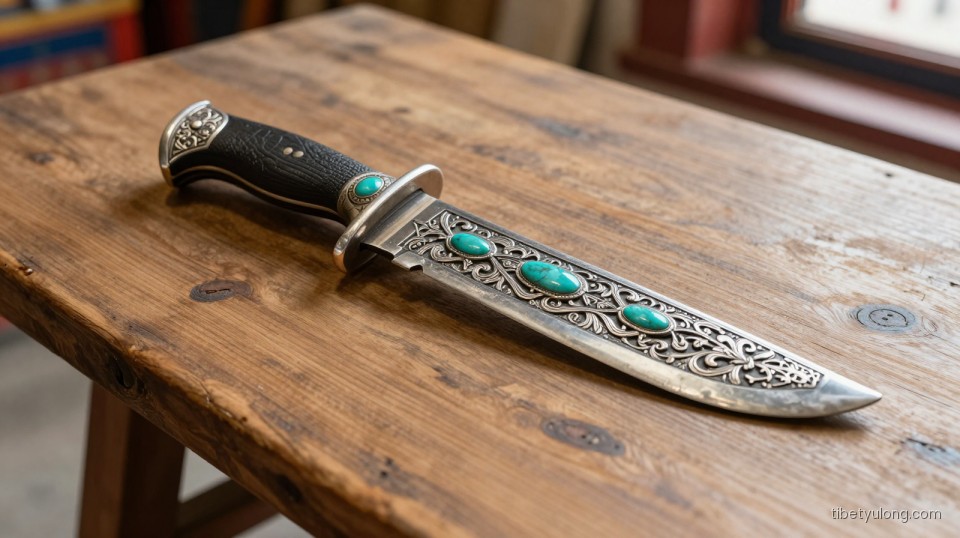
Historically, the development of metalworking on the plateau dates back thousands of years. Early iterations were likely crude, fashioned from whatever metals could be scavenged or traded along early routes connecting Central Asia, China, and the Indian subcontinent. As trade networks expanded, particularly along the ancient Tea Horse Road, blacksmiths gained access to better raw materials, including higher-quality iron and steel. This influx of resources allowed local craftsmen to refine their techniques, transforming a basic survival implement into a culturally significant object. Over time, distinct regional styles began to emerge. Villages known for their blacksmithing prowess became famous throughout the region, and owning a blade from a specific master craftsman became a mark of prestige among nomadic tribes. The evolution of the knife mirrors the broader historical shifts of the plateau, reflecting changes in trade, technology, and social structure.
Traditional Craftsmanship Behind Every Tibetan Knife
The creation of a genuine Tibetan Knife is a labor-intensive process that relies heavily on ancestral knowledge rather than modern industrial machinery. In renowned crafting centers such as Lhatse County in the Shigatse prefecture or certain villages in Yushu, blacksmithing is often a family tradition passed down from father to son over many generations. The forge itself is usually a modest structure, equipped with a charcoal fire, hand-operated bellows, and heavy anvils.
The process begins with selecting the right metal. Traditionally, artisans utilized recycled materials—old horseshoes, discarded tools, or scrap iron—but today, high-carbon steel is frequently preferred for its superior edge retention and durability. The metal is heated in the charcoal forge until it glows a vibrant orange-red, then repeatedly hammered and folded. This folding technique, somewhat reminiscent of historical Japanese sword-making, helps distribute carbon evenly and expel impurities, resulting in a stronger, more resilient blade. The smith must carefully judge the temperature by eye and rely entirely on the feel of the hammer strikes to shape the steel.
Once the basic profile is formed, the blade undergoes quenching, a critical step where the hot metal is rapidly cooled, often in water, oil, or sometimes specialized local liquids. This hardens the steel. Following quenching, the blade is tempered to reduce brittleness, ensuring it can withstand the rigorous demands of nomadic life without snapping. Finally, hours are spent grinding and polishing the blade using stones of varying grits until a razor-sharp edge and a smooth finish are achieved. This entire forging process can take several days to weeks for a single high-quality blade, depending on its size and complexity.
Materials and Ornamental Designs
While the blade represents the functional core, the handle and scabbard of a Tibetan Knife elevate it to a work of art. The choice of materials often reflects the owner’s wealth, social standing, and regional identity. Common handle materials include dense hardwoods, yak bone, and antler. However, more elaborate pieces feature handles wrapped in silver wire, encased in brass, or adorned with precious stones.
Turquoise and coral are perhaps the most iconic decorative elements found on these knives. In local culture, turquoise is believed to possess protective qualities and bring good fortune, while red coral symbolizes vitality and success. These stones are carefully set into silver or gold mountings on the handle and scabbard. The metalwork on the scabbard itself is equally impressive. Artisans use techniques such as repoussé (hammering designs from the reverse side), chasing, and engraving to create intricate patterns. Motifs frequently include auspicious Buddhist symbols like the endless knot, lotus flowers, dragons, clouds, and stylized flora and fauna. The level of detail can be astonishing, with some scabbards featuring fully sculpted three-dimensional figures or complex geometric latticework. It is this combination of robust metallurgy and delicate jewelry-making that makes each piece unique.
Cultural Significance and Daily Use
In traditional society, the Tibetan Knife is much more than a utilitarian object; it is a vital component of cultural identity. Historically, almost every adult male carried one suspended from his belt via a woven strap or leather cord. The style, size, and ornamentation of the knife immediately communicated information about the wearer’s hometown, profession, and economic status. A beautifully crafted, jewel-encrusted blade was a source of immense pride and often served as a family heirloom, passed down through generations.
Beyond personal adornment, the knife plays a role in various customs and ceremonies. During festivals, weddings, or important gatherings, presenting a finely crafted knife can serve as a gesture of deep respect and friendship. In daily nomadic life, its utility cannot be overstated. When families sit down to eat dried yak meat or tsampa (roasted barley flour), the knife is the primary eating utensil used to slice portions. It is also essential for repairing saddles, cutting tent ropes, and processing animal hides. Even today, as modernization reaches remote areas, many locals continue to wear their blades as a proud connection to their heritage, seamlessly blending traditional attire with contemporary life.
Regional Variations Across the Plateau
Because the Qinghai-Tibet Plateau spans a vast geographical area encompassing different provinces and autonomous regions, the design of the Tibetan Knife varies significantly from place to place. Understanding these regional distinctions is crucial for enthusiasts and collectors.
Blades originating from the Kham region (spanning parts of eastern Tibet, western Sichuan, and northwestern Yunnan) are often noted for their robust construction and slightly longer profiles, reflecting the rugged lifestyle of the Khampa people who historically valued martial prowess. Knives from the Amdo region (covering parts of Qinghai, Gansu, and northern Sichuan) frequently exhibit distinct handle shapes and favor specific types of metal inlay work. Meanwhile, those crafted in central areas around Lhasa and Shigatse tend to showcase highly refined silversmithing and precise stone setting, influenced by the concentration of wealth and religious institutions in the capital region. Recognizing these subtle differences in curvature, hilt shape, and decorative motifs allows knowledgeable observers to trace a knife’s origin back to its specific geographic roots.
Practical Advice for Travelers and Collectors
For travelers exploring the plateau, purchasing a Tibetan Knife is a highly sought-after experience, but it requires practical knowledge and careful planning. Authentic, hand-forged pieces can be found in local markets, specialized artisan shops, and established bazaars in cities like Lhasa, Xining, and Shangri-La. When shopping, look for signs of genuine craftsmanship: a well-balanced weight, a smooth transition between the blade and handle, and securely set stones rather than glued imitations. Be prepared to negotiate prices respectfully, keeping in mind the extensive labor involved in creating authentic pieces.
Crucially, travelers must be aware of strict transportation regulations. Aviation security laws universally prohibit carrying bladed items in cabin luggage. If you purchase a knife, it must be properly packaged and checked in as hold luggage, and you should verify specific airline policies beforehand. Furthermore, shipping bladed items via standard postal services within or out of the country may be subject to legal restrictions or require special declarations. Always ask the vendor for advice on compliant packaging and shipping methods.
Navigating these logistics is much easier when traveling with experienced local guidance. Companies specializing in regional exploration, such as Tibet Yulong Travel, can provide invaluable assistance. They not only help visitors discover authentic artisan workshops away from tourist traps but also offer practical advice on safely transporting cultural souvenirs home, ensuring your journey remains smooth and memorable.
Ultimately, bringing home a handcrafted blade is about preserving a tangible piece of plateau history. By supporting local blacksmiths who dedicate their lives to this demanding craft, travelers contribute directly to the survival of an ancient artistic tradition, ensuring that the rhythmic sound of the hammer on the anvil continues to echo across the mountains for generations to come.