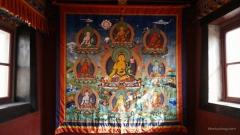
Tholing Monastery is one of the most important historic Buddhist sites in western Tibet, but photographing its murals takes more than a camera and a good eye. The paintings are delicate, the interiors can be dim, and photography rules may differ between rooms or change with local conservation needs. This guide explains how to prepare, what to ask before taking pictures, how to work with available light, and how to make useful images without putting ancient artwork at risk. It also covers practical travel considerations for reaching the remote Ngari region and planning time around the monastery and nearby Guge-era sites. Keep these points in mind before you go:
- Confirm photography permission on arrival.
- Never use flash unless staff explicitly permit it.
- Bring a fast lens and spare batteries.
- Photograph details only from approved positions.
- Allow time for altitude, weather, and road conditions.
Why Tholing Monastery deserves careful photography
Tholing Monastery stands near Zanda County in Ngari, western Tibet. Founded in the early eleventh century under the Guge Kingdom, it became an influential center of Buddhist learning and artistic exchange. Its surviving religious buildings and wall paintings reflect the region’s connections with Himalayan and Central Asian artistic traditions. The setting is stark and expansive: a monastery complex among high-altitude landscapes, with the celebrated ruins of the Guge Kingdom at Tsaparang within the wider area.
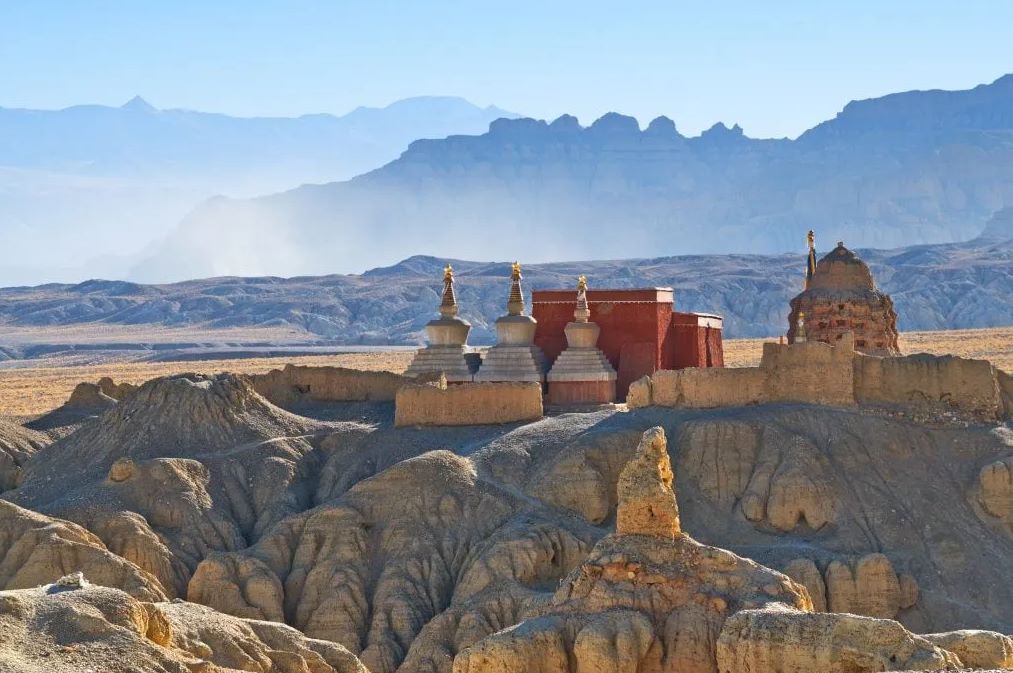
Tholing Monastery
For photographers, the appeal is not simply the age of the paintings. Murals often contain layered figures, patterned robes, expressive faces, decorative borders, and traces of pigments that have weathered over centuries. A wide photograph may show how a painting fits into a room, while a close view can reveal brushwork and surface texture. Yet those details are also vulnerable. Contact, heat, intense light, dust, and careless equipment handling can all place pressure on fragile interiors.
A responsible visit begins with understanding that the monastery is an active religious and heritage site, not a studio. The best images may be the ones you make within the limits set by caretakers. If a room is closed or a painting cannot be photographed, treat that restriction as part of the visit rather than an obstacle to overcome.
Tholing Monastery murals photography guide: permissions first
Photography regulations are not necessarily identical throughout the monastery. Some interiors may allow photographs, while others may prohibit them or require a separate ticket or staff approval. Rules can also change to protect particular murals or accommodate religious activity. Do not assume that a permission granted for the courtyard applies inside every building.
At the entrance, ask clearly whether photography is allowed in the specific halls you intend to visit. If the answer is unclear, ask a staff member or your local guide to confirm before raising your camera. Make sure you understand whether the restriction applies to all photography, flash, tripods, video, or only certain rooms. Follow posted signs and staff instructions even if another visitor appears to be taking pictures.
Never use flash unless an authorized staff member explicitly says it is permitted. Flash can disturb worshippers and may contribute to cumulative exposure concerns for sensitive surfaces. A phone’s automatic flash can fire without warning, so switch it off before entering. Disable camera-assist lights as well, and check that a phone’s screen or autofocus lamp will not shine directly onto a mural.
Tripods, monopods, selfie sticks, and camera bags may be restricted because they can obstruct movement or accidentally strike walls. Keep your equipment compact and close to your body. Do not touch a painting, lean against a painted surface, or move offerings and ritual objects to improve a composition. If a caretaker asks you to stop or put your camera away, comply immediately and without argument.
Plan the visit around the interiors
The monastery is in a remote, high-altitude part of Tibet. Reaching it usually requires careful planning, and travel times can be affected by road conditions, weather, checkpoints, and acclimatization needs. Verify current access arrangements with your operator or local contacts before setting out; do not rely on old schedules or assume that every building will be open on a particular day.
Give yourself enough time at the site to observe before photographing. On arrival, take a moment to note the direction of the light outside, the layout of the rooms, and where visitors are expected to walk. If an interior is open, let your eyes adjust before deciding on camera settings. Rushing often produces blurred images, poor exposure, and awkward framing, while a quiet first look helps you recognize which details matter most.
Religious activity takes priority. If prayers or ceremonies are taking place, ask whether visitors may enter and whether photography is appropriate. Keep a respectful distance from worshippers and avoid photographing people without permission. A mural can be documented without turning a devotional moment into a background scene.
Working with low light and delicate surfaces
Many historic interiors receive little natural light. That can make mural photography challenging, especially when flash and support equipment are not allowed. The goal is to produce a clear, honest record while keeping the camera stable and avoiding unnecessary exposure or disruption.
Choose a suitable lens
A fast standard or wide-angle lens can be useful when the room is small and the whole mural will not fit in the frame. A lens with a wide maximum aperture, such as f/1.8 or f/2.8, gathers more light than a slower kit zoom. However, extremely wide lenses can distort figures and architectural lines near the edges. Step back where permitted, keep the camera level, and avoid placing important faces at the extreme corners.
A short telephoto lens is useful for details when you cannot approach the wall. It also helps isolate a painted figure or border without cropping awkwardly. Do not change position by crossing ropes, entering restricted areas, or stepping onto a platform that is not open to visitors. If the lens cannot reach a detail from an approved position, accept the limitation.
Set exposure deliberately
Start with a wide aperture and a shutter speed fast enough to reduce movement from your hands. Modern cameras can produce usable files at higher ISO settings, so raising ISO is usually preferable to accepting a blurred image. Review a test frame only if photography is allowed, and keep the screen brightness modest in a dark room.
Use exposure compensation carefully. Pale plaster or a bright doorway in the frame can cause a camera to underexpose the mural; a dark room can lead it to overexpose lighter pigments. A histogram or highlight warning can help, but avoid repeatedly reviewing images if doing so distracts other visitors. If you use manual exposure, take a conservative test and avoid clipping bright painted areas.
For handheld shooting, brace your elbows against your torso rather than against the wall or a shrine. Use image stabilization when available. A brief pause after exhaling can help steady the camera. Do not hold up the line of visitors while making repeated attempts at the same composition.
Preserve natural color
Artificial white balance can shift the appearance of old pigments, particularly under mixed light. Auto white balance is convenient, but consider recording RAW files if permitted and if you are comfortable adjusting them later. RAW capture allows modest correction of color temperature and exposure without pretending that the room was brighter or more saturated than it appeared.
Avoid heavy editing that invents vivid colors, removes cracks, reconstructs missing sections, or makes the artwork look pristine. Conservation photography should distinguish the observed surface from digital interpretation. Keep an untouched original file and note any significant edits if you share the image publicly.
Composition ideas for mural photography
A strong photograph does not need to show every detail. Begin with context: include enough of the room, wall, or architectural frame to explain where the painting sits. If you are permitted to photograph the interior, a level camera and parallel framing can make the image easier to read. Look for natural divisions in the painted surface, such as a central figure, a repeated border, or a sequence of scenes.
For detail images, build the frame around one clear subject. It might be the gesture of a hand, a patterned garment, a line of small figures, or the relationship between a figure and an ornamental border. Avoid cropping through a face or cutting off a significant motif without intention. If reflections, shadow, or surface wear are visible, do not try to hide them through aggressive editing; they are part of the mural’s present condition.
The painted walls may not be perfectly flat, and the room’s geometry can make straight lines appear distorted. Keep the camera sensor parallel to the surface where possible. If you must angle the camera because of the room layout, make that choice deliberately and avoid combining a steep perspective with an extremely wide lens.
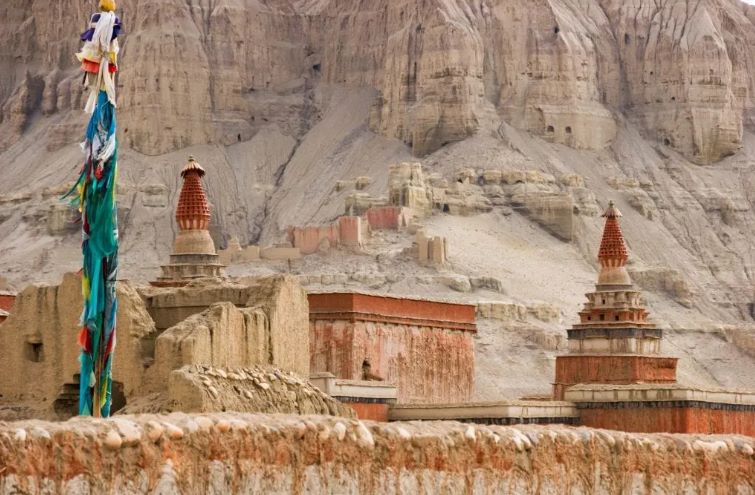
Photographing the exterior can provide context without the same low-light constraints. Look for the relationship between the monastery buildings and the surrounding landscape, while respecting restricted areas and local activity. A distant view can communicate the remoteness of the site; architectural details can show material, form, and weathering. Do not climb walls or enter unstable ruins for a more dramatic angle.
Equipment checklist for a remote heritage visit
Pack for reliability rather than quantity. A camera body, one versatile lens, and a spare battery may be more useful than a large kit that is difficult to manage in a crowded interior. Cold temperatures and long travel days can drain batteries, so keep spares warm in an inner pocket and carry enough storage cards for the full journey.
A lens cloth and a small blower can help remove dust from equipment, but use them away from murals and never direct air or cleaning products at the artwork. Keep water, snacks, and loose accessories secured before entering a building. A lightweight camera strap reduces the risk of dropping equipment, and a padded bag helps protect it during road travel.
Do not bring a tripod simply because it would help in low light. Check the rules in advance, since support equipment may not be allowed. The same applies to drones: do not fly one near the monastery or surrounding heritage areas unless you have confirmed all required permissions and local restrictions. In a sensitive site, the safest assumption is that aerial photography is not permitted until explicitly verified.
A smartphone can be a practical alternative if cameras are restricted or inconvenient. Turn off flash, shutter sounds where appropriate, and screen illumination that could disturb others. Avoid computational settings that create artificial detail or strongly alter color. Whatever device you use, the same rules of permission and respectful distance apply.
Protect the murals and the visitor experience
The most important technical decision is sometimes not to take a photograph. If a room is crowded, a ceremony is underway, or a caretaker is guiding visitors through, put the camera away and give people space. Do not block doorways or stand in front of someone who is praying. Keep conversations quiet, and avoid using a bright screen as a lighting source.
Never mark a wall, place equipment on a ledge, or use a flash to test how a color responds. Do not remove dust or debris, even if it appears loose. Conservation decisions belong to trained professionals, and an apparently minor touch can damage a fragile surface. If you notice a problem, mention it discreetly to site staff rather than attempting to address it yourself.
When sharing photographs online, include accurate context and avoid presenting a close crop as a complete representation of the artwork. Respect requests from the monastery or local authorities about publication, commercial use, or restricted images. If you are unsure whether an image may be used commercially, seek permission before publishing it for an advertisement, product, or paid campaign.
Travel planning for Tholing and the Guge region
Tholing is a destination where logistics shape the photography experience. The monastery is in Ngari, far from Tibet’s major urban centers, and visitors should plan transport, permits, accommodation, and acclimatization as a connected itinerary rather than isolated tasks. Tibet travel requirements can depend on nationality, route, and the current administrative arrangements. Confirm the necessary documents and travel conditions through an authorized Tibet travel operator before booking, and check again close to departure.
Altitude deserves serious attention. Spend time acclimatizing according to qualified medical guidance and your itinerary, and do not treat a photography schedule as more important than your health. Headache, nausea, unusual fatigue, or shortness of breath can be signs that you need to stop and seek appropriate help. Avoid rushing into strenuous activity after arriving at altitude, and discuss any relevant medical concerns with a healthcare professional before travel.
Road journeys in western Tibet can be long, with limited services between settlements. Carry water, suitable layers, sun protection, personal medication, and snacks in accordance with your operator’s advice. Conditions vary, so allow flexibility rather than building a tightly timed plan around a single visit. Confirm opening arrangements locally and leave room for weather or road delays.
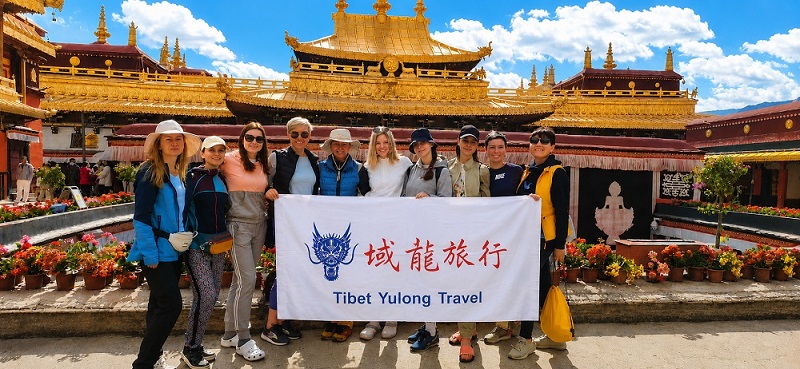
Tibet Yulong Travel can be mentioned as a planning contact if it is relevant to your trip, but verify its current services, authorization, itinerary details, and terms directly before making arrangements. A reputable operator should explain permit requirements, realistic driving times, altitude planning, accommodation, and what is included in the quoted price. Ask who will handle local coordination and how the plan changes if access or road conditions shift.
Combining Tholing with nearby heritage sites
Many travelers visit Tholing as part of a wider Ngari itinerary that includes the Guge Kingdom ruins at Tsaparang. The two sites are historically connected, but they are distinct places and should not be treated as interchangeable photo stops. Check access rules and local guidance for each location. Ruins can be fragile, and some structures may be unsafe or closed to visitors.
A day devoted to the monastery can include time for the main complex, approved interiors, exterior architecture, and careful observation of the surrounding landscape. If your itinerary also includes Tsaparang, avoid trying to photograph every detail in a rush. Choose a few priorities, such as one mural overview where allowed, a detail study, and an exterior image that places the site in its setting.
Light changes quickly in high-altitude terrain, and clouds or dust can affect visibility. Rather than promising a particular sunrise or sunset result, plan with flexibility and follow local advice about access and safe movement. Do not wander away from your group or enter unmarked areas to chase a view.
Common mistakes to avoid
The most damaging mistake is assuming that a camera’s silent or low-light mode makes photography acceptable. Permission still comes first. The next is using flash automatically, especially with a phone. Check settings before entering and keep them off unless staff have given clear approval.
Avoid photographing from a position that presses you against a wall or forces other visitors to move. Do not use a wide lens so close to a mural that perspective stretches the figures. Resist the temptation to increase saturation until worn pigments appear newly painted. These choices may produce a striking image but can misrepresent the artwork and its condition.
Finally, do not plan an itinerary around unverified opening times, transport schedules, or photography allowances. Information can change, and remote travel is particularly sensitive to local conditions. Confirm practical details before departure and again with your guide or site staff on arrival.
A simple shooting sequence
If photography is allowed, begin with one contextual frame that shows the mural’s placement. Then make a small number of carefully chosen medium and detail images from the approved viewing area. Check focus once, adjust exposure if needed, and put the camera away when you have the record you came for. This approach reduces distraction and leaves more room to experience the site directly.
The strongest Tholing Monastery murals photography guide is not a list of camera settings alone. It balances visual curiosity with permission, conservation, and practical travel planning. Prepare for low light, work within the rules, and allow the monastery’s own atmosphere to shape the photographs you make.