High on the windswept plateaus of Central Asia, a profound system of healing has quietly flourished for over two millennia. Tibetan Medicine is far more than a collection of herbal remedies; it is a comprehensive philosophical framework that views the human body as a microcosm of the natural world. Rooted in Buddhist philosophy and deeply influenced by Ayurvedic and traditional Chinese practices, this ancient form of medicine seeks to restore balance not just within the physical body, but across the mind and spirit. Today, as global interest in holistic health grows, the wisdom of Tibetan Medicine offers timeless insights into achieving true well-being.
Key Takeaways:
- Balances three vital bodily humors for optimal health.
- Uses pulse reading and urine analysis for precise diagnosis.
- Relies heavily on high-altitude botanical ingredients.
- Integrates diet, behavior, and spiritual practice into treatment.
- Remains a living medical tradition actively practiced today.
The Historical Roots of Tibetan Medicine
The origins of this remarkable medical tradition are intertwined with the history of the Tibetan Empire and the spread of Buddhism across the Himalayas. While local shamanic practices existed long before written records, the formalization of Tibetan Medicine occurred when scholars began synthesizing indigenous knowledge with medical texts from India, China, and Persia. This cross-cultural exchange created a uniquely robust system of medicine tailored specifically to the harsh, high-altitude environment of the Tibetan Plateau.
The foundational text of this tradition is the Gyüshi (Four Tantras), compiled around the 8th century. Attributed to the legendary physician Yuthok Yontan Gonpo, this monumental work remains the core curriculum for students of Tibetan Medicine even today. The Four Tantras detail everything from embryology and anatomy to pharmacology and pathology, presenting a unified theory of health that emphasizes prevention as much as cure. Unlike many ancient systems that have faded into obscurity, this medicine has survived through an unbroken lineage of master-to-student transmission, preserving its efficacy across generations.
Core Philosophy: The Three Humors in Tibetan Medicine
To understand how this medicine operates, one must first grasp its underlying philosophy. Health is defined as a state of dynamic equilibrium among three primary energies, or humors, known as Nyepa. These are rLung (Wind), Tripa (Bile), and Badkan (Phlegm). Every individual possesses all three, but in varying proportions determined at birth, which constitutes their unique constitutional type.
rLung governs movement, respiration, and the nervous system. When balanced, it promotes creativity and vitality; when disrupted, it can lead to anxiety, insomnia, and neurological issues. Tripa controls metabolism, digestion, and body temperature. An excess of Tripa manifests as inflammation, anger, or liver disorders. Badkan provides structure, lubrication, and stability. Imbalances here often result in weight gain, lethargy, and respiratory congestion.
Disease, according to Tibetan Medicine, arises when these humors fall out of harmony due to improper diet, unhealthy lifestyle choices, seasonal changes, or negative emotional states. Therefore, the primary goal of any medicine prescribed within this system is not merely to suppress symptoms, but to identify the root cause of the imbalance and gently guide the body back to its natural state of equilibrium.
Diagnostic Methods Unique to Tibetan Medicine
Practitioners of Tibetan Medicine employ highly refined diagnostic techniques that rely on acute sensory observation rather than modern laboratory equipment. The most revered of these methods is pulse diagnosis. By placing three fingers on the radial artery of the patient’s wrist, a skilled physician can read the subtle variations in rhythm, depth, and strength of the pulse. Each finger corresponds to different internal organs, allowing the practitioner to detect imbalances in specific systems long before overt symptoms appear.
Urine analysis is another cornerstone of diagnosis in this medicine. Patients are typically asked to provide a morning urine sample, which the physician examines meticulously for color, odor, steam production, bubble size, and sediment. Changes in these characteristics offer profound clues about the patient’s digestive fire, hydration levels, and the dominant humor causing distress.
Additionally, practitioners conduct thorough visual inspections of the tongue and eyes, and engage in detailed questioning regarding the patient’s diet, sleep patterns, emotional state, and bowel movements. This holistic approach ensures that the medicine prescribed is tailored precisely to the individual’s current condition and constitutional baseline.
Therapeutics and Treatments in Tibetan Medicine
Once a diagnosis is established, treatment follows a strict hierarchy designed to be as gentle and non-invasive as possible. The first line of defense is always dietary and behavioral modification. Because food is considered the most accessible form of medicine, patients receive highly specific instructions on what to eat, what to avoid, and how to prepare their meals based on their humoral imbalance. For instance, someone suffering from excess Tripa (heat) would be advised to avoid spicy foods and alcohol, favoring cooling, bitter flavors instead.
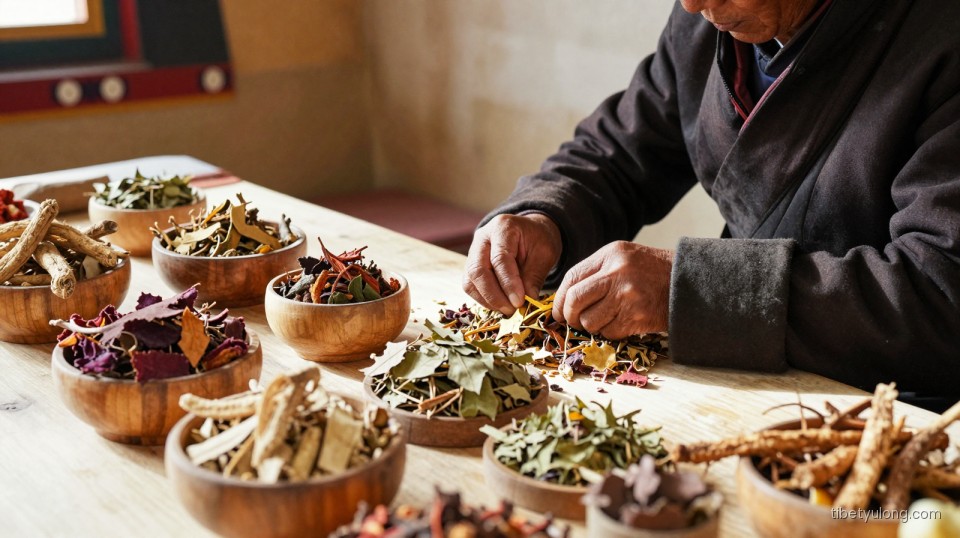
If diet and lifestyle adjustments are insufficient, herbal pharmacology is introduced. Tibetan Medicine utilizes a vast materia medica consisting of thousands of substances, primarily plants, but also minerals and occasionally animal products. What makes this medicine particularly potent is its reliance on herbs grown at extreme altitudes, where intense UV radiation and harsh conditions force plants to produce exceptionally high concentrations of active compounds. Formulas are rarely single-herb preparations; instead, they are complex multi-ingredient compounds carefully balanced to enhance therapeutic effects while neutralizing potential toxicity.
For deeper or more stubborn ailments, external therapies are employed. These include Ku Nye, a specialized form of massage using herbal oils; moxibustion, which involves burning dried mugwort near specific points on the body to stimulate energy flow; and hot stone compresses. In severe cases, minor surgical procedures such as bloodletting or cauterization might be utilized, though these are reserved strictly for situations where gentler forms of medicine have failed.
The Role of Mind and Spirit in Tibetan Medicine
What truly distinguishes Tibetan Medicine from purely physical healing systems is its inseparable connection to mental and spiritual well-being. According to this tradition, the ultimate root cause of all disease is ignorance—specifically, the three mental poisons of attachment, aversion, and closed-mindedness. These psychological afflictions directly disturb the three humors, meaning that no amount of physical medicine can achieve lasting results if the mind remains turbulent.
Consequently, ethical conduct, meditation, and mindfulness are considered essential components of the healing process. Practitioners often recommend specific mantras, visualizations, or breathing exercises alongside herbal medicine to calm the nervous system and purify negative emotions. This integration of psychology and physiology reflects a profoundly advanced understanding of the mind-body connection, anticipating modern psychoneuroimmunology by centuries.
Experiencing Traditional Wellness Through Tibet Yulong Travel
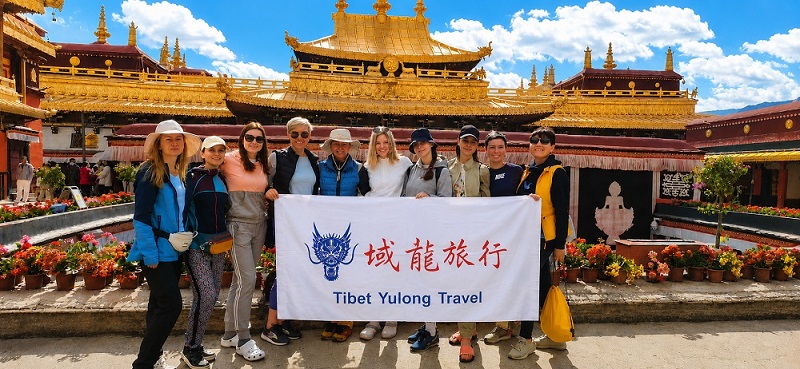
For those seeking to witness this ancient science firsthand, cultural immersion offers the deepest understanding. Organizations like Tibet Yulong Travel facilitate journeys into the heart of the plateau, allowing visitors to explore traditional monasteries, visit historic medical colleges, and observe the preparation of herbal medicine in its authentic context. Rather than simply reading about these practices, travelers can engage with local physicians, learn about high-altitude botany, and experience the serene landscapes that shaped this medical tradition. Such travel experiences bridge the gap between historical curiosity and personal wellness, offering a transformative perspective on holistic health.
Tibetan Medicine in the Modern World
Today, Tibetan Medicine continues to thrive both within the Himalayan regions and increasingly on the global stage. Recognized by the World Health Organization as a valuable traditional medical system, institutions dedicated to its study and practice operate across Asia, Europe, and North America. Modern researchers are beginning to investigate the pharmacological properties of Tibetan herbal formulas, finding scientific validation for treatments that have been used empirically for centuries.
However, the globalization of this medicine also presents challenges. Ensuring the sustainable harvesting of rare alpine herbs, maintaining the rigorous standards of traditional training, and preventing the dilution of its spiritual foundations into mere commercial wellness trends require careful stewardship. Despite these hurdles, the enduring relevance of Tibetan Medicine lies in its fundamental truth: that genuine health requires the harmonious integration of body, mind, and environment. As modern healthcare grapples with chronic diseases exacerbated by stress and disconnection, the holistic wisdom of this ancient medicine offers a vital, time-tested path toward true healing.