Tibetan culture is deeply intertwined with spiritual practices, ancient traditions, and the rhythms of nature. For travelers seeking an authentic cultural immersion, understanding what are the most significant Tibetan Festivals is essential. These celebrations offer a rare window into a world where religion, community, and daily life merge seamlessly. From grand monastic ceremonies to lively street dances, each festival tells a unique story of survival, faith, and joy on the Roof of the World.
Key Highlights:
- Losar marks the traditional Tibetan New Year with prayers and feasts.
- The Monlam Prayer Festival focuses on deep spiritual reflection and debate.
- Saga Dawa celebrates the life of Buddha through pilgrimage and merit-making.
- Shoton Festival features spectacular thangka unveilings and traditional opera.
- Ongkor Festival gives thanks for the harvest with horse racing and dancing.
Exploring the Rich Heritage Through Major Tibetan Festivals
To truly appreciate the plateau’s culture, one must look beyond the stunning landscapes and observe its people in celebration. The most significant Tibetan Festivals are not merely holidays; they are living repositories of history. They dictate the agricultural calendar, reinforce social bonds, and provide opportunities for spiritual advancement. Whether you are planning a trip independently or booking a comprehensive journey through Tibet Yulong Travel, timing your visit to coincide with these events will transform a standard sightseeing tour into a profound cultural expedition. Let us explore the specific festivals that define the Tibetan calendar.
Losar: The Grandest of All Tibetan Festivals
Losar, the Tibetan New Year, is arguably the most important and widely celebrated among all Tibetan Festivals. Falling usually in February or March according to the lunar calendar, it is a time when families reunite, homes are thoroughly cleaned, and old grievances are set aside. The preparations begin weeks in advance. Households prepare “khapse,” a type of fried pastry, and arrange a special wooden box called a “chemar” filled with roasted barley flour (tsampa) and dried fruits, symbolizing prosperity for the coming year.
The first three days of Losar hold distinct significance. On the first day, known as Lama Losar, people typically stay home, drink chang (barley wine), and perform religious rituals at their household shrines. The second day, King’s Losar, involves visiting friends and relatives, exchanging white scarves known as khata, and offering blessings. By the third day, public celebrations erupt. Monks chant sutras, and locals gather at monasteries or sacred sites to hang new prayer flags, replacing the weathered ones from the previous year. The air fills with the scent of juniper incense, and the sound of traditional drums echoes across the valleys. For visitors, witnessing Losar provides an unparalleled opportunity to see Tibetan hospitality at its warmest and most vibrant.
Monlam Prayer Festival: Spiritual Devotion Among Tibetan Festivals
Established in 1049 by Tsongkhapa, the founder of the Gelug school of Tibetan Buddhism, the Monlam Prayer Festival—also known as the Great Prayer Festival—is a cornerstone of spiritual life. It traditionally follows immediately after Losar, lasting for several days. Historically, thousands of monks from major monasteries such as Drepung, Sera, and Ganden would converge in Lhasa to participate in intense prayer sessions aimed at promoting world peace and spiritual harmony.
During Monlam, the focus shifts entirely toward religious devotion. Monks engage in rigorous philosophical debates in monastery courtyards, testing their knowledge of Buddhist scriptures. These debates are highly animated, involving rhythmic clapping and dramatic gestures that captivate onlookers. Laypeople also participate by making offerings, lighting butter lamps, and circumambulating sacred sites like the Jokhang Temple. The sheer scale of collective meditation and chanting creates an atmosphere that is palpable even to those who do not share the faith. It stands out among Tibetan Festivals for its emphasis on intellectual rigor and communal spiritual effort rather than festive revelry.
Saga Dawa: The Holiest Month in the Calendar of Tibetan Festivals
Saga Dawa occurs during the fourth month of the Tibetan lunar calendar, typically aligning with May or June. It is considered the holiest period because it commemorates the birth, enlightenment, and parinirvana (passing away) of Sakyamuni Buddha. During this time, the karmic effects of both positive and negative actions are believed to be multiplied exponentially, prompting widespread acts of compassion and devotion.
Pilgrims travel from all corners of the plateau to participate in Saga Dawa. In Lhasa, the streets around the Barkhor circuit are packed with devotees spinning prayer wheels and reciting mantras. Many Tibetans adopt a strict vegetarian diet throughout the month, and it is common to see people releasing animals destined for slaughter as an act of saving lives. One of the most striking sights is the procession carrying a massive flagpole, which is raised at the base of Mount Kailash or outside major monasteries. If you are exploring Tibetan Festivals with a focus on pure religious authenticity, Saga Dawa offers the most moving and spiritually charged environment.
Shoton Festival: Yogurt, Operas, and Iconic Tibetan Festivals
The Shoton Festival, often translated as the “Yogurt Banquet Festival,” is one of the most visually spectacular Tibetan Festivals. Originating in the 11th century, it began as a time when laypeople offered yogurt to monks emerging from their summer retreats. Today, it has evolved into a massive cultural extravaganza held in August, centered primarily around Drepung Monastery and Norbulingka, the former summer palace of the Dalai Lamas.
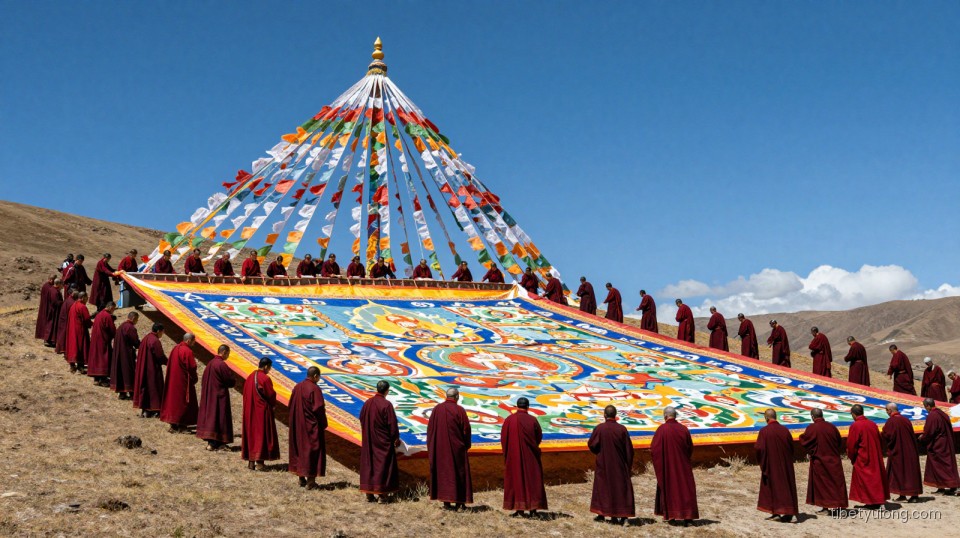
The festival kicks off before dawn at Drepung Monastery with the grand unveiling of a giant thangka—a sacred scroll painting depicting Buddha. As the first rays of sunlight hit the hillside, monks slowly unfurl the massive tapestry while horns blow and crowds chant prayers. Following the thangka display, the festivities shift to Norbulingka, where traditional Tibetan opera performances take place continuously for several days. Families set up colorful tents in the parks, sharing food, drinking butter tea, and watching actors in elaborate masks perform ancient tales. The blend of solemn religious ritual and joyous secular entertainment makes Shoton a favorite among travelers experiencing Tibetan Festivals for the first time.
Ongkor Festival: Agricultural Roots of Tibetan Festivals
While many Tibetan Festivals are rooted in Buddhism, Ongkor highlights the agrarian foundation of Tibetan society. Celebrated in the seventh or eighth lunar month, just before the autumn harvest, Ongkor translates roughly to “encircling the fields.” Farmers walk around their crop fields carrying scriptures, prayer flags, and burning incense to thank the deities for the rain and sunshine, and to pray for a bountiful yield.
Once the religious circumambulation is complete, the mood shifts to celebration. Villages host horse racing, archery competitions, tug-of-war, and traditional singing and dancing that lasts late into the night. People wear their finest traditional clothing, adorned with turquoise, coral, and silver jewelry. Ongkor provides a fascinating contrast to the monastic-heavy festivals, showcasing the rural lifestyle and the deep connection between the Tibetan people and their harsh but beautiful landscape. Tour operators like Tibet Yulong Travel often recommend visiting rural areas during Ongkor to witness these unfiltered, community-driven celebrations that rarely make it into mainstream tourist brochures.
Bathing Festival: Purification Traditions Within Tibetan Festivals
Occurring in early September when the star Venus appears prominently in the sky, the Bathing Festival is a unique tradition lasting about a week. According to local belief, the water in rivers and streams during this specific period possesses healing properties, capable of curing diseases and washing away bad luck. Men, women, and children head to nearby rivers to bathe, wash their clothes, and play in the water.
Unlike some other Tibetan Festivals that require strict adherence to religious protocols, the Bathing Festival is relaxed and joyful. Families camp along riverbanks, sharing meals and enjoying the brief, mild warmth of early autumn before the harsh winter sets in. It is a testament to how natural phenomena and folklore intertwine in daily Tibetan life.
Planning Your Journey to Experience Tibetan Festivals
Attending these events requires careful logistical planning. Permits, accommodation availability, and transportation can become highly constrained during peak festival seasons. This is where experienced agencies prove invaluable. Companies like Tibet Yulong Travel specialize in crafting itineraries that align perfectly with the lunar calendar, ensuring you do not miss the thangka unveiling at Shoton or the morning prayers of Losar. They handle the complex permit processes and provide knowledgeable local guides who can explain the nuanced symbolism behind every ritual, dance, and chant. When exploring Tibetan Festivals, having local expertise transforms confusion into comprehension, allowing you to respectfully engage with the culture rather than merely observing it from the sidelines.
Understanding what are the most significant Tibetan Festivals reveals that the plateau is not a static museum of ancient ruins, but a dynamic, living culture. Each festival, whether marked by silent meditation or thunderous horse hooves, serves as a vital thread in the fabric of Tibetan identity. Experiencing them firsthand remains one of the most rewarding journeys a traveler can undertake.