Key Points
- Mount Kailash is considered the spiritual center of the universe by four major religions, making any attempt to climb it a profound act of desecration.
- The Chinese government has enforced a strict legal ban on climbing the mountain since 2001, following international pressure and religious petitions.
- Extreme weather conditions, unpredictable microclimates, and steep pyramidal faces make Mount Kailash technically dangerous for mountaineers.
- Historical accounts and local legends suggest that those who attempted to scale the peak faced rapid aging, sudden storms, or fatal consequences.
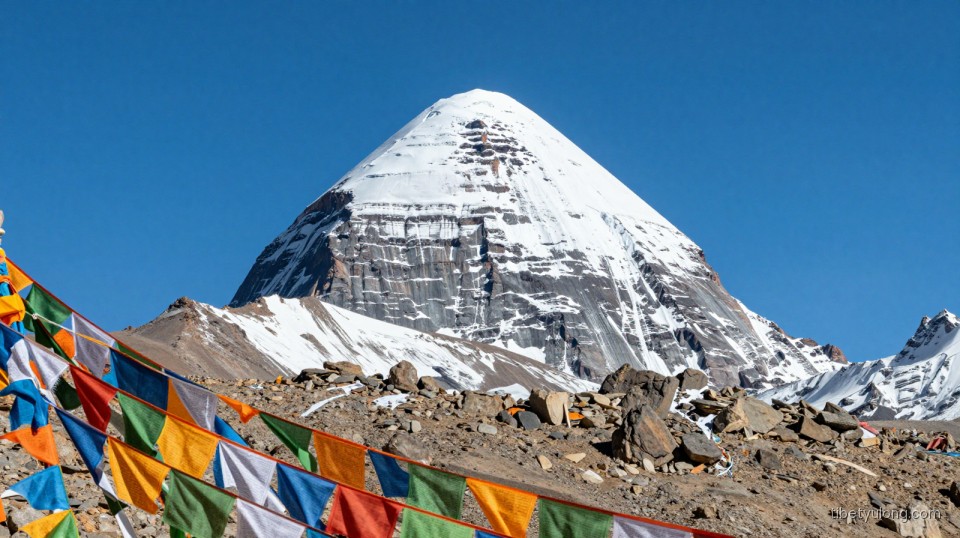
Standing at 6,638 meters in the remote Transhimalaya region of Tibet, Mount Kailash presents a silhouette unlike any other peak on Earth. Its striking, nearly symmetrical pyramid shape dominates the stark landscape, drawing the eyes of travelers, pilgrims, and mountaineers alike. Yet, while humanity has conquered Everest, K2, and countless other formidable summits, no verified modern ascent of Mount Kailash has ever taken place. This is not due to a lack of ambition or technological capability. The reasons why Mount Kailash cannot be climbed are deeply rooted in ancient theology, stringent legal frameworks, and unforgiving physical geography. Understanding these factors requires looking beyond standard mountaineering logic and stepping into a world where spiritual reverence dictates the boundaries of human exploration.
The Spiritual Weight of Mount Kailash
To understand the absolute prohibition against scaling this mountain, one must first grasp its unparalleled significance in global religion. Mount Kailash is not merely a geological formation; it is the spiritual axis of the world for over a billion people across four distinct faiths. For Hindus, the peak is the earthly manifestation of Mount Meru, the cosmic center of the universe, and the eternal abode of Lord Shiva. To set foot upon its summit is viewed as an unimaginable sacrilege, akin to trampling on the divine itself.
Buddhists share a similar reverence, associating the mountain with Demchok, a deity representing supreme bliss. Tibetan Buddhist lore speaks of the legendary monk Milarepa, who supposedly reached the summit in the 11th century through magical flight rather than physical climbing, after a contest with a Bon priest. The Jains revere the peak as Ashtapada, the site where their first Tirthankara, Rishabhadeva, attained spiritual liberation. Meanwhile, followers of the ancient Bon religion consider Mount Kailash the soul of Tibet and the seat of all spiritual power.
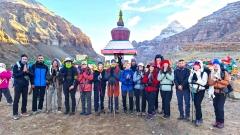
Because of this shared sanctity, the accepted way to interact with the mountain is not to conquer it, but to circumambulate it. The Kora, a 52-kilometer trek around the base of Mount Kailash, is one of the most important pilgrimages in the world. Pilgrims believe that completing this arduous walk erases the sins of a lifetime. Attempting to climb the peak directly contradicts the fundamental ethos of every religion that holds it sacred, transforming a potential mountaineering achievement into a global religious offense.
Legal Bans and Government Regulations
The spiritual objections to climbing Mount Kailash have been firmly codified into law. While the mountain remained unclimbed for centuries purely out of religious respect, the modern era brought explicit legal prohibitions. In the mid-1980s, the renowned Italian mountaineer Reinhold Messner was reportedly offered permission by the Chinese authorities to attempt the summit. When news of this potential expedition leaked, it triggered immediate and widespread outrage from Hindu, Buddhist, Jain, and Bon communities worldwide.
Faced with intense diplomatic and religious pressure, the plans were abandoned. By 2001, when a Spanish team sought permits to climb the mountain, the backlash was even more organized. The United Nations and various international bodies received petitions urging the protection of the site. Consequently, the Chinese government enacted a permanent, strict ban on any climbing activities on Mount Kailash. Today, the regulations surrounding the peak are absolute. Permits for the region only authorize the Kora pilgrimage and basic tourism in designated lower-altitude areas. Any unauthorized attempt to ascend the mountain would result in immediate expulsion, heavy fines, and potential criminal charges under Chinese law. The legal framework ensures that the spiritual wishes of billions are protected by the authority of the state.
Geographical and Climatic Barriers
Even if the religious taboos and legal bans were somehow removed, Mount Kailash would remain a terrifying prospect for mountaineers due to its unique geography and brutal climate. Unlike the Himalayas further south, which benefit from established base camps and seasonal climbing windows, the Transhimalaya is a harsh, arid environment subjected to violent, unpredictable weather patterns.
The physical structure of Mount Kailash poses severe technical challenges. Its faces are incredibly steep, rising almost vertically in certain sections. The rock composition, primarily conglomerate and sandstone, is notoriously unstable. Climbers would face constant risks of rockfall, especially as temperatures fluctuate wildly between day and night, causing the stone to expand and fracture. There are no gentle slopes or gradual ridges to establish safe high-altitude camps.
Furthermore, the altitude of 6,638 meters places the summit well within the death zone’s lower threshold, where oxygen levels are insufficient to sustain human life for extended periods without supplemental support. The weather systems around Mount Kailash are localized and fierce. Sudden blizzards, hurricane-force winds, and whiteout conditions can materialize without warning, even during the summer months. The combination of crumbling rock faces, extreme cold, high altitude, and volatile weather makes the mountain a logistical nightmare. It is a peak that actively resists human presence, offering no natural routes for a safe ascent or descent.
Myths, Legends, and Unverified Attempts
The aura surrounding Mount Kailash is thick with legends that serve as powerful deterrents to anyone harboring secret ambitions of reaching the top. Local folklore is filled with cautionary tales about the fate of those who dared to disrespect the mountain’s sanctity. One persistent legend claims that time moves differently near the summit. Stories circulate among locals about climbers who attempted to scale the lower reaches and returned to find their hair turned white and their bodies aged by decades in a matter of hours.
While these accounts belong to the realm of mythology, they reflect a deep-seated cultural belief that the mountain possesses supernatural defenses. Another common narrative suggests that sudden, unnatural snowstorms will immediately engulf anyone who steps above the sacred snowline with the intent to climb. These stories are passed down through generations of Tibetan herders and guides, reinforcing the psychological barrier against ascent.
Historically, there is no verified record of any human standing on the summit of Mount Kailash in the modern era. Some unconfirmed rumors point to Russian scientific expeditions investigating anomalous energy fields around the peak, but these claims lack credible evidence and are widely dismissed by the mountaineering community. The absence of any successful climb is not due to a lack of capable athletes, but rather a universal acknowledgment that some places on Earth are meant to be revered from afar.
The Modern Perspective on Untouched Peaks
In contemporary mountaineering culture, there is a growing movement toward leaving certain peaks unclimbed out of respect for indigenous cultures and environmental preservation. Mount Kailash stands as the ultimate symbol of this philosophy. The realization that not every natural wonder needs to be conquered represents a maturation in how humanity interacts with the wild.
Travelers who visit western Tibet today do so to experience the profound silence of the landscape and to witness the devotion of pilgrims walking the Kora. The appeal of Mount Kailash lies precisely in its inaccessibility. Its unclimbed status elevates it from a mere geological feature to a monument of human restraint and spiritual devotion. By choosing not to climb, we preserve the mystery and sanctity that have defined the mountain for millennia. The true journey to Mount Kailash is not vertical; it is horizontal, inward, and deeply respectful of boundaries that transcend physical geography.