
✨ Highlights:
- 🧊 Three Sacred Frozen Lakes: Namtso, Pumo Yumco, and Yamdrok — each offers unique blue ice formations and photographic opportunities you won’t find anywhere else on Earth.
- 📅 Best Shooting Window: Late December to early February delivers the most stable and vibrant blue ice conditions, with crystal-clear skies perfect for both daytime landscapes and night astrophotography.
- 🎯 Pro Photography Spots: From Tashi Peninsula panoramas to Pumo Yumco’s bubble ice and Yamdrok’s Kamba La Pass viewpoint, discover the exact locations where award-winning shots are made.
- ⭐ Starry Night Magic: At 4,700m+ elevation, Tibet’s frozen lakes offer some of the darkest skies in Asia — the Milky Way reflected on blue ice is a once-in-a-lifetime shot.
- 🧥 Survival Guide Included: Essential tips for battling -20°C temperatures, altitude sickness prevention, and keeping your camera gear operational in extreme cold.
Why a Frozen Lake Photography Tour in Tibet Belongs on Every Photographer’s Bucket List? When most travelers think of Tibet, they picture summer green pastures, prayer flags fluttering in the wind, and the golden roofs of the Potala Palace. But for landscape photographers, the real magic happens in winter — when the high-altitude sacred lakes freeze over into vast sheets of translucent blue ice that glow like giant sapphires under the Himalayan sun.
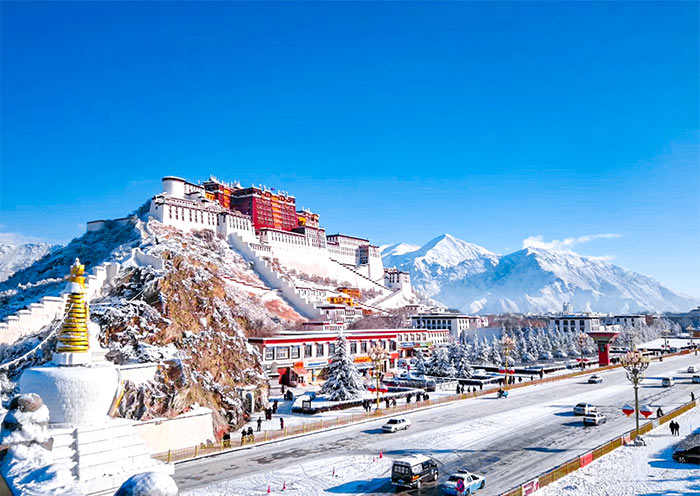
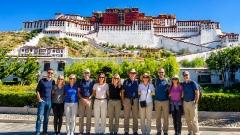
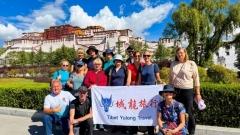
Potala Palace in winter
A frozen lake photography tour in Tibet offers something that even the famous Lake Baikal cannot match: the combination of sacred cultural significance, dramatic snow-capped Himalayan backdrops, and an almost complete absence of crowds. While Baikal draws thousands of ice photographers every winter, Tibet’s frozen lakes remain a well-kept secret — you can spend an entire day on the ice of Namtso without seeing another tourist.
The science behind the blue ice phenomenon is fascinating. As lake water freezes slowly over months, trapped air bubbles are gradually squeezed out, leaving behind incredibly dense, clear ice. When sunlight penetrates this dense ice, longer wavelengths of light (red, orange, yellow) pass through, while shorter blue wavelengths scatter and reflect back to the surface. The result is a mesmerizing spectrum of blues — from pale turquoise near the surface to deep sapphire in thicker sections — that changes constantly with the angle of the sun.
But it’s not just about the ice. Tibet’s high altitude (most lakes sit above 4,500 meters) means exceptionally clean, dry air with minimal light pollution. The combination of blue ice by day and brilliant starry skies by night creates a 24-hour photography playground that you simply cannot find at lower elevations.
Top Frozen Lakes for Photography in Tibet
Namtso Lake: The Heavenly Lake Transformed by Winter
Namtso, meaning “Heavenly Lake” in Tibetan, is the largest saltwater lake on the Tibetan Plateau and one of the three holiest lakes in Tibet. Sitting at 4,718 meters above sea level — roughly 1,200 meters higher than Lhasa — Namtso freezes completely from November through March, transforming into a vast white-and-blue expanse stretching 70 kilometers long and 30 kilometers wide.
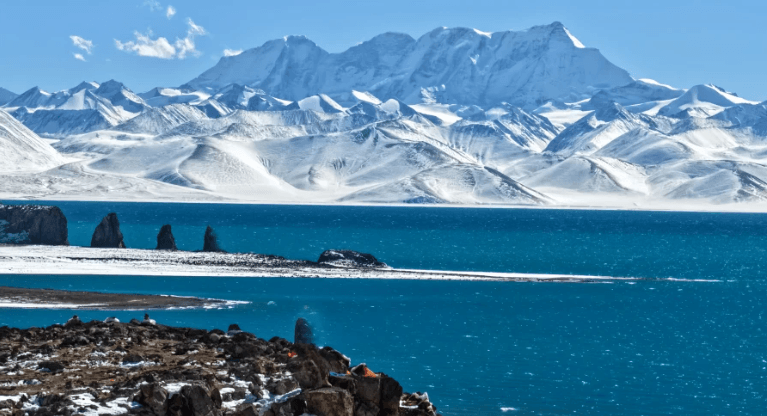
For photographers, the frozen Namtso Lake experience is defined by scale. The lake is so large that from many vantage points, you cannot see the opposite shore. The Nyenchen Tanglha mountain range forms a dramatic backdrop of snow-capped peaks along the lake’s southern shore, creating the perfect foreground-background composition for wide-angle shots.
The Tashi Peninsula area on the southeastern shore is the most accessible and popular photography location. Here you’ll find:
– Panoramic viewpoints overlooking the frozen lake with snow mountains in the distance — ideal for golden hour wide-angle shots
– Ice crack formations that create dramatic leading lines across the blue ice surface
– Prayer flags and rock formations that add cultural context and foreground interest to your compositions
– Holy Elephant Gate (Sheng Xiang Tian Men) — though the area is now protected, the nearby shore still offers stunning ice formations with natural arch-like structures
Night photography at frozen Namtso is nothing short of spectacular. With virtually no light pollution for hundreds of kilometers, the winter Milky Way rises brilliantly above the frozen lake from roughly 10 PM to 3 AM. A wide-angle lens (14-24mm or 16-35mm) on a sturdy tripod, set to ISO 3200-6400 with a 15-20 second exposure, will capture the galaxy reflected in the blue ice below — an image that will stop anyone scrolling through their feed.
Pumo Yumco: The Sapphire Maiden of the Himalayas
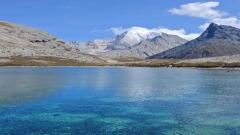
If Namtso is about scale, Pumo Yumco is about intensity. At 5,010 meters above sea level, this smaller lake (roughly 31km by 14km) produces the most vivid blue ice in all of Tibet — so clear and so blue that locals call it “the blue jewel floating in the sky.”
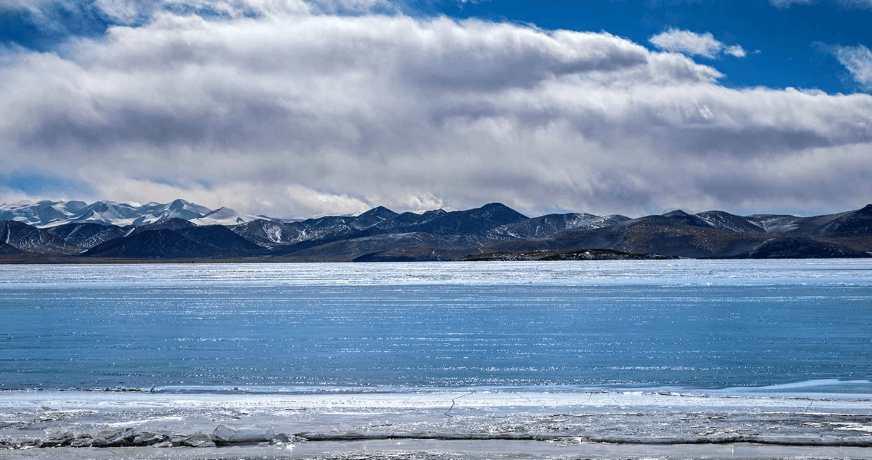
The name Pumo Yumco means “Maiden Lake” in Tibetan, and in winter this maiden transforms into an ice queen. The lake’s high mineral content and slow freezing process create exceptionally clear ice with a deep blue hue that is most intense around midday when sunlight penetrates deepest into the ice.
Photographers visiting Pumo Yumco on a Tibet blue ice photography tour should look for:
– Bubble ice formations — trapped methane and air bubbles frozen in vertical columns, best shot from above with a wide-angle lens
– Intricate ice crack patterns that resemble shattered glass, perfect for abstract close-ups with a macro or standard lens
– Tuiwa Monastery viewpoint — perched on a cliff above the lake, this tiny monastery provides an elevated vantage point with a cultural foreground
– Sheep herding on ice — every winter, local herders from Tuiwa village drive their sheep across the frozen lake to graze on a small island, a unique cultural photography opportunity available nowhere else
The best time to shoot Pumo Yumco’s blue ice is from late December to early February, when the ice is thickest (up to half a meter) and most stable. Midday light produces the most saturated blue colors, while morning and evening light creates beautiful contrast between warm golden sunlight and cool blue ice.
Yamdrok Lake: The Turquoise Mosaic in Winter
Yamdrok Lake, one of Tibet’s three sacred lakes, is famous for its unique coral-like shape and shimmering turquoise waters. While it doesn’t freeze as completely as Namtso or Pumo Yumco due to its lower elevation (4,441m) and irregular shape, Yamdrok Lake in winter offers a different kind of photographic beauty — a patchwork of frozen and unfrozen sections that creates stunning visual contrast.
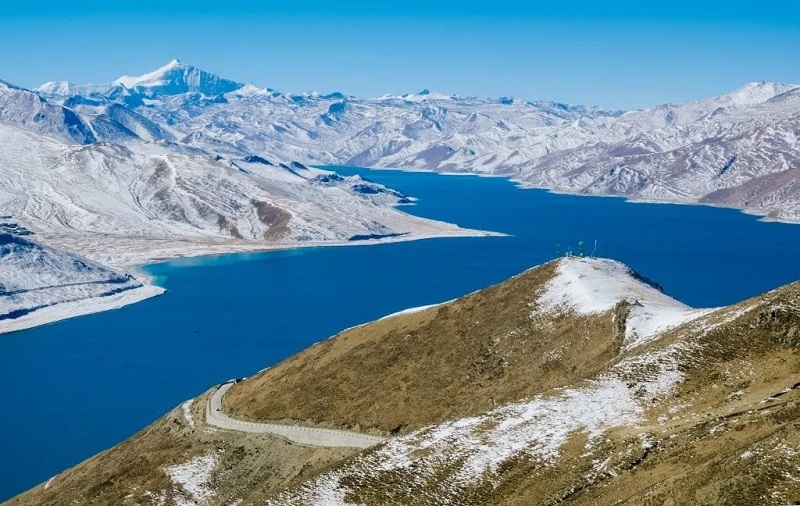
The Kamba La Pass viewpoint at 4,790 meters is the classic spot for photographing Yamdrok’s distinctive shape. In winter, the partially frozen lake shows a mosaic of white ice, dark open water, and snow-covered shorelines winding through the mountain valleys — a composition that looks almost like an aerial view of a frozen river delta.
For photographers on a Tibet winter photography tour, Yamdrok offers several advantages:
– It’s accessible year-round (the road over Kamba La is usually plowed)
– The lower elevation means milder temperatures and less altitude risk
– Winter brings migratory birds, including black-necked cranes, adding wildlife photography opportunities
– The multiple viewing platforms along the lakeshore provide varied perspectives
Hidden Gems: Lesser-Known Frozen Lakes
Beyond the big three, Tibet has dozens of smaller frozen lakes that offer incredible photography with zero crowds:
– Zongcuo Lake — near Tingri, this small lake freezes into dreamy blue ice with natural cracks, and you can drive right to the shore
– Qiaoyang Cuo — a winter-only lake that freezes into a perfect transparent ice mirror reflecting the sky and surrounding snow mountains
– Basum Tso Lake — in Nyingchi, this lower-elevation lake freezes partially and offers beautiful winter forest-and-ice compositions
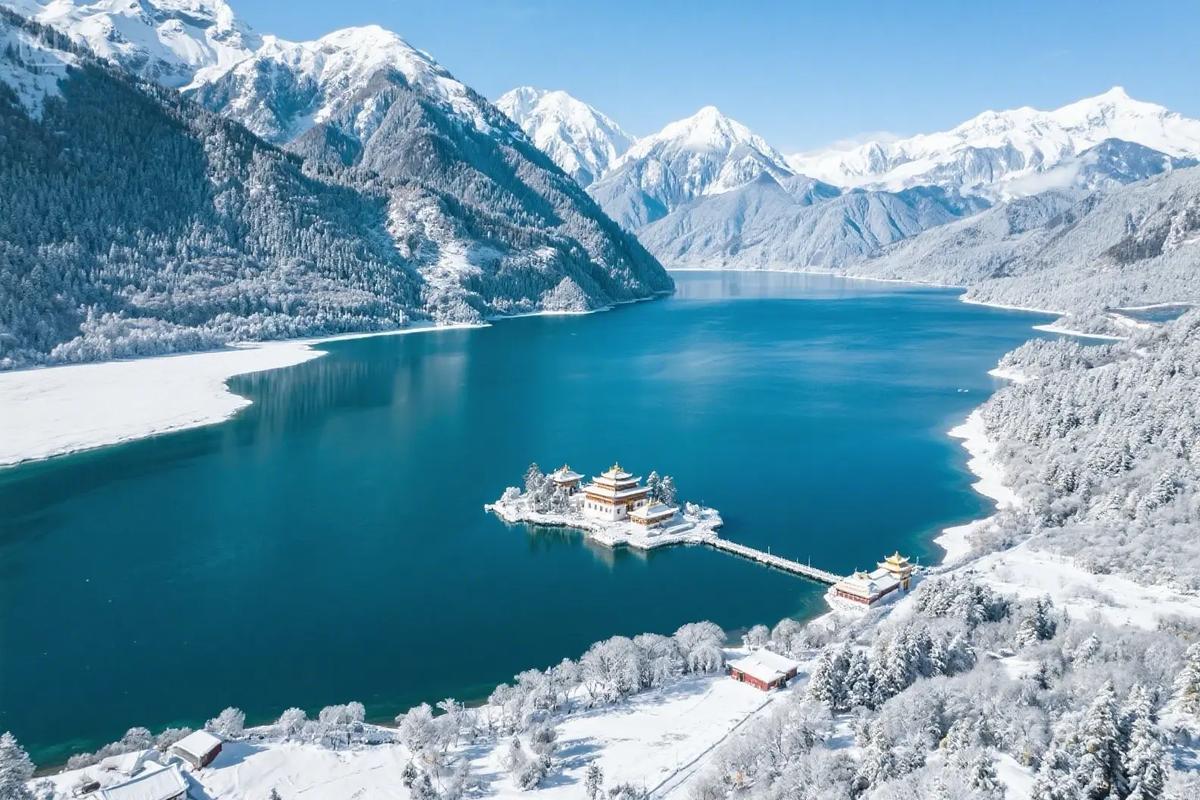
Basum Tso Lake
Best Time for a Frozen Lake Photography Tour in Tibet
Timing is everything when planning a frozen lake photography tour in Tibet. The blue ice season is relatively short, and conditions change dramatically from month to month.
Peak Blue Ice Season: Late December – Early February
This is the golden window for serious ice photographers. Lakes are fully frozen, ice is thickest and most stable, and the blue color is most intense. Daytime temperatures hover around -10°C to -15°C, dropping to -25°C to -30°C at night. The trade-off for these extreme conditions is crystal-clear skies almost every day — winter is the driest season in Tibet, with near-zero precipitation.
Shoulder Seasons: November & March–Early April
November sees the lakes begin to freeze, creating interesting transitional patterns of half-water, half-ice. March and early April bring the thaw, with ice breaking up into dramatic floating chunks. Both shoulder seasons offer unique photographic opportunities, but the blue ice may not be as consistently vibrant, and road conditions can be unpredictable.
What to Avoid: Mid-February to Early March
This is the most unpredictable period. Temperatures start to rise, ice becomes unstable and dangerous, and frequent snowstorms can block mountain passes. Most local tour operators avoid frozen lake trips during this window.
For the best combination of blue ice quality, clear skies, and road accessibility, plan your Tibet frozen lake photography tour between December 20 and February 10.
Essential Photography Gear & Techniques
Gear Checklist for Extreme Cold
Shooting at -20°C to -30°C at 4,700+ meters elevation demands careful equipment preparation:
– Extra batteries (at least 4-6 per camera body) — cold temperatures drain batteries 2-3 times faster than normal. Keep spares in an inner pocket against your body to maintain temperature.
– Sturdy tripod — essential for long exposures, golden hour landscapes, and night photography. Carbon fiber is lighter but can become brittle in extreme cold; aluminum is more durable but heavier.
– Wide-angle lens (14-24mm or 16-35mm) — for lake panoramas, environmental portraits, and astrophotography. This will be your most-used lens on a frozen lake tour.
– Standard zoom (24-70mm) — for medium-range compositions and ice detail shots.
– Telephoto (70-200mm or 100-400mm) — for compressing mountain backgrounds with ice foregrounds, and for wildlife (birds, yaks).
– Lens cloths — multiple, to wipe off frost and condensation. Avoid breathing on your lens — the moisture will freeze instantly.
– Camera rain cover / cold weather cover — protects gear from snow and wind, and provides some insulation.
– Hand warmers — tape one to your camera battery grip to extend battery life, and keep extras in your gloves.
– ND filters (6-stop, 10-stop) — for long exposure ice shots that smooth out wind-blown snow or create silky water effects at partially frozen lakes.
– Spare memory cards — cold is hard on electronics; having backups is essential.
Pro Photography Techniques for Frozen Lakes
1. Master the Golden Hours
The hour after sunrise and the hour before sunset produce the most dramatic light on frozen lakes. The low-angle sunlight creates long shadows across the ice surface, highlighting texture and crack patterns, while the warm light contrasts beautifully with the cool blue ice. Set up early and stay late — the light changes fast.
2. Shoot Blue Ice at Midday
Counterintuitively, the most vibrant blue ice colors appear around midday when the sun is highest and light penetrates deepest into the ice. This is the time to shoot close-ups of ice texture, bubble formations, and cracks. Use a polarizing filter to reduce surface glare and make the blue pop even more.
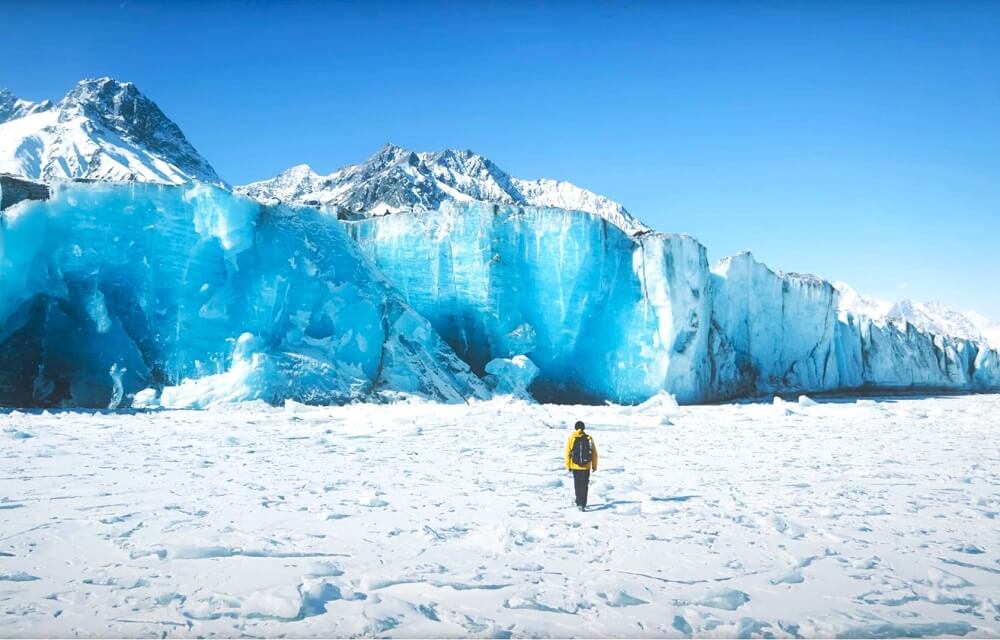
Laigu Glacier
3. Create Depth with Foreground Interest
Frozen lake shots can feel flat without a strong foreground. Look for:
- Ice cracks that create leading lines toward distant mountains
- Rocks or boulders frozen into the ice
- Prayer flags or small stupas along the shore
- Footprints or animal tracks in the snow
- Your own shadow for scale
4. Night Photography Settings For Milky Way shots over frozen lakes:
- Lens: 14-24mm at f/2.8 (or widest aperture)
- ISO: 3200-6400 (higher for darker skies)
- Shutter speed: 15-20 seconds (use the 500 rule: 500 ÷ focal length = max seconds without star trails)
- Focus: Manual focus to infinity (use live view to focus on a bright star)
- White balance: 3500-4000K for cool, natural-looking night skies
5. Wear Bright Colors for Self-Portraits If you want to include yourself or a model in the frame, wear red, yellow, or orange clothing. The contrast between a bright red jacket and deep blue ice is visually stunning and instantly draws the eye — a trick used by every top Tibet travel photographer.
Recommended Itinerary: 12-Day Tibet Frozen Lake Photography Tour
📸 Our Signature 7-Day Tibet Frozen Lake Photography Tour
Led by professional photography guides with 10+ years of Tibet winter experience. Private 4WD, warm accommodation, all permits included.
👉 [Check Dates & Book Now]
Day 1: Arrival in Lhasa (3,650m) Arrive at Lhasa Gonggar Airport and transfer to your hotel. Spend the day resting and acclimatizing to the altitude. Evening: optional sunset shoot of the Potala Palace from Chakpori Hill viewpoint.
Day 2: Lhasa → Basum Tso → Nyingchi (390km) Drive east through the Mila Mountain Tunnel to Basum Tso, a sacred green lake nestled in forested mountains — in winter, the partially frozen surface creates stunning ice-and-water compositions. Continue along the Nyang River valley to Nyingchi. Photography focus: winter lake reflections, forest ice scenes.
Day 3: Nyingchi → Lulang → Ranwu Lake → Bomi (380km) Journey through the Lulang forest valley, famous for its Tibetan wooden villages and snow-dusted pine forests. Arrive at Ranwu Lake in the afternoon — this high-altitude lake freezes into a perfect mirror in winter, reflecting the surrounding snow peaks. Overnight in Bomi. Photography focus: frozen lake reflections, alpine forest winter scenes.
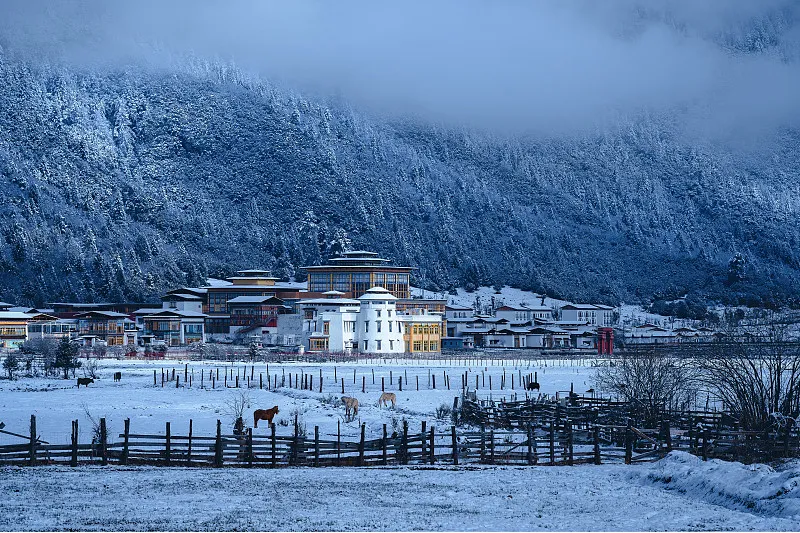
Winter Scenery of Lulang
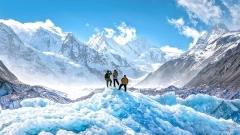
Day 4: Bomi → Laigu Glacier → Yalong Glacier → Nyingchi (300km) The glacier highlight of the tour. Visit Laigu Glacier, one of Tibet’s most accessible glacier groups, where you can walk right up to towering blue ice walls and frozen glacial lakes. Continue to Yalong Glacier for dramatic ice formations. Return to Nyingchi in the evening. Photography focus: glacier blue ice, ice caves, frozen glacial lakes.
Day 5: Nyingchi → Kading Valley → Lhasa (460km) Morning visit to Kading Valley, known for its frozen waterfalls and ice formations in winter. Drive back to Lhasa along the Yarlung Tsangpo River, with stops at scenic viewpoints along the way. Photography focus: frozen waterfalls, river valley winter landscapes.
Day 6: Lhasa City Photography Tour A full day of cultural photography in Lhasa. Shoot the Potala Palace from multiple angles (morning light from the north, sunset from the south), explore Jokhang Temple and Barkhor Street for pilgrim portraits and street photography. These cultural shots add depth and variety to your Tibet portfolio.
Day 7: Lhasa → Yamdrok Lake → Karola Glacier → Shigatse Cross the 4,790m Kamba La Pass for the classic panoramic view of Yamdrok Lake — in winter, the partially frozen lake shows a stunning mosaic of white ice and turquoise water. Continue along the lake shore with multiple photography stops. Visit Karola Glacier en route to Shigatse. Photography focus: frozen lake panoramas, roadside glacier.
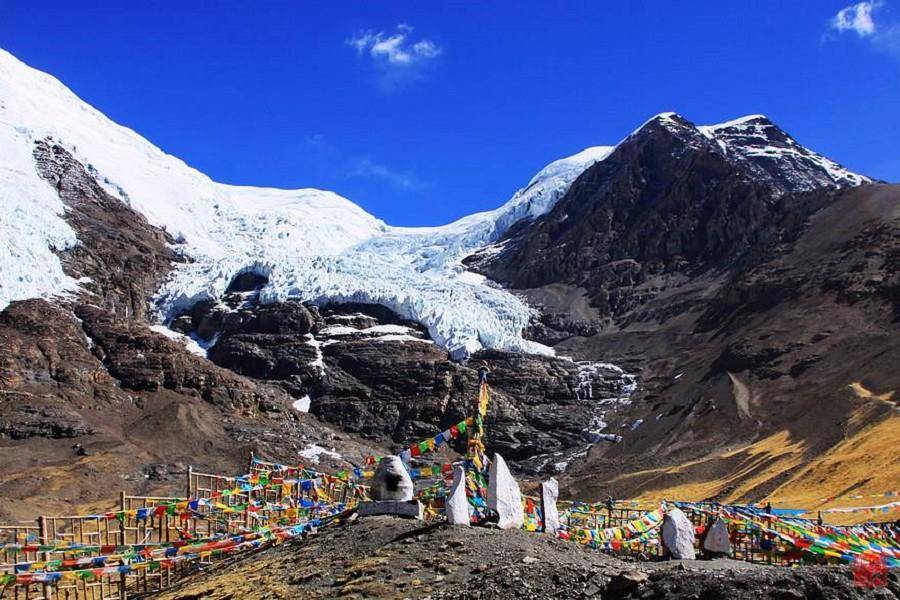
Karola Glacier
Day 8: Shigatse → Tingri → Everest Base Camp (5,200m) Drive through Tingri County and over the 5,248m Gyatso La Pass to Everest Base Camp. Arrive in the afternoon for golden hour shooting of the north face of Mount Everest. Stay overnight at Basong Village near the base camp. Photography focus: Everest golden hour, high-altitude mountain landscapes.
Day 9: Everest Base Camp → Gawula Pass → Shigatse Wake early for sunrise over Everest — the first light hitting the summit is one of the most iconic shots in Himalayan photography. On the return, stop at Gawula Pass (5,210m) for the panoramic view of five 8,000m peaks including Everest, Lhotse, Makalu, and Cho Oyu. Drive back to Shigatse.
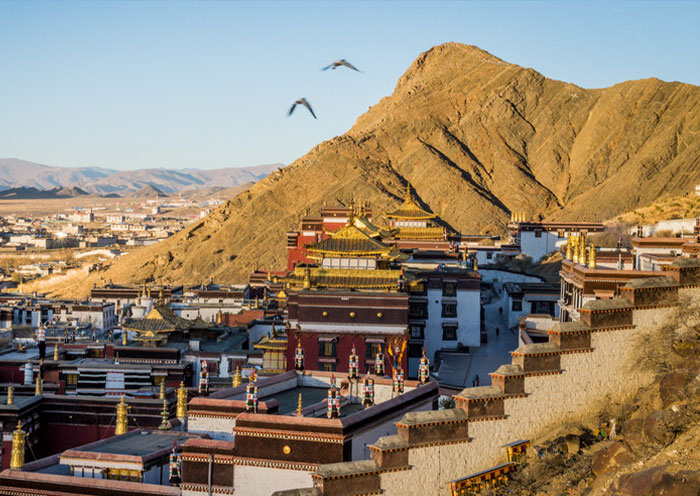
Day 10: Shigatse → Tashilhunpo Monastery → Lhasa Morning visit to Tashilhunpo Monastery, the seat of the Panchen Lama — its massive golden roofs and whitewashed walls are stunning in winter light. Drive back to Lhasa in the afternoon, with optional stops along the Yarlung Tsangpo River.
Day 11: Lhasa → Namtso Lake (4,718m) → Lhasa The frozen lake centerpiece of the tour. Drive north across the Nyenchen Tanglha Mountains to Namtso Lake. Spend 3-4 hours photographing the vast frozen lake — blue ice formations, dramatic ice cracks, prayer flags with snow mountain backdrops, and the Tashi Peninsula viewpoints. Return to Lhasa in the evening. Photography focus: blue ice panoramas, sacred lake winter landscapes.
Day 12: Departure from Lhasa Final morning in Lhasa. Transfer to the airport for your departure flight, carrying a memory card full of unforgettable Tibet winter images.
Practical Travel Tips for Your Tibet Frozen Lake Tour
Altitude Sickness Prevention
All three major frozen lakes sit above 4,400 meters, with Pumo Yumco exceeding 5,000 meters. Altitude sickness is a real risk:
- Spend at least 2 full days in Lhasa (3,650m) before going higher
- Stay well-hydrated — drink 3-4 liters of water per day
- Avoid alcohol, smoking, and strenuous activity for the first 3 days
- Consider taking Diamox (acetazolamide) — consult your doctor before the trip
- Carry a portable oxygen canister for emergencies
- If you develop severe headache, shortness of breath, or confusion, descend immediately
Staying Warm in Extreme Cold
Winter temperatures at Tibet’s frozen lakes can drop to -30°C at night. Dress in layers:
- Base layer: Merino wool thermal top and bottom
- Mid layer: Fleece jacket and down vest
- Outer layer: Windproof and waterproof down parka (rated to -30°C minimum)
- Bottoms: Thermal base + windproof insulated pants
- Hands: Inner liner gloves + heavy mittens (you’ll remove mittens to shoot, so liners are essential)
- Feet: Thick wool socks + insulated waterproof boots with good traction (ice is slippery!)
- Head & face: Balaclava or face mask + warm hat that covers your ears
- Neck gaiter: Protects your neck and can be pulled up to cover your face in wind
Permits & Logistics
Traveling to Tibet requires special permits, and some frozen lake areas have additional restrictions:
- Tibet Travel Permit: Required for all foreign travelers, arranged through a registered tour operator
- Alien Travel Permit: Required for areas like Namtso and Pumo Yumco that are outside Lhasa prefecture
- Road closures: The road to Namtso over Nagen La Pass can close temporarily after heavy snowfall — build flexibility into your itinerary
- Book with a local operator: Independent travel is not permitted in Tibet; you must book through a licensed travel agency. Choose one with winter experience and photography tour expertise.
Best Time of Day to Shoot
- Sunrise (around 8:30-9:00 AM in winter): Golden light, long shadows, minimal wind
- Midday (11 AM – 2 PM): Best blue ice color intensity, harsher light for landscapes
- Sunset (around 6:30-7:00 PM): Warm golden light, dramatic skies, wind often picks up
- Night (10 PM – 3 AM): Astrophotography, Milky Way, extremely cold — dress for battle
Final Thoughts
A frozen lake photography tour in Tibet is more than just a photography trip — it’s an immersion into one of the planet’s most extreme and beautiful environments. Standing on a sheet of blue ice at 4,700 meters, surrounded by snow-capped Himalayan peaks, with not another soul in sight, you’ll understand why Tibet has captivated travelers and photographers for centuries.
The blue ice of Tibet’s sacred lakes is a phenomenon that may not last forever. As global temperatures rise, the freeze periods are getting shorter and the ice is getting thinner — particularly at Pumo Yumco, where local herders report that the ice is no longer thick enough to safely cross with sheep in some years. There’s never been a better time to witness and photograph this natural wonder before it changes.
Whether you’re a professional landscape photographer chasing the next viral image or an amateur looking for the ultimate winter photography adventure, Tibet’s frozen lakes will reward you with images you’ll be proud to share for a lifetime. The cold is brutal, the altitude is challenging, and the logistics are complex — but when you see that first ray of morning sun hit a field of blue ice with the Himalayas on the horizon, you’ll know every moment of discomfort was worth it.