
Standing in the shadow of Everest, Mount Lhotse is often overlooked by casual observers, yet it remains one of the most formidable and respected peaks in the Himalayas. As the fourth highest mountain on Earth, this massive wall of rock and ice presents unique challenges that attract elite mountaineers from around the globe. Unlike its famous neighbor, Mount Lhotse demands technical precision, exceptional endurance, and a deep understanding of high-altitude climbing. Whether you are researching for an upcoming expedition or simply fascinated by extreme geography, understanding the intricacies of this peak is essential. The journey to its summit is not merely a physical test but a profound exploration of human limits against nature’s grandest architecture.
Key Takeaways:
- Mount Lhotse is the fourth highest peak globally at 8,516 meters.
- It shares the South Col route with Mount Everest up to Camp 3.
- The Lhotse Face is a notorious, steep wall of blue ice.
- The main summit was first climbed in 1956 by a Swiss team.
- Lhotse Middle remained unclimbed until 2001 due to extreme difficulty.
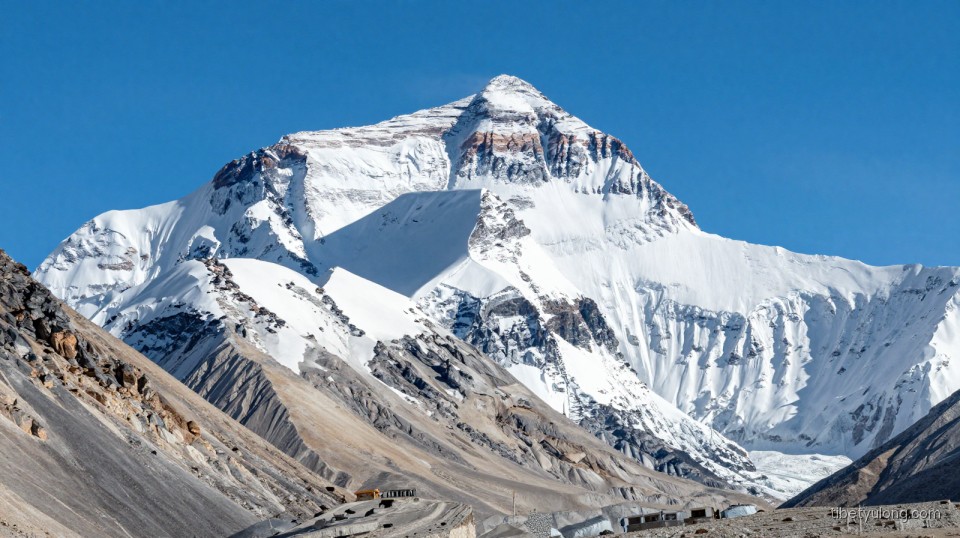
Understanding the Geography of Mount Lhotse
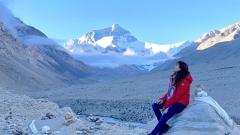
Located on the border between the Khumbu region of Nepal and the Tibet Autonomous Region of China, Mount Lhotse is part of the Everest massif. The name itself translates to “South Peak” in Tibetan, which accurately describes its position relative to Mount Everest. However, calling it merely a subsidiary peak does a disservice to its sheer scale and independent character. The mountain forms a massive ridge that runs east to west, featuring three distinct summits: the Main Summit at 8,516 meters, Lhotse Middle (also known as Lhotse Central) at 8,414 meters, and Lhotse Shar at 8,383 meters.
The topography of Mount Lhotse is defined by dramatic vertical relief. Its south face, known as the Lhotse South Face, is one of the largest and steepest mountain faces in the world, rising over 3,200 meters from base to summit. This sheer wall has repelled numerous attempts by the world’s best alpinists and remains one of the ultimate prizes in extreme mountaineering. The western flank, however, provides the standard climbing route, sharing much of its lower terrain with the Southeast Ridge route of Mount Everest. This geographical connection means climbers heading for either peak must navigate the treacherous Khumbu Icefall together before diverging higher up the mountain.
The Climbing History of Mount Lhotse
The history of ascents on Mount Lhotse is marked by both triumph and tragedy. While early Everest expeditions naturally scouted the shared lower routes, serious attempts on the Lhotse summit came slightly later. The first successful ascent of the main summit was achieved on May 18, 1956, by Swiss climbers Ernst Reiss and Fritz Luchsinger. They were part of a Swiss expedition that also successfully placed climbers on the summit of Everest just days later. Their route up the West Face established the standard path that commercial expeditions still follow today.
Lhotse Shar was summited later, in 1979, by an Austrian team led by Sepp Mayerl. However, the most intriguing historical chapter belongs to Lhotse Middle. Despite being only slightly shorter than the main peak, its incredibly sharp ridges and technical difficulties kept it unclimbed for decades. It held the record as the highest unclimbed named point on Earth until a Russian expedition finally reached its summit in 2001. This achievement underscored the fact that altitude alone does not dictate the difficulty of Mount Lhotse; the specific geometry of each sub-peak presents entirely different mountaineering puzzles.
Standard Climbing Route on Mount Lhotse
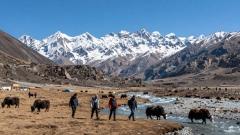
Climbing Mount Lhotse via the standard West Face route requires navigating some of the most famous and dangerous terrain in the Himalayas. The expedition begins with the trek through the Khumbu Valley to Everest Base Camp, which serves as the staging ground for both Everest and Lhotse climbers. From base camp, teams must pass through the Khumbu Icefall, a constantly shifting river of seracs and deep crevasses. Aluminum ladders are lashed together to bridge these gaps, requiring climbers to move quickly during the coldest hours of the night when the ice is most stable.
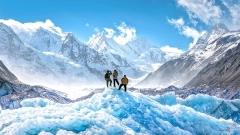
After surviving the icefall, climbers establish Camp 1 in the Western Cwm, a broad, flat valley flanked by Everest, Nuptse, and Mount Lhotse. The heat in the Cwm can be intense during the day, reflecting off the snow. Camp 2 is situated further up this valley, near the base of the Lhotse Face. The true divergence from the Everest route happens above Camp 3. While Everest climbers traverse left toward the South Col, those attempting Mount Lhotse continue straight up the imposing Lhotse Face. This section involves ascending a steep, 50-to-60-degree wall of hard blue ice using fixed ropes, crampons, and ice axes. The physical exertion required here, combined with the thinning oxygen, makes it the crux of the climb. Climbers typically establish a high camp around 7,900 meters before making the final push through the narrow, rocky Lhotse Couloir to reach the summit ridge.
Physical Challenges and Risks on Mount Lhotse
The risks associated with climbing Mount Lhotse are severe and demand absolute respect. Altitude sickness is the primary concern, as the body struggles to function above 8,000 meters, entering the so-called “Death Zone.” Supplemental oxygen is used by the vast majority of climbers, but even with it, the margin for error is razor-thin. Pulmonary and cerebral edema can develop rapidly if acclimatization protocols are ignored or if climbers ascend too quickly.
Beyond physiological threats, objective hazards dominate the mountain. The Khumbu Icefall remains the most statistically dangerous section, with avalanches and collapsing seracs posing unpredictable threats. On the Lhotse Face itself, falling rocks and ice debris from climbers above are a constant hazard. The steepness of the couloir near the summit also means that a single slip without properly secured fixed ropes can be fatal. Weather windows on Mount Lhotse are notoriously short and unpredictable. High-altitude jet stream winds frequently batter the upper slopes, forcing teams to wait in high camps for days, depleting their food, fuel, and physical reserves while waiting for a brief lull to attempt the summit.
Preparing for a Mount Lhotse Expedition
Preparation for Mount Lhotse goes far beyond basic physical fitness. Prospective climbers must have extensive prior experience at high altitudes, ideally having summited other 8,000-meter peaks or highly technical 7,000-meter mountains. Cardiovascular endurance, core strength, and proficiency in ice climbing techniques are mandatory prerequisites. Training regimens usually begin months in advance, incorporating weighted pack hiking, mixed climbing, and altitude simulation if accessible.
Logistical preparation is equally critical. Selecting a reputable guiding company is paramount for safety and success. Agencies like Tibet Yulong Travel offer specialized logistical support, permit facilitation, and experienced guiding services tailored for complex Himalayan expeditions. Working with seasoned operators ensures that base camp infrastructure, oxygen systems, and Sherpa support are managed to the highest standards. Gear selection must be meticulous, prioritizing lightweight yet exceptionally warm clothing, reliable double boots, and technical hardware suited for vertical ice. Mental preparation is often the deciding factor; climbers must be ready to turn back if conditions deteriorate, prioritizing survival over summit glory.
Environmental Conservation Around Mount Lhotse
The increasing popularity of Himalayan mountaineering has brought significant environmental pressure to the region surrounding Mount Lhotse. Decades of expeditions left behind tons of waste, abandoned tents, empty oxygen cylinders, and human refuse. In recent times, concerted efforts by local authorities, NGOs, and responsible expedition operators have shifted the focus toward sustainability. Strict regulations now require teams to bring down all their waste, and deposit systems penalize those who fail to comply.
Glacial retreat due to climate change is another pressing issue affecting the Khumbu Glacier and the stability of the routes leading to Mount Lhotse. Warmer temperatures make the icefall more volatile and alter the traditional climbing seasons. Conservation initiatives now extend beyond trash removal to include monitoring glacial lakes, protecting local flora and fauna, and supporting the indigenous Sherpa communities who bear the brunt of both the economic benefits and environmental costs of mountaineering tourism. Responsible climbers choose operators who actively participate in these conservation programs, ensuring that the legacy of exploring Mount Lhotse does not come at the expense of its fragile ecosystem.
Comparing Mount Lhotse and Mount Everest
While they share a massif and a significant portion of the climbing route, Mount Lhotse and Mount Everest offer distinctly different experiences. Everest draws massive crowds, leading to bottlenecks, particularly near the Hillary Step and the Balcony. Mount Lhotse, by contrast, sees a fraction of the traffic. Once climbers diverge at Camp 3, the Lhotse Face offers a quieter, more isolated ascent. This solitude appeals to purists who wish to avoid the commercial circus that sometimes characterizes the Everest climbing season.
However, the reduced traffic on Mount Lhotse does not mean reduced danger. The Lhotse Couloir is significantly steeper and more technical than the upper slopes of Everest. There is less room for error, and the fixed lines are subjected to different stress patterns due to the angle of the ice. Furthermore, because fewer teams are attempting the peak, there is less collaborative trail-breaking in heavy snow conditions. Climbers on Mount Lhotse must be more self-reliant, making it a preferred objective for those who have already summited Everest and are seeking a greater technical challenge at extreme altitude. The psychological dynamic shifts from managing crowds to managing pure, exposed verticality.
For those planning an expedition, understanding these nuances is vital. Whether organizing logistics independently or partnering with specialized agencies like Tibet Yulong Travel for regional expertise, thorough research into the specific demands of Mount Lhotse will dictate the difference between a successful summit and a safe retreat. The mountain rewards meticulous preparation, technical mastery, and a profound respect for the raw power of the high Himalayas.